
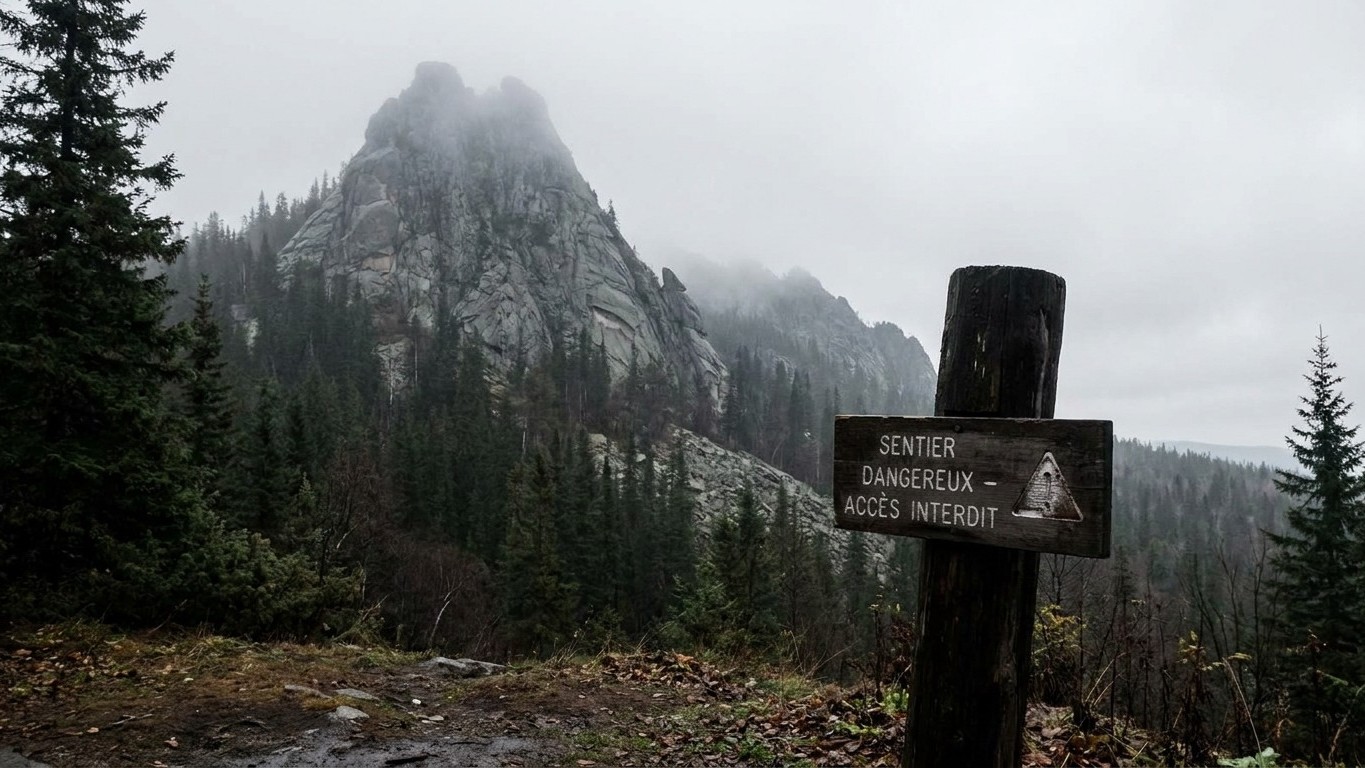
Un chantier commencé sous Brejnev, jamais officiellement expliqué, toujours actif quatre décennies plus tard : voilà ce qui se cache sous le plus haut sommet de l’Oural méridional. À 1 640 mètres d’altitude, la montagne de Iamantaou (« la mauvaise montagne » en bachkir) abrite un réseau de galeries, de voies ferrées et de logements creusés dans le granit et le quartz, dont personne, ni les habitants voisins ni les services de renseignement occidentaux, n’a jamais pu confirmer l’usage réel.
Key takeaways
- A colossal underground network has been hidden beneath the mountain since the 1970s, and its true function remains unknown
- The project miraculously outlived the collapse of the USSR and continues clandestine operations to this day
- Even American intelligence agencies admit they do not truly know what lies within this subterranean complex
A project launched amid the arms race
In 1979, a closed city named Ufa-105, also known as Mejgorié, began rising at the foot of the highest peak in the southern Ural. The undertaking was guided by a distinctly specialized entity: a construction directorate named Directorate-30, attached to the Ministry of Defense, dedicated to major underground works. It is not a casual DIY shelter. It is a state organization, endowed with immense resources, committed over many decades.
The spirit of the era helps explain such an outsized ambition. The Iamantaou complex started taking shape in the 1970s under Soviet leader Leonid Brezhnev, in the midst of the arms race with the United States. Moscow sought to build installations capable of enduring a nuclear strike, echoing what Washington was pursuing with its Cheyenne Mountain Complex in Colorado.
The scale of the project is dizzying. The whole operation appears to have mobilized as many as 60,000 workers and to have stretched over roughly 400 square kilometers, about the size of a large city. Some estimates place the footprint at up to 400 square miles, with depths reaching 3,000 feet, almost a kilometer beneath the summit. An American general stationed in the 1990s summed up the situation with unsettling candor: he described an enormous underground complex, counting in the millions of square meters of subterranean space, while conceding that American intelligence had no clear understanding of its purpose.
The American revelation, then Russian silence
The world learned of the site through the press, not through Moscow. On April 16, 1996, the New York Times published an article reporting that a gigantic military complex was being constructed in Russia’s Ural mountains, citing Western officials and Russian witnesses. The article spoke of thousands of workers mobilized on the project.
In response to this disclosure, Russian authorities vacillated between minimalist confirmations and explanations that strained credibility. When questioned by American officials about the nature of the site, Russian authorities alternated between describing it as a mining operation, a storage facility for uranium and other radioactive materials, a warehouse for food or precious metals, and even a resort for the political elite. None of these versions persuaded Western analysts, given the project’s scale.
One former defense minister eventually offered a confession, though without details. The former Russian defense minister, Marshal Igor Sergeyev, acknowledged the existence of a facility at Iamantaou but declined to elaborate. His successor shut down any further discussion. In the 1990s, Defense Minister Igor Rodionov stated that there was no policy of disclosing military installations to foreign media. Thirty years later, this policy of silence remains essentially unchanged.
A project that survived the collapse of the USSR
What is most striking in this story is not so much the secrecy as the perseverance. Most of the great Soviet undertakings ground to a halt with the USSR’s dissolution due to budget constraints. Not this one. The project endured through the economic turmoil of the post-Soviet era, defying Russia’s financial pressures and triggering Washington’s unease. Under Boris Yeltsin, amid a severe economic crisis, the cranes kept turning beneath the mountain while the country struggled to pay its civil servants.
The accompanying infrastructure also tells a story of industrial scale. A railway line was connected to Mount Iamantaou, and a road was opened from Magnitogorsk. You don’t lay down a dedicated rail line for a mere potato warehouse. According to a former participant in the project, the construction of the subterranean city was completed around 2002, after which the maintenance of the complex became a permanent activity, justifying heightened security across the entire area.
The mystery has never truly been resolved. The most credible rumors point to a reinforced nuclear command center—a Russian analogue to the Dead Hand protocol—capable of guaranteeing a retaliatory response even if the central leadership were destroyed. Others, more fanciful, have nicknamed the site the “Russian Area 51,” feeding theories bordering on dubious exoticism. What remains certain, however, is that the mountain now lies within the South Ural nature reserve, which officially prohibits ascent, a practical justification to deter curious minds without ever needing to explain what truly sleeps beneath its granite slopes.
Sources: resistanceauthentique.wordpress.com | aquamarine-moscow.ru
