
Note for the editors: the imposed headline claims that no season pass would have been sold. Yet the lifts did operate for a few winters (1989, then up to 2003), which the brief confirms. The article remains factual on this point. The headline could be nuanced.
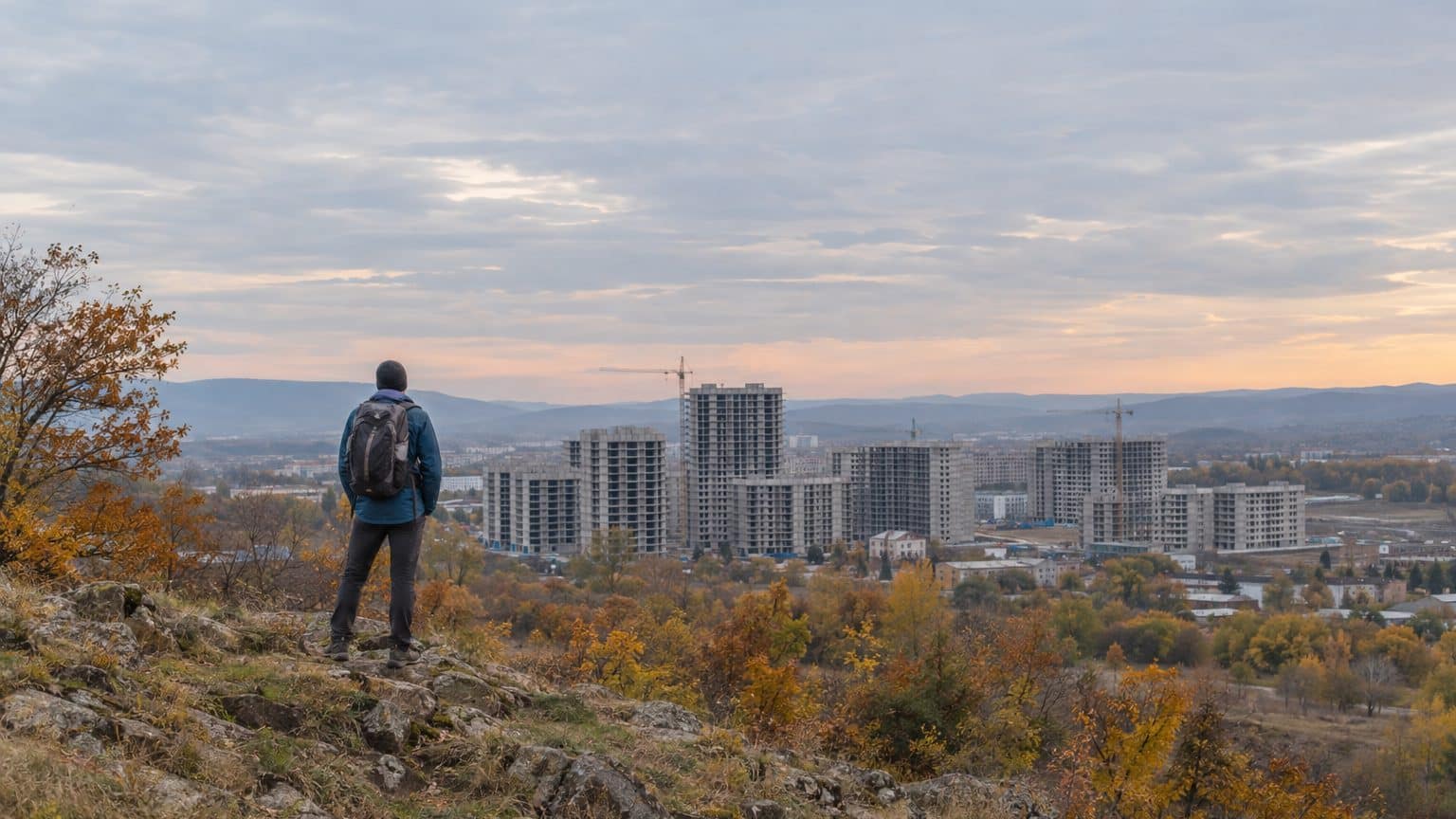
Saint-Honoré 1500, renamed La Chaud, stacks its rows of buildings at an altitude of 1,505 m, above La Mure, in Isère. The project envisioned around 1,400 beds (some sources cite 1,500), i.e., more than one and a half times the current population of Saint-Honoré, which had 830 inhabitants in 2023. The construction site halted abruptly in March 1993, and the resort was never completed.
- The Saint-Honoré 1500 construction site stopped in March 1993, unfinished.
- The lot was sold at auction twice, in 2003 and 2004, with the price nearly doubling.
- About forty residents still live in some of the resort’s buildings.
From coal to snow: a reconversion wager
Everything began with the mines. In 1989, the State announced that the La Mure pits would close in 1994, and the last of them, Villaret at Susville, would finally shut down on March 28, 1997. On the Matheysin plateau, local authorities sought an economic lever, and the mountains offered one on a plateau, provided it could be connected to the neighboring domain of Alpe du Grand Serre.
The facilities went up fairly quickly. In 1988, a cable link reached the Ollière pass, linking the resort to Alpe du Grand Serre. In 1989, two chairlifts and one drag lift came into service at the starting point of Saint-Honoré 1500, while the real estate project anticipated around 1,400 beds, a shopping center, and sports facilities.
The remaining task was financing the entire project. According to the press of the time, in 1990 the department of Isère secured a guarantee from the bank for 50% of the construction costs.
March 1993: the construction site stops abruptly
The construction site halted in March 1993, four years before the closure of the last mine.
The press at the time reported that the company in charge of construction had been placed in receivership, then liquidated in June 1995. The promoter, meanwhile, was imprisoned for embezzlement. This judicial aspect dates from 2003 and has circulated widely on the Internet since, hence caution: no names are cited here.
On the ground, the tally resembles a frozen construction site: two residences were delivered, two others were nearly finished, and three buildings remained at the shell stage.
Lifts without snow, then two auctions
At the start of the 2000s, the lifts still ran for a few winters, managed by the commune. After 2003, nothing more. The slope faces due south, and betting on snow at 1,505 m in this orientation proved to be a gamble. The operator of Alpe du Grand Serre did not take them over.
On October 28, 2003, the site went up for auction in a single lot and found a buyer at €830,000, with a starting price of €489,759. A rebid immediately revived the sale. On January 13, 2004, at the Grenoble courthouse, the lot was definitively resold for €1.62 million, from a starting price of €913,000.
Between the two sales, the price almost doubled in under three months.
The lot included a building of 68 completed apartments that were vandalized. It also included a 60-room hotel-restaurant unfinished, other apartments, and garages left unused before the end of the structural work.
The dismantling of the lifts then stretched over years. Parts of the Tibannes chairlift were taken over in 2005 by Alpe du Grand Serre, but the chairlift itself was still standing in 2009. The rest was only resold in 2014.
A ruin that isn’t quite a ruin
The dossier eventually ended up at the National Assembly. Written Question No. 89852, published on March 28, 2006, mentions a ruin despite the sums spent by the department, which had guaranteed the project. However: guaranteeing is not paying, and no amount paid has been established at this stage. The reply, dated May 23, 2006, states that no request for state aid for the station itself had been recorded.
Some buildings are nevertheless inhabited, while others remain in bare concrete.
Reports have described around forty residents, along with photographers, graffiti artists and urban explorers drawn to façades covered with tags. On June 1, 2019, two Grenoble dance companies performed there three times as part of a cultural operation by the Isère Department. The choreographers said they wanted to make the place frequented for one evening, for cultural rather than sporting purposes.
To reach it from La Mure, you must pass through the hamlet of Fugières, then climb a regular, steady road for about 7 km. The route is also offered as a bike ascent, with views of the lakes on the Matheysin plateau and the Vercors.
Sources: placegrenet.fr | francebleu.fr
