
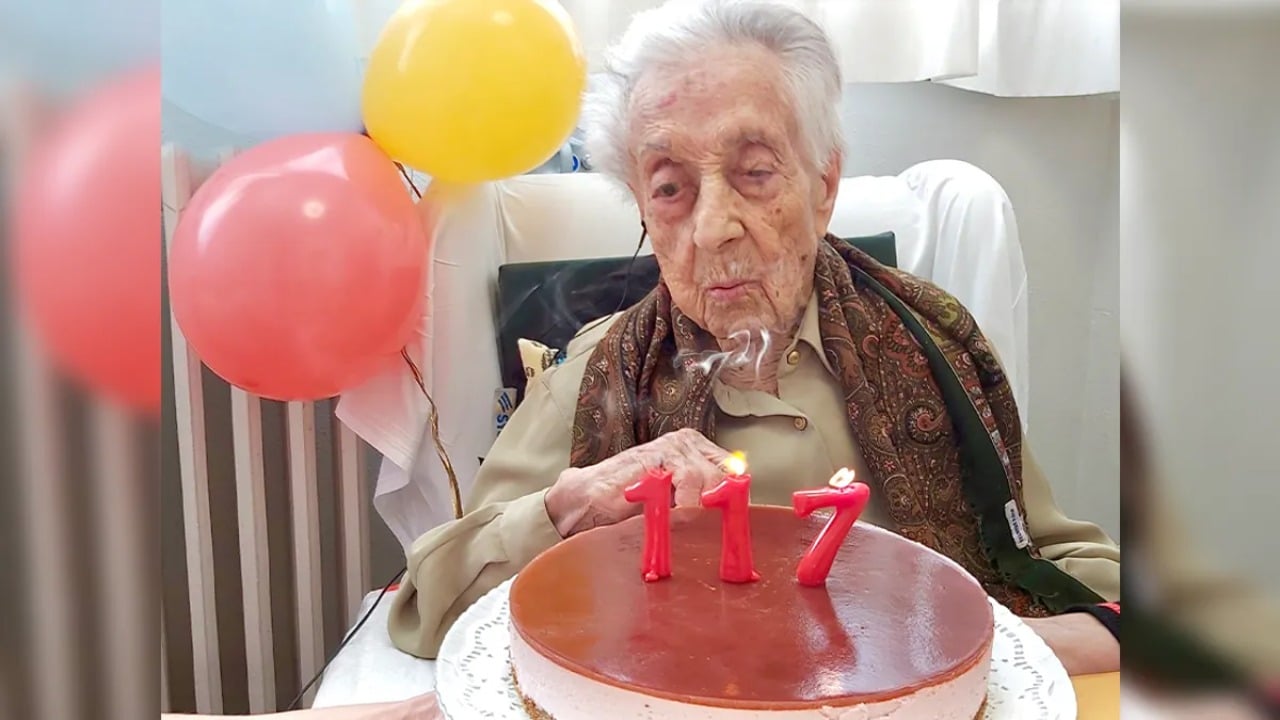
Born on March 4, 1907, Maria Branyas Morera made history by becoming one of the oldest women in the world and the oldest person worldwide in 2023. She passed away in August 2024 at the age of 117 years and 168 days, an exceptional longevity that has fascinated scientists and researchers: why did she live so long? Was it due to rare genetic factors, to her lifestyle, or to a combination of both? A thorough study conducted by Spanish researchers using advanced biological technologies may finally answer this question.
A Unique Study on a Supercentenarian
The study on Maria Branyas Morera focused on a multi-omic analysis of her body. This term refers to the examination of several biological aspects at once, including the genome, the transcriptome, metabolism, the microbiome, and the epigenome.
In detail, the genome represents the complete set of an individual’s genetic material, that is, all the DNA. This includes the genes that carry instructions for making proteins and regulating bodily functions.
The transcriptome, for its part, refers to the entirety of RNA produced by a genome at a given moment. These RNAs are temporary copies of genes used to manufacture proteins in the body. Analyzing the transcriptome helps understand how genes are activated or deactivated in cells, which can affect health and aging.
The metabolome denotes the entire set of small molecules (or metabolites) produced during chemical reactions within the body’s cells. These metabolites play a crucial role in energy production, the regulation of cell growth, and other vital functions. Studying the metabolome helps understand how metabolism works and how it changes with age.
The microbiome consists of billions of microorganisms (such as bacteria, viruses, and fungi) that live in and on our bodies, notably in our gut. These microorganisms play a significant role in digestion, our immune system, and even our mood and mental health.
Finally, the epigenome refers to chemical modifications of DNA and the proteins surrounding it that influence gene expression, i.e., their activation or deactivation, without changing the DNA sequence itself. These modifications can be influenced by the environment, lifestyle, and diet, and they play a key role in aging and the prevention of certain diseases.
A ‘Young’ Biology Despite Advanced Age
At 116 years old, already well beyond the average life expectancy, researchers collected biological samples from her tissues to compare them with those of much younger individuals, some as young as 25. The results of this analysis were remarkable. By comparing Branyas Morera’s cells with those of the younger subjects, researchers found that many age-associated biological markers were surprisingly youthful for a 116-year-old woman.
Take telomeres, the structures located at the ends of chromosomes. They normally shorten with age, but in Branyas Morera’s case, her telomeres were among the longest ever observed, even compared to those of individuals in their thirties. This observation suggests that biologically, she aged much more slowly than the majority of people.
The researchers also found rare genetic variants in her genome that are known to protect against some of the most common age-related diseases, such as cardiovascular problems, diabetes, and neurodegeneration. These results indicate that genetically, she had a considerable advantage that contributed to her longevity.
The Role of Genetics in Longevity
Beyond her exceptional biological markers, scientists identified several unique genetic variants in Maria Branyas Morera. These mutations were present in her but not in the other study participants, suggesting they played a key role in her longevity. These variants are linked to important biological mechanisms such as stem cell regulation and protection against chronic diseases.
The study also highlighted the importance of epigenetics in longevity. Using epigenetic clocks, researchers calculated the woman’s biological age from DNA methylation. These clocks revealed that her biological age was much younger than her chronological age. This finding reinforces the idea that longevity depends not only on genes but also on how they are expressed over time.
The Role of a Healthy Lifestyle
Biology alone does not fully explain Branyas Morera’s exceptional longevity. The study also revealed that her active and healthy lifestyle played a decisive role. Living in Catalonia, a Mediterranean region, she followed a diet rich in vegetables, fruits, olive oil, and fermented dairy products, notably yogurt. This type of diet typical of the Mediterranean diet is well known for its benefits to cardiovascular and digestive health.
Researchers also observed that Branyas Morera maintained an exceptional gut microbiota. A healthy microbiota is often linked to slower aging and a stronger immune response. Her diet, combined with healthy lifestyle habits, helped her maintain an impressive level of physical and mental health even at an advanced age.
Beyond her diet, the centenarian led an active social life, another key factor for a long and healthy life. She was surrounded by family and friends, and she enjoyed spending time gardening, playing the piano, and reading. These activities, which stimulate both mind and body, are associated with better mental health and a reduced risk of dementia.
Ultimately, Maria Branyas Morera showed that it is possible to defy the laws of biology, but also that the key lies in a combination of rare elements and a lifestyle that respects both body and mind. Scientists continue their research to better understand these mechanisms, and perhaps one day we may all benefit from the secrets of those who, like her, live beyond 100 years.
