
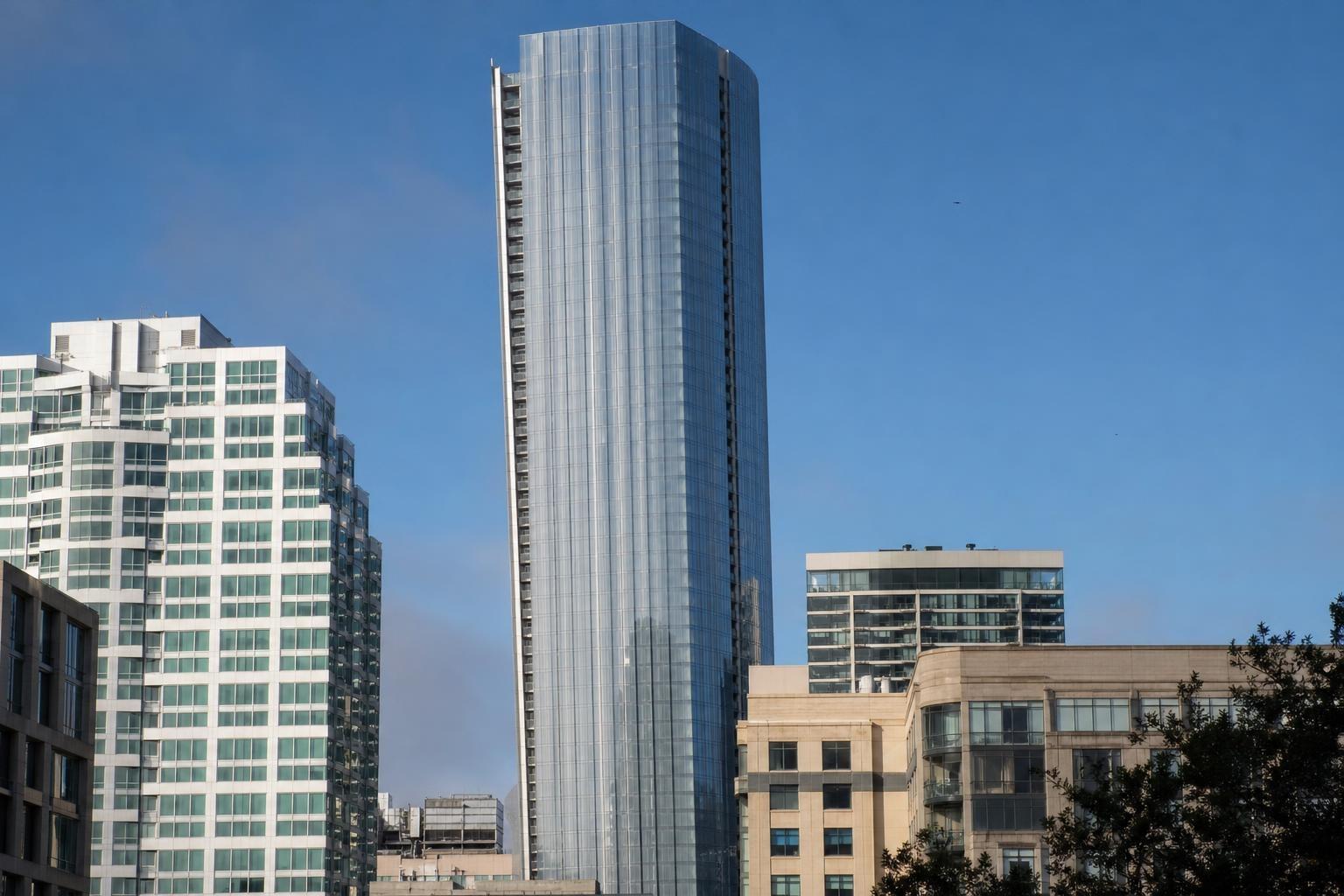
A gleaming symbol of luxury and ambition now doubles as a case study in geotechnical humility. In the heart of downtown, a 58-storey residential skyscraper has sunk nearly half a metre, and its crown leans more than 70 cm—an unsettling reminder that even modern engineering meets its match beneath our feet.
How a skyline star started to slump
When the building opened to fanfare, its foundation relied on friction piles embedded deep into dense sand and clay, not all the way to bedrock. That choice wasn’t unusual for its era or location, but it left less margin for the unexpected under changing loads and groundwater conditions.
As the neighborhood densified—tunnels, trenches, and a massive transit hub nearby—the soils saw subtle shifts in pressure and moisture. “The ground doesn’t move the way we think it does; it moves the way it must,” one engineer remarked, capturing the paradox of urban earth in motion.
The numbers behind the lean
Settlement reached on the order of 50 cm, while the top now leans over 70 cm toward the northwest, a figure that feels abstract until you imagine a laser line dropping from the roof and missing its mark by the length of a guitar. That drift accumulated over years, with periods of faster movement during construction activity in the vicinity and slower creep as loads found new equilibrium.
Monitors track the tilt in real time: tiny changes, millimetres and fractions, plotted day after day like an EKG of urban ground. “It’s not just about how far it’s moved,” a consultant noted, “it’s about whether the rate is under control.”
Life inside a leaning landmark
Daily life continues: doormen still greet, elevators still glide, and the lobby’s glossy stone still reflects designer lighting. But confidence has a price. Some residents speak of muted anxiety—“You learn to trust the data,” one said—while others worry about resale value, insurance complexity, and the drumbeat of headlines.
Inside, the experience is less dramatic than the numbers suggest. Floors feel level, systems function, and most safety standards are still met. Yet the idea of imperceptible motion in a home that cost millions can fray nerves, shifting the psychology of place even as the structure remains fundamentally sound.
The fix: piles, patience, and proof
Engineers proposed a perimeter retrofit: new steel-and-concrete piles socketed into bedrock, coupled with careful jacking to re-share loads and arrest further tilt. The plan evolved—scaled, sequenced, and retested—to minimize added settlement during installation, a delicate dance of cause and effect.
Think of it as giving the tower a new set of anchors, bypassing the compressible soils that betrayed it. “We’re not turning back time,” one project lead said, “we’re stopping the clock and nudging the hand to a safer position.” Post-installation monitoring is central: a multi-year regime of sensors, surveys, and hard thresholds for action.
Why this matters beyond one address
This isn’t just about one address; it’s a postcard from the future of coastal megacities. As we build taller on softer ground, we collide with the physics of consolidation, drawdown, and differential settlement. Add sea-level rise, seismic risk, and intense urban layering, and every foundation becomes a long story still being written.
- The lesson for cities: invest in subsurface knowledge, design for redundancy to bedrock when feasible, monitor relentlessly, and treat ground water like critical infrastructure rather than background noise.
The calculus of risk and reassurance
Structural safety is not a binary switch. It’s a continuum measured in factors of safety, serviceability, and social tolerance. A building can be both code-compliant and publicly unsettling, especially when the evidence—a visible lean—feels like heresy against our assumptions of perfect plumb.
Markets translate that discomfort into numbers: litigation costs, retrofit budgets, HOA assessments, and transaction discounts. Yet there’s also upside in transparency. Clear dashboards, third-party audits, and candid communication rebuild a form of civic credit that money alone can’t buy.
What’s next for a very watched tower
Expect years of verification. The question isn’t merely “Did the tilt stop?” but “Is the long-term trend stable under full occupancy, seasonal cycles, and seismic jolts?” Success here will look unglamorous: flat lines, boring reports, and routine inspections that feel like overkill until the day they don’t.
Residents will watch the charts, the city will watch the experts, and the world will watch a high-rise that turned into a high-visibility lesson. “Foundations are promises,” an old professor used to say. This one is being rewritten, line by line, with deeper piles, slower numbers, and a renewed respect for the ground that holds up our greatest ambitions.
