
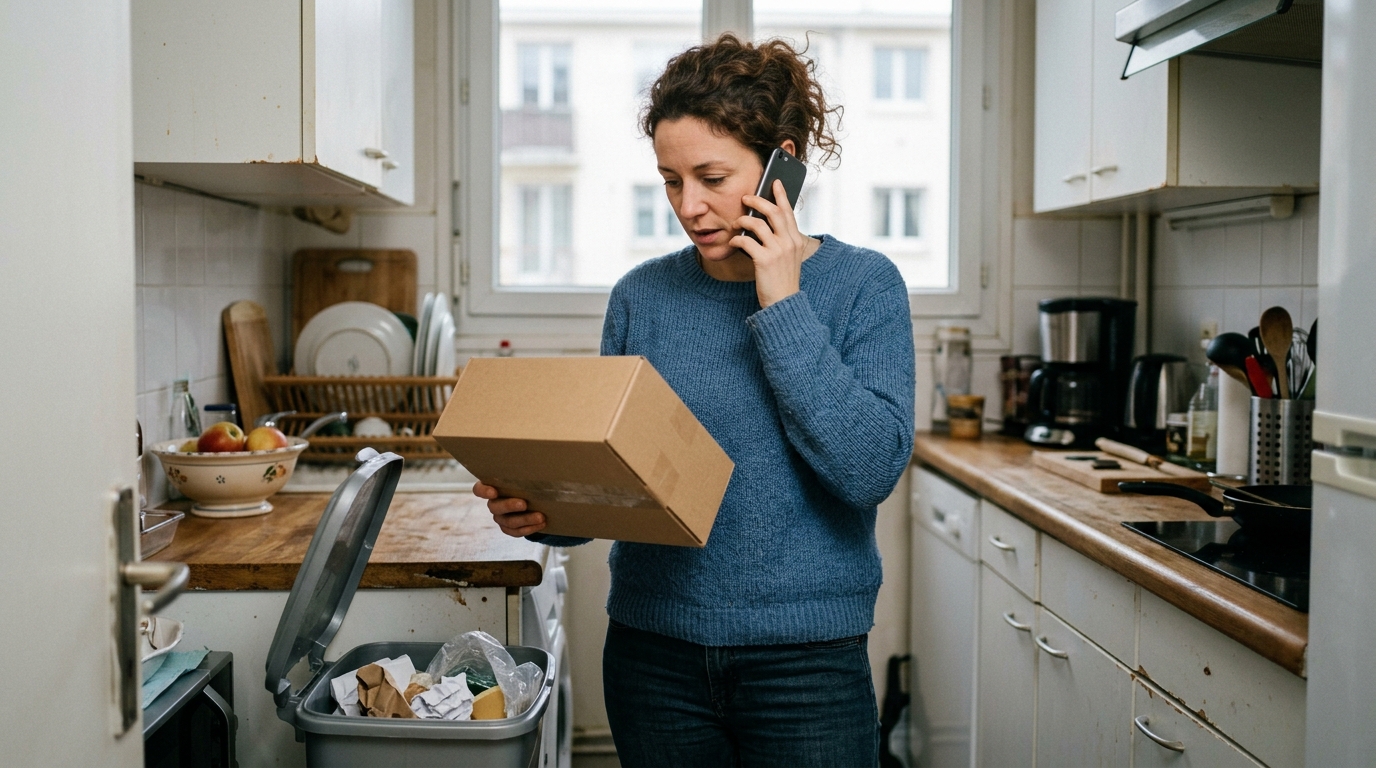
An alert pops up on your phone, or you notice it while scrolling the aisles of a supermarket: the package of biscuits or the canister you have in your pantry is part of a recalled lot. The instinct is almost automatic; we head for the bin without asking questions. But this haste could cost you a few euros, and more importantly deprive health authorities of a useful signal. Behind every product recall lies a much simpler and far more advantageous procedure than simply tossing the item. So, before you discard this product without question, here is what consumer services would really like you to do.
- A recalled product must be reported in-store for a refund, because only specific lots identified by lot number are affected.
- In the absence of a receipt, a bank statement, a loyalty card, or a sworn declaration may be enough depending on the retailer.
- In case of a health doubt, you should contact the DDPP for a food item, or the ANSM for a medicine, and consult a doctor if symptoms appear.
- Why blindly discarding a recalled product is a bad idea
- No receipt? Here’s how to get a refund anyway
- Symptoms, doubt, urgency: the right moves to take and whom to contact
Why blindly discarding a recalled product is a bad idea
Since 2021, the official site RappelConso, run jointly by the DGCCRF, the DGAL, the DGPR and the DGEC, centralizes all recalls in France. Each product page specifies the steps to take, and in the vast majority of cases, this goes beyond simply discarding the product. It recommends not consuming or using it, but especially reporting it at the point of sale to obtain a refund. Another often overlooked point is that a recall almost never concerns an entire product range, but specific lots, identifiable by a lot number, a best-before date, or a barcode. Systematically discarding an entire product as a precaution can therefore sometimes deprive you of a refund for an item that, once checked, was not even affected by the alert.
No receipt? Here’s how to get a refund anyway
It’s the argument most often used to abandon the idea of a refund: the absence of a receipt. Yet, this step is not always essential. If the payment was made by bank card, the bank statement can suffice as proof of purchase. Similarly, a loyalty card used in-store often keeps a trace of your purchases, which greatly facilitates the process. Some retailers go further by accepting a simple sworn declaration, or a return based solely on the lot number of the recalled product. The catch is that each retailer applies its own policy in this area: the process can vary significantly from store to store. In most cases, the till returns provide a refund of the price paid, or sometimes a voucher. A welcome commercial gesture, but it does not cover medical expenses, lost workdays, or the health consequences of a potential health issue.
Symptoms, doubt, urgency: the right moves to take and whom to contact
Beyond the refund, a product recall often raises a more troubling question: your own health. For food items, you can contact the Departmental Directorate for Population Protection (DDPP) of the relevant department, via an online form or by mail. This is not the only scenario to know about; medicines and medical devices do not fall under RappelConso but under the ANSM, which publishes its own lot withdrawals. If in doubt after consuming a recalled product, the right moves are to keep proof of purchase, monitor any symptoms, and consult a doctor promptly if any unusual signs appear. Among the essential steps to remember:
- Check the lot number before discarding the product
- Keep the receipt or, if unavailable, the bank statement
- Contact the DDPP for a suspect food product
- Consult a doctor if symptoms appear after consumption
A recalled product is therefore never a financial inevitability: between easy refunds, dedicated contacts and health vigilance, every consumer has concrete levers to act calmly. The next time an alert drops, it’s better to keep these reflexes in mind rather than automatically tossing it in the trash.
