
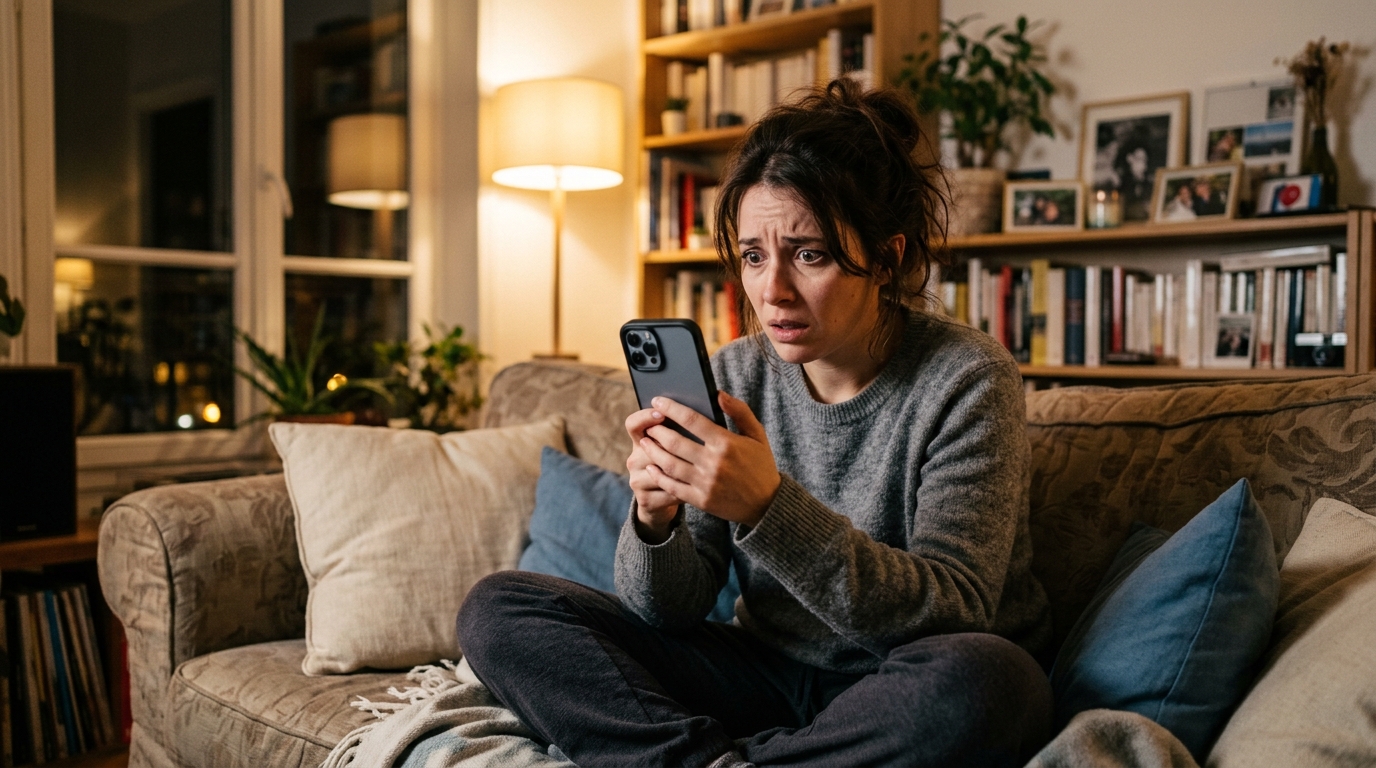
A few seconds after I pressed the SMS link I had received, my phone already displayed a form asking for my banking details, under the pretext of regularising a reminder of property tax. At the moment, nothing seemed suspicious: the message referenced my address, a plausible amount, and an administrative tone that seemed perfectly calibrated. I thought I was dealing with a routine reminder, like so many others that arrive as autumn approaches, the period when tax notices traditionally land in electronic mailboxes.
However, the DGFiP never notifies by SMS. No text message, no link, no such notification exists in its official system. What that link actually triggered behind the screen, no one had explained to me before it was too late, and it is precisely this mechanism that I want to detail here, to prevent other taxpayers from falling into the same trap these days.
- The DGFiP never notifies a property tax notice by SMS and only accepts payment via the personal space on impots.gouv.fr
- A recent hacking of DGFiP systems allowed the extraction of tax and cadastral data used to make fraudulent messages more credible
- Impersonating the identity of an administration to mislead a taxpayer is punished by one year in prison and a 15,000 euro fine
- A text, a link, and suddenly nothing adds up
- The only place where the dgfip truly speaks: your personal space
- What this text really triggered on my phone
- The reflexes that would have changed everything
A text, a link, and suddenly nothing adds up
The wording of the message seemed serious: a fiscal reference, a deadline reminder, a no-nonsense administrative phrase. It is precisely this apparent seriousness that makes these scams so dangerous today. A recent hacking of the DGFiP systems allowed the extraction of tax and cadastral data, which explains why some fraudulent messages contain real information about their victims, such as the tax identifier, the address of the property concerned, or even the reference fiscal income. These details, once reserved for the administration, now circulate among fraudsters able to inject them into messages that appear perfectly credible.
The trap does not stop at the SMS itself. By clicking the link, the victim is typically redirected to a false tax page, which faithfully reproduces the colours, the logo, and the layout of the official site. The illusion is nearly flawless, until a detail reveals the deception: a slightly altered web address, a disguised spelling mistake, or an immediate payment request that would be unusual in interactions with the tax office.
The only place where the dgfip truly speaks: your personal space
There exists a simple rule, yet widely unknown: the DGFiP never notifies a property tax notice by SMS and only accepts payment through the personal space on impots.gouv.fr. All official communications pass through this single channel, accessible after secure identification. Property owners who are not on monthly payments can also view their 2026 notice online from the end of August, while taxpayers on monthly payments access it a little later, around mid-September. This calendar shift, known to the administration, has never triggered any SMS reminder.
Another telltale sign: official DGFiP email addresses always end with @dgfip.finances.gouv.fr. Any variant should immediately raise suspicion. Likewise, the real tax pages use exclusively the state-managed domain on .gouv.fr. A slightly modified domain, a different extension, or an added word is itself enough to stop any ongoing action.
What this SMS really triggered on my phone
Analyzing what happened after the click, one thing became clear: the link did not lead to any consultation information, but directly to a payment form. The official online posting of a tax notice never requires anything beyond online viewing, with no immediate payment demand and no urgent form to fill out. This step, which seemed harmless, is precisely the core of the trap: it pushes the victim to provide banking details in a stressful context, whereas the actual property tax payment should only occur later in the tax calendar, no later than October 20 for online payment, and October 15 for other payment methods.
That time gap should have been enough to raise suspicions. Why request immediate payment when the official deadline is still weeks away? It is this artificially created urgency that characterizes the most sophisticated phishing attempts.
The reflexes that would have changed everything
A few simple reflexes can nevertheless defuse this kind of scam before it Claims victims. The fundamental rule remains: the DGFiP never asks for a bank card number by SMS, email, or phone, whether to collect a payment or perform a reimbursement. Any message that deviates from this principle should be considered suspect, regardless of how precise the information it contains might appear.
- Always verify the site address before entering any information
- Log in only via your personal space on impots.gouv.fr, never through a link received by SMS
- Check the domain extension; it should always be .gouv.fr
- Never disclose banking details in response to an unsolicited message
- Report the fraudulent message to the appropriate authorities rather than simply deleting it
It is also worth recalling that these practices are not mere missteps: impersonating an administration to mislead a taxpayer is punishable by one year in prison and a 15,000 euro fine under the Penal Code. A sanction that reminds us that behind every fake SMS lies a clearly identified offense, not just a casual marketing abuse.
This misadventure ultimately reveals, at its core, a broader reality: fraudsters adapt quickly to administrative calendars and exploit the slightest lapse in vigilance. At a moment when property tax notices are just beginning to circulate, a single reflex suffices to halt any manipulation: go straight to your personal space, never through a link received by message. One question remains worth addressing collectively: how many taxpayers would have reacted differently if they had simply known, before clicking, that the tax administration would never contact them in this manner?
