
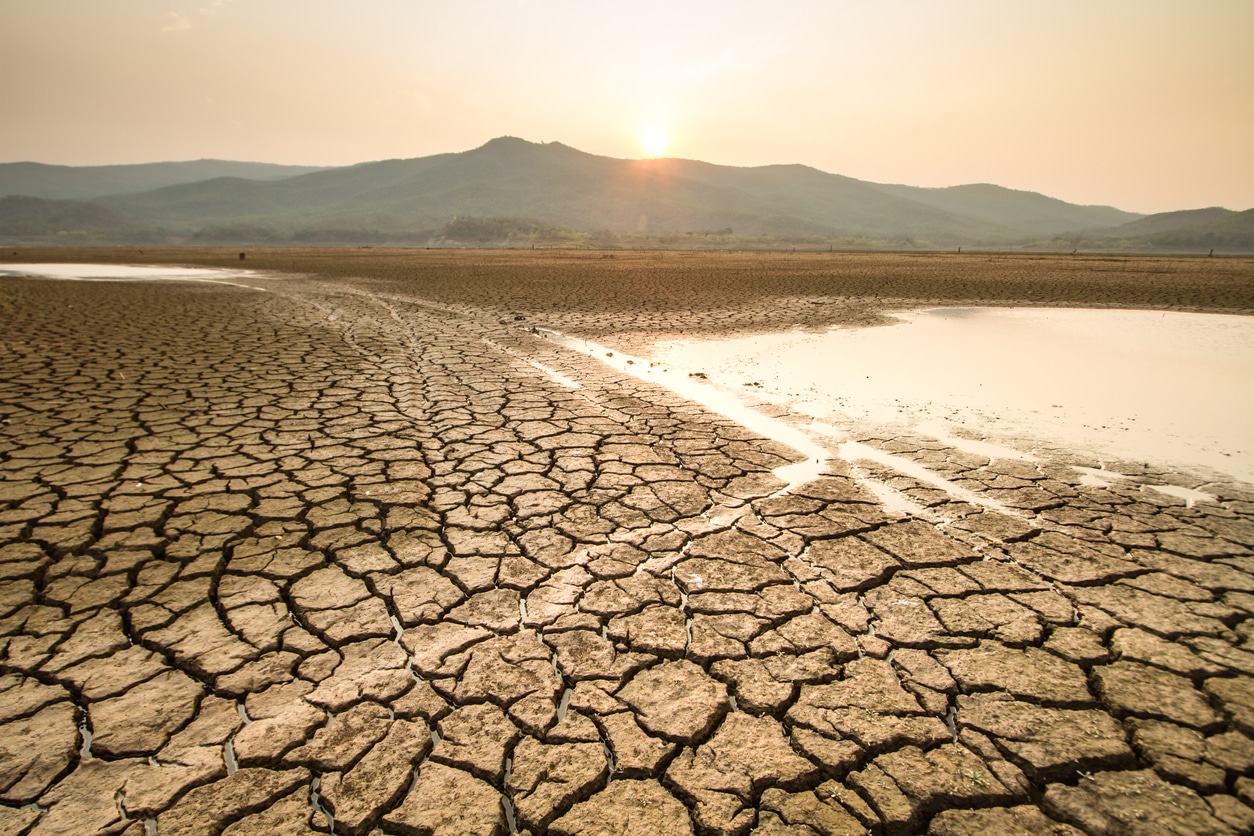
Recently, American and Spanish researchers published a curious study concerning rain‑making rituals during drought. According to the authors, there is a correlation between prayers and rainfall, primarily in arid regions. However, this does not imply that these rituals cause the precipitation.
The most extensive study on rain rituals
First, it is worth recalling that rituals and other processions to bring down rain have existed since prehistory. They are found across the globe, especially within agricultural civilizations, when drought threatens harvests and wells. For example, among the Berbers, the Tlaɣunja—a large wooden spoon dressed like a bride—is paraded. In Thailand, consider the traditional cat parade (Hae Nang Maew Festival), during which a feline is walked about while being sprayed with water with the aim of triggering downpours.
In May 2026, work by Yale University (United States) and the University of Murcia (Spain) was published in the Quarterly Journal of Economics. The study, conducted by specialists in economic history and energy and environmental markets, is the most recent and largest research on rain-making rituals.
“We present a model in which a religious leader attempts to persuade followers to believe in it. Praying for rain is effective only where the risk of precipitation during a drought increases over time; prayer is therefore more likely to succeed when people want the rain the most.”, the study notes.
The “hazard rate” effect
In fact, the researchers cross-referenced the traditions of more than 1,200 ethnic groups around the world with highly precise climate data. According to the results, weather follows a rising hazard rate in arid regions—that is, the longer the sequence of dry days, the higher the statistical probability that rain will occur the following day.
The study authors stated that rituals and other prayers never appear at the onset of a drought but rather when the climatic episode becomes critical and unbearable. At that precise moment, the natural probability of a shower breaking out is already at its maximum. The work shows that a prayer launched during a month of extreme drought artificially increases the apparent probability of rain on the following days by 71%.
To validate their model, the researchers added the analysis of 200 years of archives—from the eighteenth to the twentieth century—of the Murcia Cathedral, a very arid region of Spain. In fact, they compared the exact dates of official stops in the religious institution ordering prayers for rain (the “rogations”) with the actual weather data of the time. The correlation appeared perfect, insofar as the Church launched the rituals at the precise moment when historical drought accumulation made the return of rain imminent.
A question of the illusion of efficacy
In economics, rain-making rituals are studied as “instrumental beliefs.” The objective here is to understand how behaviors that may be deemed irrational can actually help agricultural societies. These societies thus use the rituals to manage their economic stress, structure their harvest calendar, and maintain social cohesion in the face of climate-induced difficulties.
For the authors, human societies living in arid environments have developed an intuitive, though biased, understanding of the cycles of climatic probabilities. Thus, ethnic groups associated with this specific climate profile are 47% more likely to develop rain-prayer rituals than others, since the illusion of efficacy is mathematically highest there.
