
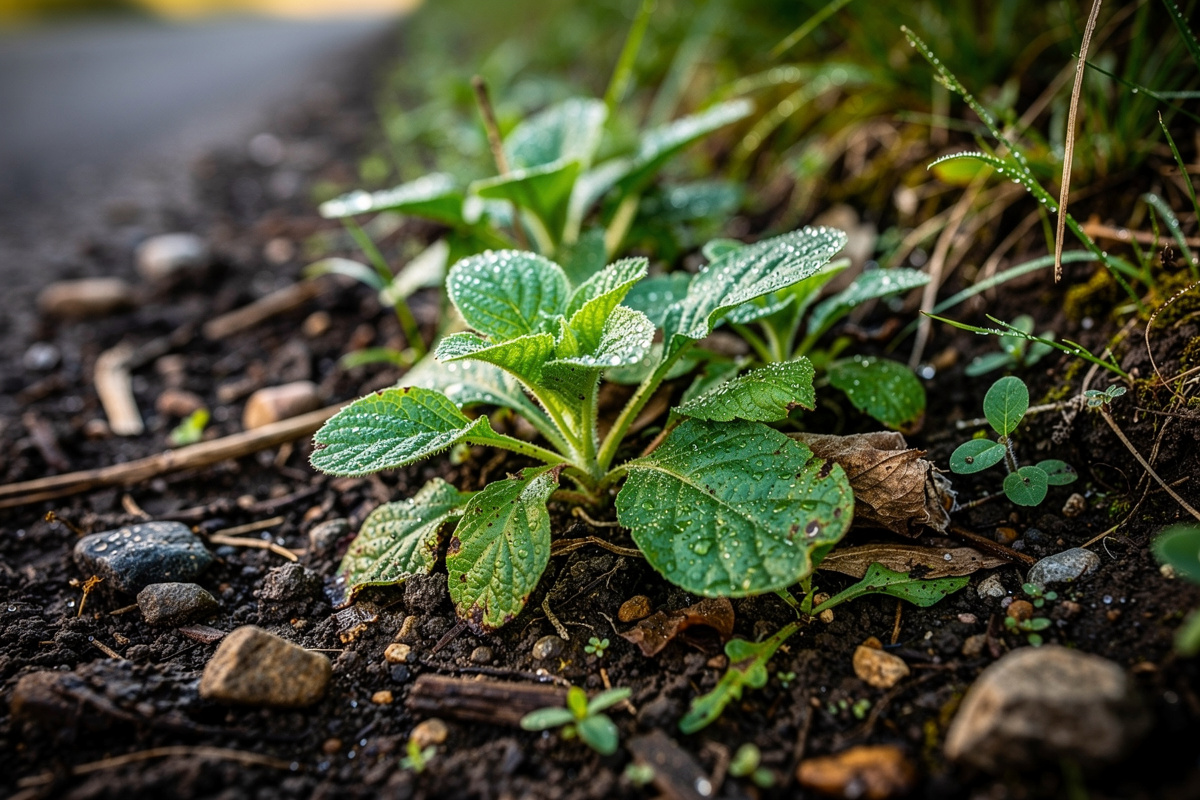
It grows in the clear waters of ditches, one might walk by it without noticing, and yet it has just earned the highest possible score in an American study that sifted through dozens of fruits and vegetables. Not 95, not 98: 100 out of 100. A real spotlight on a vegetable that most French people associate mainly with a garnish to accompany meat, without imagining that it could rise to the top of such a serious nutritional ranking.
This small vegetal feat deserves a moment’s attention, if only to understand what distinguishes a common, almost banal plant from a food that some researchers already call the absolute reference in terms of nutritional density.
Watercress, the only plant to score a perfect 100 out of 100
The name of this discreet champion? Watercress, that aquatic plant with tiny round leaves traditionally found in damp ditches and in watercress beds across several French regions. According to a ranking compiled by the Centers for Disease Control and Prevention (CDC), the American health agency, watercress is the sole plant-based food to have earned the maximum score of 100 out of 100 on a nutrition density scale covering 47 fruits and vegetables.
Right behind it are other well-known green leaves beloved by salad fans: Napa cabbage, credited with about 92 points, followed by swiss chard and beet greens. A ranking that is sure to surprise, given that watercress remains a niche product today, far from the busiest shelves of supermarkets.
Why the CDC created this nutrition-density ranking
This rather unusual list did not come from a simple desire to rank vegetables for fun. It is a tool designed to help identify the most nutritionally effective foods—that is, those that deliver the greatest benefits for the fewest calories. The researchers behind this method, affiliated with William Paterson University in New Jersey, made a significant methodological choice: instead of comparing foods per 100 grams, as is often done, they opted for an evaluation per 100 kilocalories.
That choice completely changes the framework. It makes it possible to measure not only the nutrient richness of a food but its nutritional efficiency, taking into account its caloric content. Seventeen nutrients considered protective were scrutinized: potassium, fiber, calcium, iron, as well as vitamins A, B6, B12, C, D, E, and K. Of the 47 foods tested, 41 achieved a score sufficient to deserve the label of superfoods, a category in which watercress now sits unchallenged.
However, this perfect score should be nuanced: attaining 100 out of 100 does not mean watercress covers all daily nutrient needs. It is rather a capped score, aggregating the contribution of each of the 17 nutrients studied to craft an overall profile that is exceptionally complete.
What makes watercress so exceptional nutritionally
Concretely, what justifies such performance? Watercress stands out primarily for its remarkable levels of vitamin K, essential for blood clotting and bone health, as well as vitamin C, whose concentration would surpass even that found in an orange, the usual benchmark in this area. It also provides a noteworthy amount of provitamin A, in the form of beta-carotene, a plant pigment with well-documented antioxidant properties.
But the most surprising asset of watercress probably lies in its subtler chemical composition. This plant indeed contains sulforaphane and 3,3′-diindolylmethane, more commonly known by the abbreviation DIM. These two compounds, also present in other cruciferous vegetables like broccoli, are of particular scientific interest for their potentially protective properties against certain cancers. Not trivial, therefore, for a plant that is still too often thought of as merely a decorative garnish on a plate.
How to incorporate this wet-ditch plant into daily life
Despite this particularly solid nutritional dossier, watercress remains paradoxically absent from everyday eating habits, both in France and the United States. It must be said that its slightly peppery, almost tangy flavor does not appeal to everyone at first taste, and its presence on shelves remains discreet, far from the popularity of a green salad or a tomato.
Yet France has a genuine know-how in this area. The Île-de-France region remains the leading producer of watercress in the country, with Essonne as the top producing department, for a national production that reaches several thousand tonnes every year. A reminder that this plant, far from exotic, is part of a vegetable-growing heritage that is sometimes forgotten.
To enjoy its benefits without overturning habits, a few simple ideas are enough: a few fresh leaves added to a composed salad, a velouté prepared with watercress for cooler evenings, or a handful slipped into a sandwich to bring a touch of freshness and character. Here are easy avenues to weave it into meals:
- In a salad, mixed with other young shoots
- In a velouté, blended with a potato and a splash of cream
- As a fresh garnish on a slice of bread or a sandwich
- As a side dish to grilled fish or meat
This CDC ranking thus brings back into the spotlight a vegetable that we often encounter without paying attention to it, even though it concentrates a large share of the nutrients deemed essential for a balanced diet. At a time when people readily seek superfoods from abroad, perhaps it is time to take a closer look at what quietly grows in the damp ditches of our own regions. And if the next wellness trend happens to be within reach, in a watercress bed rather than in an aisle of imported products?
