
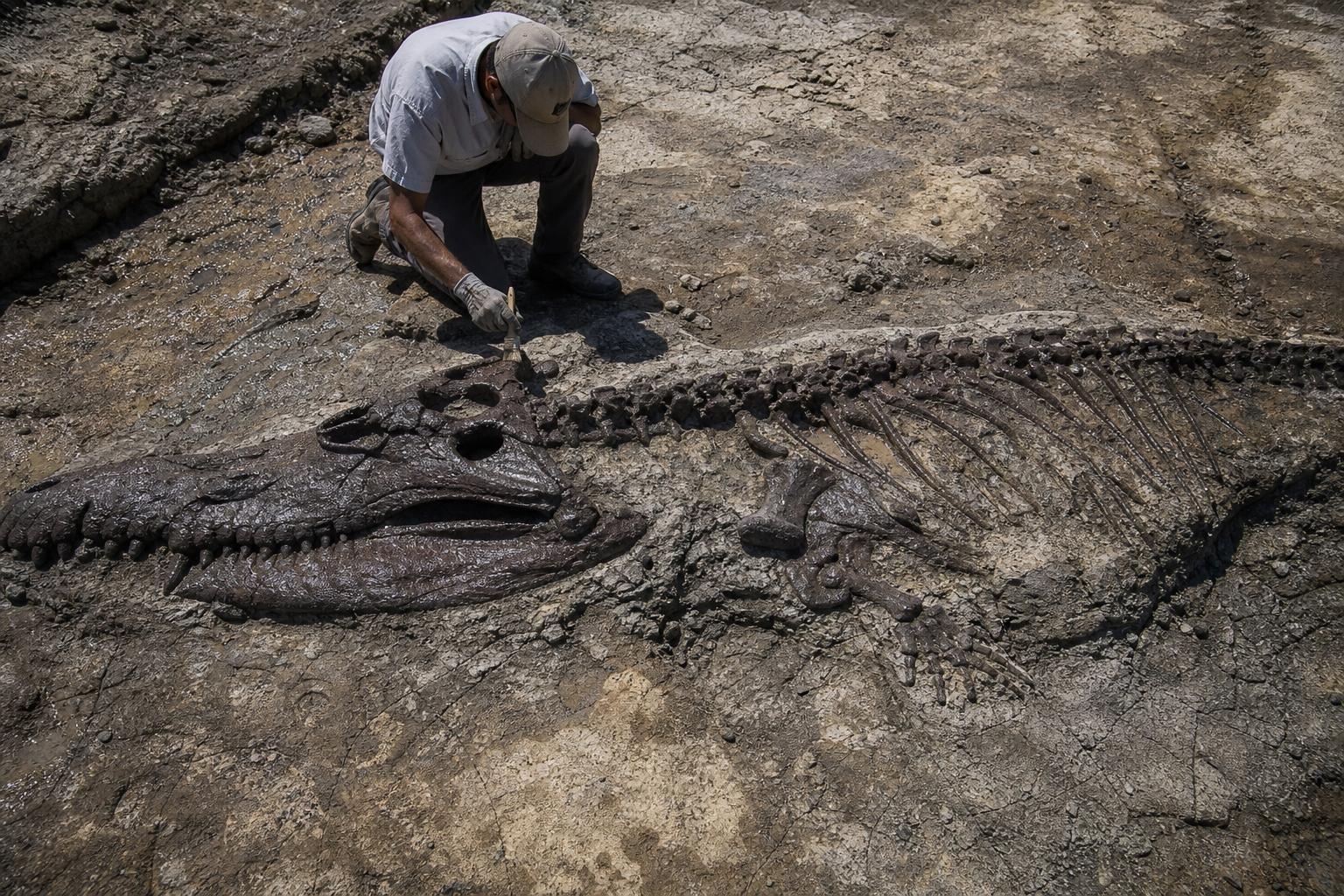
The Cretaceous coast of what is now Texas was no quiet shoreline. It was a labyrinth of tidal channels, mangrove thickets, and sun-warmed bays along a shallow inland sea. From those brown-green waters, a giant rose. It waited in silence, pressed to the mud, letting fish schools and wandering dinosaurs drift a little too close. When it struck, it was sudden, bone-cracking, and final.
Paleontologists have pieced together that beast from a tangle of skull fragments, armored plates, and teeth as thick as a thumb. The portrait that emerges is of a crocodylian so vast and so specialized that it reshapes our sense of who sat atop the food chain in ancient North America. “We knew it was big,” one researcher said, “but the new material shows an animal built to dominate shores.”
Unearthed in the Lone Star State
The fossils come from west Texas outcrops that once edged the Western Interior Seaway. Over 80 million years ago, rivers braided through swamps where turtles, fish, and dinosaurs thrived. Among them lived a crocodylian with a skull longer than a person is tall and a body stretching well past any modern relative in North America.
Its genus is familiar to specialists, but the new Texas material is exceptional. The skull bones are thick, the snout broad, the teeth blunt and deeply rooted. Massive bony plates—osteoderms—pave the back like overlapping loaves of bread. You can trace serrated scratches on some fossils of duck-billed dinosaurs, and the gouges line up with this animal’s teeth. “These marks are like a signature pressed into the rock record,” a team member noted.
Anatomy of a Super-Predator
Think of a modern saltwater crocodile, then scale up the head, widen the jaw arches, and reinforce every lever of the bite. This predator’s skull was a weapon, prioritizing crush power over speed. The nasal region was vaulted and solid, the jaw joints heavy and braced, and the tooth crowns rounded for puncture and pressure.
Its armor wasn’t just defense. The osteoderms likely helped anchor muscles, store minerals, and regulate body heat in warm, fluctuating coastal waters. The tail—deep and muscular—would have been the engine, driving an explosive lunge from below.
- Estimated length: over 30 feet, with a skull approaching 5 feet, teeth as thick as soda cans, and armor plates the size of bricks
Life Along Cretaceous Shores
Texas at the time was a living edge. Tides brought nutrients, fish, and tender hatchlings into quiet coves. Herds of hadrosaurs crossed channels, and juvenile horned dinosaurs wandered reed beds. This crocodilian didn’t have to chase. It only had to choose the moment.
Ambush suited it. The broad snout suggests a knack for holding struggling prey, not just pinching it. The teeth tell of puncture and crush, ideal for turtles, large fish, and dinosaur limbs dragged into water. “You can picture the ripple, the surge, and then nothing,” said a paleontologist involved with the study.
The environment rewarded patience. Warm seasons were long, storms episodic, and carcasses plentiful after flooding events. Such conditions grow giants, and this lineage took full advantage.
From Scattered Bones to a Portrait
The team synthesized decades of collecting with modern imaging to reconstruct the skull and skeleton. CT scans revealed internal buttresses, hidden canals, and the subtle curvatures that control how a face handles force. Digital models tested jaw mechanics and estimated the stresses each bite would generate.
Histology—the study of bone microstructure—added growth history. Thin slices showed seasonal growth rings, suggesting animals that matured slowly, reached massive sizes, and lived long lives in familiar territories. Variations in bone texture and skull shape hint at regional differences, implying multiple populations or closely allied species along the ancient coastline.
Rethinking Apex Power
For years, the Cretaceous narrative placed big theropods at the top of every food web. The Texas evidence complicates that story. On coastlines and river mouths, this crocodilian likely matched or surpassed any land predator for influence. It controlled crossings, scavenged storm kills, and set the rules of access to water.
That ecological reach matters. Apex animals engineer their worlds—opening scavenger niches, shaping migration routes, and altering how often other predators feed. “Take away a giant like this,” one researcher said, “and the shoreline becomes a different place.”
Why It Matters Today
Understanding these fossils is more than a tally of teeth. It’s a window into resilience, climate, and the ways large reptiles thrive in changing seas. As coastlines warm and shift now, crocodylians once again expand their ranges, reminding us that patient ambush can outlast brash speed.
Texas remains central to that story. Its badlands still yield armor plates in the dust, still give up teeth that gleam like river-worn pebbles. With each new fragment, the animal grows clearer—not just a monster in the marsh, but a keystone force that shaped an ancient shore and left its bite stamped into the bones of an entire ecosystem.
