
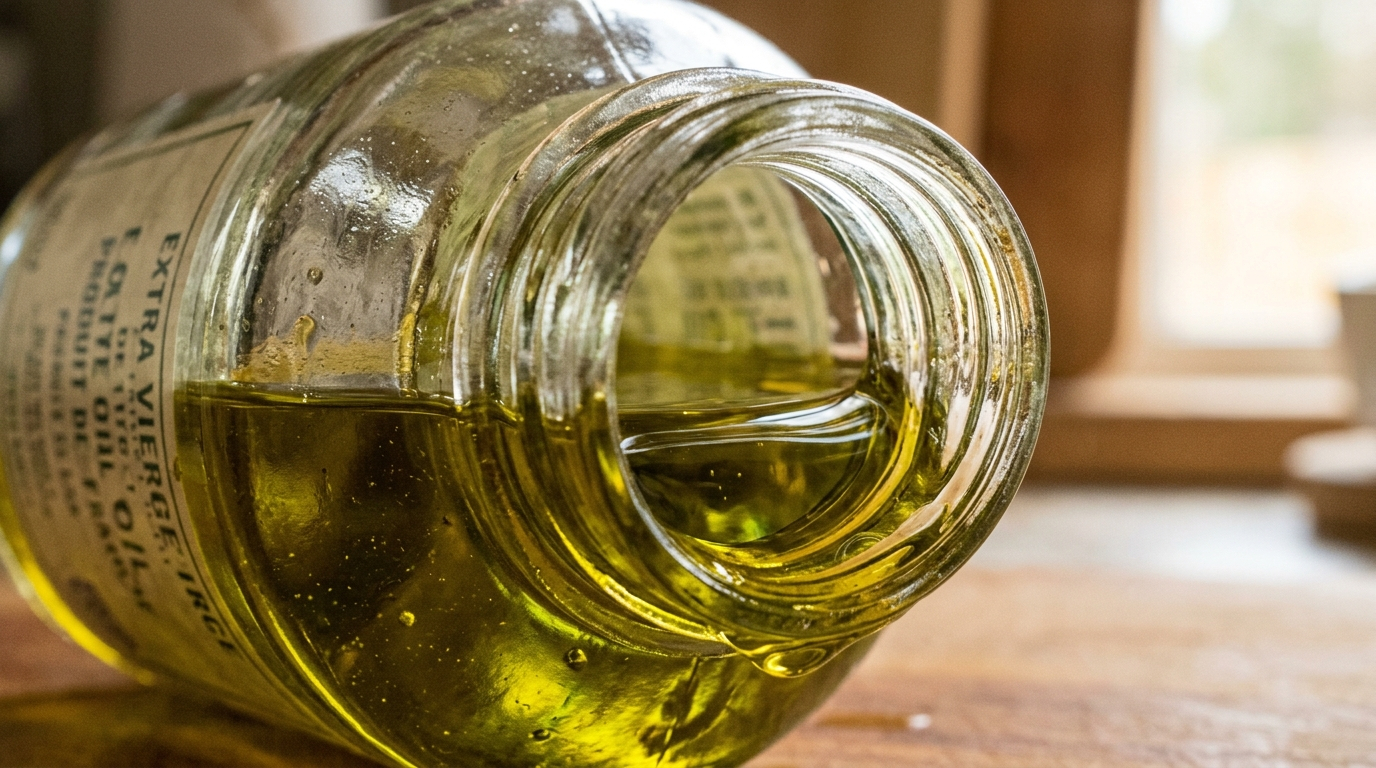
It sits proudly on the kitchen counter, housed in a tinted glass bottle, often adorned with a sprig of rosemary simply to look pretty. Olive oil has established itself as the indisputable star of French cooking, buoyed by decades of talk about its benefits for the heart and arteries. Yet here’s the catch: a habit millions of people repeat every evening, without giving it a second thought, could cancel out all those benefits—or even turn them into a real health concern. What if the way you pour your oil into the pan is the actual problem?
The Not-So-Good Idea Hidden in Your Pan
Many people think they’re doing the right thing by using olive oil for everything: the vinaigrette, certainly, but also for pan cooking, and even the occasional fry. This habit stems from a good intention, since olive oil is indeed rich in monounsaturated fats and antioxidants, which are reputed to support cardiovascular health. The problem is that not all oils behave the same way under heat. When heated too intensely, often without realizing it, the oil’s composition can be altered, erasing much of its nutritional value. Worse still, it can generate substances that have nothing to do with the healthful benefits claimed at the outset. This seemingly innocent gesture deserves a closer, more serious look.
190 Degrees, the Invisible Threshold That Changes Everything
Each oil has what is called a smoke point, the temperature beyond which it begins to break down and visibly smoke in the pan. For olive oil—particularly extra-virgin olive oil—this threshold generally sits around 190°C. Once you pass this limit, the oil doesn’t just lose its delicate flavors and aromas: it releases potentially toxic compounds, such as certain aldehydes, which aren’t good for the body. Practically speaking, a pan that is hot enough to sear meat or a high-temperature fryer can easily exceed this point without us noticing. The most obvious warning signal is the smoke pouring from the pan: if it appears, the threshold has already been crossed and the oil has begun to degrade chemically. This detail, often overlooked, completely changes the picture of how we should cook with a product that is otherwise lauded for its health benefits.
Adopting the Right Habits for Safe Cooking
Good news: it isn’t a matter of banning olive oil from the kitchen, far from it. The key is simply to tailor its use to the type of cooking you’re doing. For gentle cooking, such as sautéing vegetables at a moderate heat, olive oil remains perfectly suitable and retains much of its benefits. By contrast, for high-temperature cooking—like frying or a quick sear at high heat—it’s wiser to turn to oils that stand up better to heat, such as refined sunflower oil or peanut oil, which have higher smoke points. Another straightforward practice is to reserve extra-virgin olive oil, the oil richest in nutrients but also the most delicate, for cold dressings: vinaigrettes, a drizzle on warm vegetables, or the finishing touch on a ready-made dish. Lastly, keeping an eye on the pan during cooking is the surest way to avoid surprises: at the first signs of smoke, it’s time to lower the heat or lift the pan off the burner for a moment.
As we settle back into the season of slow-simmered, heartier dishes, this reminder lands at just the right moment. Olive oil still has a rightful place in a balanced diet, provided we respect its limits. So, next time you pour a drizzle into your already-hot pan, will you take a moment to check the temperature before continuing?
