
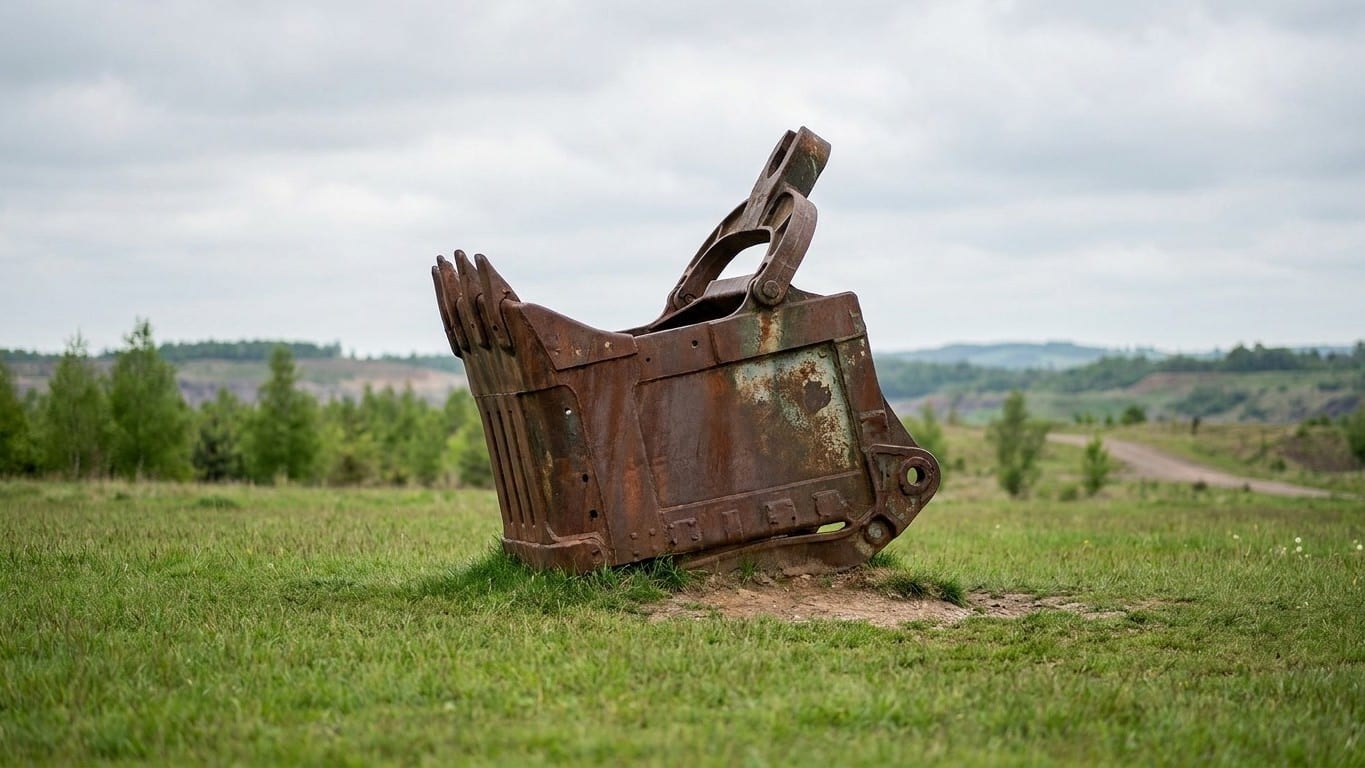
A steel bucket with a capacity of 220 cubic yards (about 168 m³) has stood alone in a southeastern Ohio park since 1999. It is all that remains of Big Muskie, the largest dragline ever built—a machine weighing 13,500 short tons (12,200 metric tonnes) and towering the equivalent of 22 stories. The rest of the beast was cut up with torches and sold for scrap for a sum that seems paltry compared to its ambition: $700,000.
Key Takeaways
- An iconic industrial machine reduced to a single piece: what happens to giants of the past
- 240 feet tall, a 240-ton bucket, 325 tons moved with each bite: numbers that dazzle
- From $25 million to $700,000: how an industrial dream faded
A Bucket Capable of Swallowing Two Greyhound Buses
The figure is dizzying. The 220-yard-cubed, 240-ton bucket stands as a true engineering marvel, installed today at Miner’s Memorial Park within Jesse Owens State Park near McConnelsville. To picture the volume, it could hold two Greyhound buses parked side by side. At full tilt, this steel maw could lift as much as 325 tons of earth and rock in a single bite.
The construction itself was a pharaonic undertaking. The machine was too massive to be shipped in one piece, so it had to be built on site: as early as 1967, more than 300 railroad cars and 250 trucks hauled components to the Muskingum mine. Two years of assembly later, the monster stood 240 feet tall, the equivalent of a 22-story building, perched on hydraulic legs rather than on tracks. Moreover, it did not roll; it walked, quite literally, lifting its colossal frame inch by inch.
An Electric Appetite Worthy of an Entire City
Between 1969 and 1991, Big Muskie hardly ever stopped digging. It ran 24 hours a day, 364 days a year, moving more than 483 million cubic yards of rock and earth. Over its twenty-two years of service, the machine removed more than 608 million cubic yards of overburden, twice the volume excavated during the construction of the Panama Canal, revealing more than 20 million tonnes of coal.
Operating such a behemoth cost a fortune in electricity. Big Muskie consumed power equivalent to lighting up 27,500 homes, with energy bills running into tens of thousands of dollars per hour. A crew of just five people was enough to keep it running around the clock, favoring night shifts since the kilowatt-hour rate was cheaper then. It was this energy appetite, coupled with the collapse in demand for high-sulfur coal in the early 1990s, that sealed its operational fate.
The Law, Not Wear and Tear, Ended the Giant
Contrary to what one might assume, it was not a breakdown that sent Big Muskie to the junkyard. The machine sat idle for eight years after its 1991 shutdown, while salvage attempts were organized. But in 1999, the state of Ohio and the Environmental Protection Agency began enforcing the Surface Mining Control and Reclamation Act, which required the removal of all equipment from former open-pit mines so the sites could be environmentally rehabilitated.
Central Ohio Coal, owner of the rig, found itself cornered. All sales attempts failed; no coal company was willing to bear the cost of dismantling, transporting, and reassembling such a massive machine, especially since few firms still operated open-cut mining with this type of equipment. The demolition contract was ultimately awarded to Mayer-Pollock Steel Corporation. On May 20, 1999, the company elected to use explosives to sever the five-inch cables supporting the machine’s imposing arm. The arm collapsed to the ground in a tangled heap of metal, ending any hope of complete preservation.
The financial tally of this demolition alone highlights the gap between industrial ambition and its twilight: a machine that had cost $25 million in 1969, the equivalent of about $219 million today when adjusted for inflation, was sent to scrap for $700,000. Only the bucket escaped the shredder, miraculously saved to become the centerpiece of a miners’ memorial.
The site where Big Muskie once operated did not vanish entirely: part of the 10,000 acres of rehabilitated land gave birth in 1994 to The Wilds, a wildlife park that today hosts African and Asian species on former mining grounds. An unexpected reimagining for a landscape shaped for twenty-two years by the largest excavator ever built in an American factory.
Sources: industrialscenery.blogspot.com | ohiodnr.gov
