
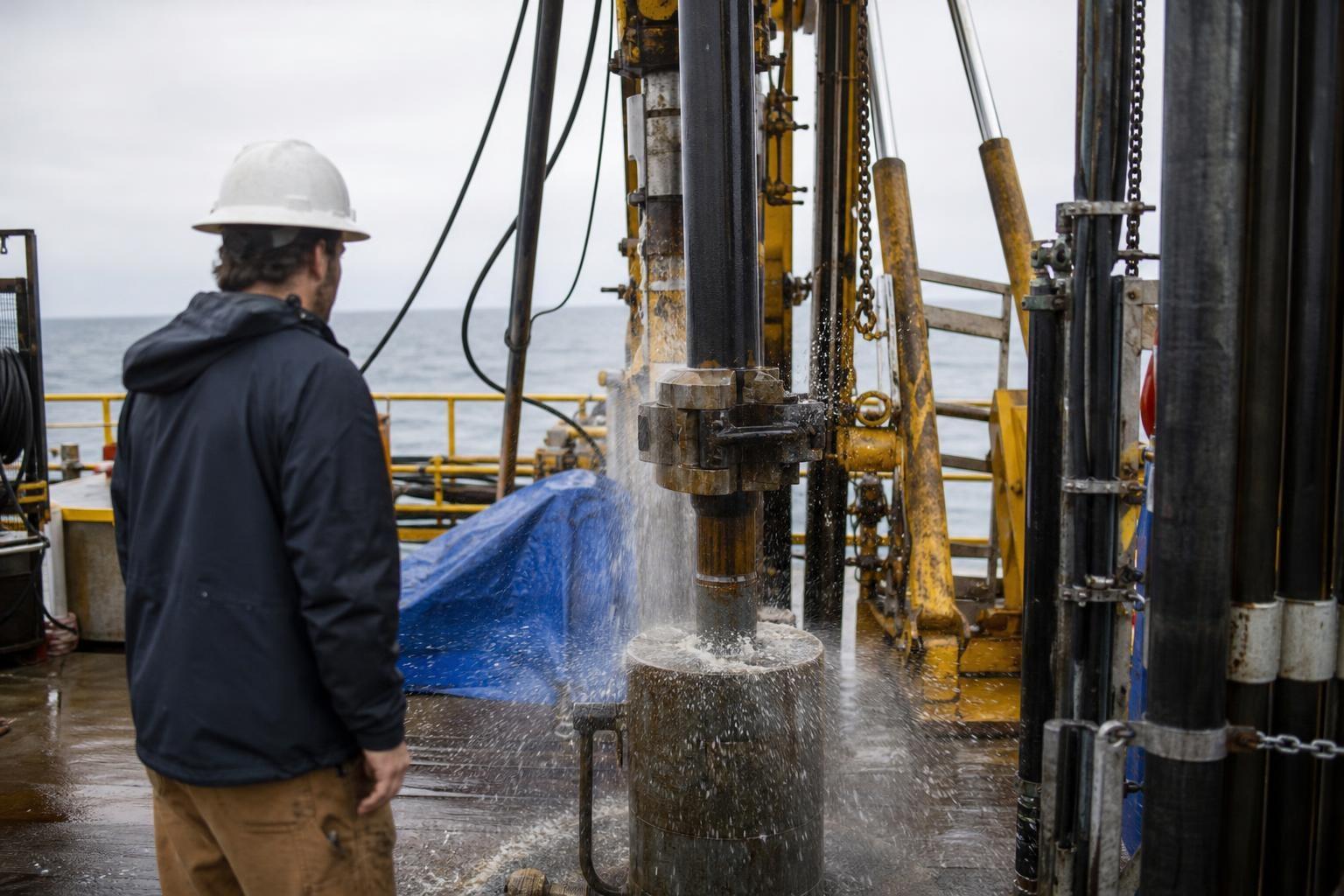
Dawn over the Atlantic is usually a study in motion—wind, waves, gulls, and boats tracing their routes. But beneath that restless surface, scientists have tapped into something still: a vast, surprising store of fresh water, sealed away in the seabed for millennia.
They drilled off Nantucket, testing a hunch born from geophysics and earlier ship-based surveys. The bit cut through layered sand and silt, then into a reservoir that tasted not of brine, but of earth and rain. “It’s a staggering find,” one researcher said, “a freshwater vault tucked under the ocean.”
What Lies Beneath the Waves
Picture a lens of low-salinity water stretching along the continental margin, threaded through ancient sediments and capped by clays. This is not a tidy lake, but a sprawl of porous layers where fresh water lingers, protected from the sea above.
The new drilling confirms what maps and electromagnetic soundings hinted at: a reservoir that could, in volume, keep a city the size of New York supplied for centuries. The number is provocative, but the message is sharper. “Beneath familiar coastlines, we’re still finding the unexpected.”
How a Seafloor Aquifer Forms
During the last ice age, sea levels were lower, and rivers cut wide valleys across what is now continental shelf. Meltwater and rain soaked deep into sandy beds, loading them with fresh water.
As ice retreated and oceans rose, these sand-filled valleys were buried by marine sediments. Clay-rich caps trapped the old freshwater, while natural pressure pushed against saltwater intrusion. The result is a mosaic: brackish here, fresher there, but unmistakably a cache of low-salinity reserves under the seafloor.
How Much, and What It Means
“Enough to quench a megacity for 800 years” is a dramatic benchmark, and it frames the scale. Yet the aquifer is not a giant faucet to swing open. Parts are brackish, and careful pumping is needed to avoid drawing in salt.
The significance is practical and strategic. Lower-salinity water needs less energy to treat than seawater, easing the burden on desalination plants. Coastal towns facing drought, saltwater intrusion, or storm-surge damage suddenly have another option in their resilience toolkit.
- Potentially lower-energy treatment compared with full desalination, especially for slightly brackish zones
- A buffer against drought and storm-driven salinization of coastal aquifers
- A testbed for smarter monitoring, pumping, and recharge strategies under climate stress
Drilling the Unseen
Before the drill ever met sediment, researchers mapped the subsurface with marine electromagnetic arrays and seismic-style imaging. These methods trace salinity and rock textures, sketching where freshwater likely resides.
Cores and well logs then confirm what the maps propose: conductivity drops where water is fresher, pore spaces are connected, and flow can be managed. “It’s like swapping a blurry silhouette for a crisp portrait,” a team member remarked. Each new hole refines a living atlas of the aquifer’s shape and quality.
Not a License to Guzzle
This discovery invites optimism, but it insists on restraint. Pump too fast, and saltwater will advance. Ignore the geology’s patchwork, and wells may pull in sand or lose pressure. Even with careful management, ecosystems can shift if offshore hydrology is disturbed.
There are legal and ethical knots, too. Who controls resources under federal versus state waters? How are fisheries and seabed habitats weighed against municipal demand? “We can’t treat a hidden aquifer as a blank check,” cautioned one scientist. “It’s a finely balanced system that must remain balanced.”
The Energy and Carbon Ledger
Treating slightly brackish water takes less energy than seawater desalination, which is good climate math. But pipelines, offshore platforms, and long-distance delivery add their own footprint. Smarter design—gravity-fed routes, renewable-powered pumps, modular plants—can bend that curve.
The most resilient portfolio blends sources: conserved demand, onshore aquifers, rain and stormwater capture, recycled wastewater, and, where appropriate, the offshore reserve as a controlled buffer.
What Comes Next
Expect a wave of pilot projects: carefully sited wells, continuous salinity monitoring, and adaptive pumping that respects the aquifer’s limits. Models will be tuned with real data, predicting how the reservoir breathes with seasons, storms, and long-term warming.
Community voices will matter. Coastal residents, fishers, and tribal nations will ask hard questions about risk, benefit, and equity. If the answers are honest, this find can become a quiet pillar of water security, not a headline that burned bright and faded.
“Beneath the waves, the planet still keeps secrets,” one researcher mused. This one is clear as a glass of spring water—and just as easy to take for granted. The work now is to be careful, be curious, and use what we’ve found with care.
