
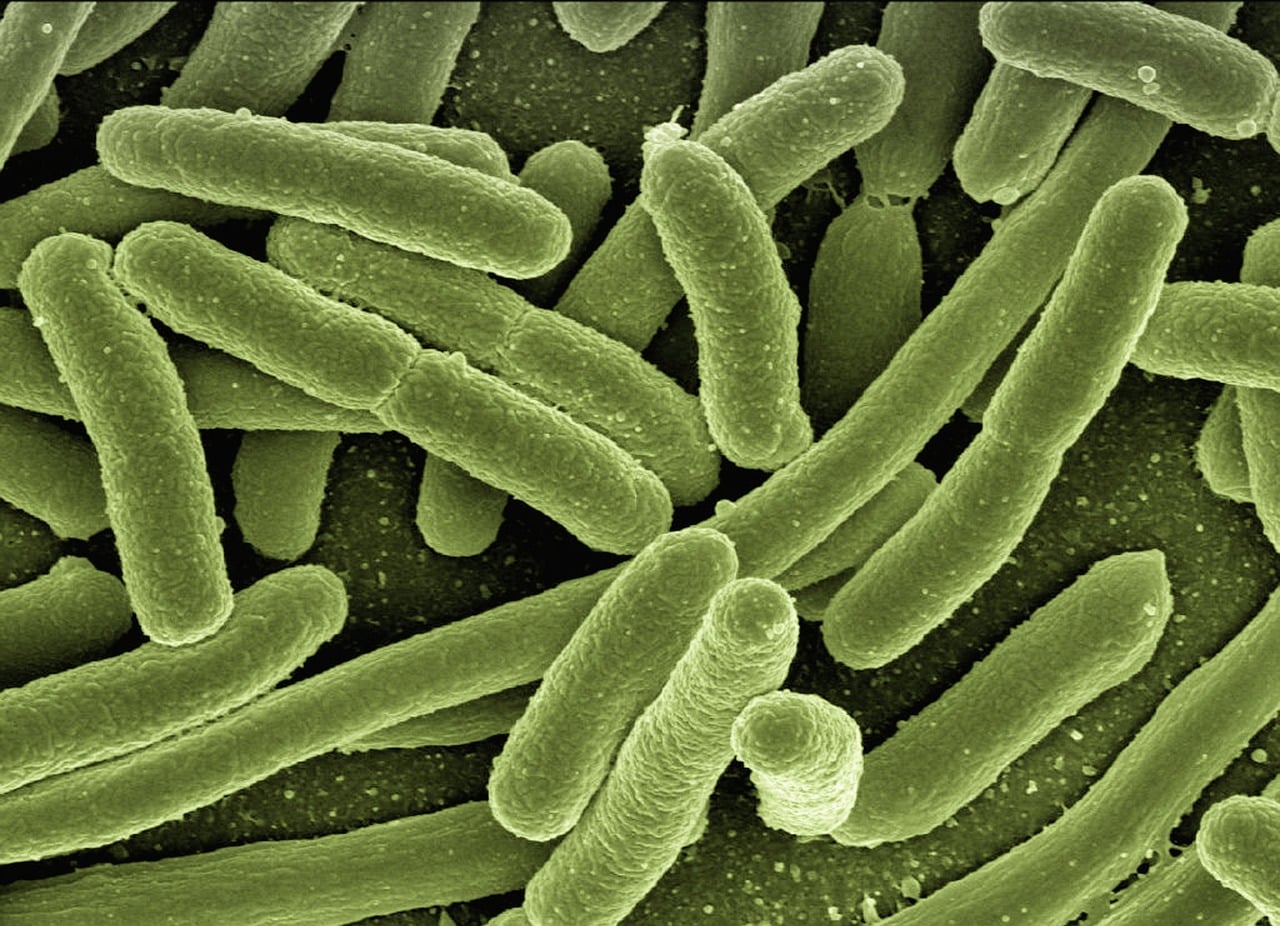
We often hear about bacteria, but what are they really? A bacterium is a living organism composed of a single cell (unicellular). It carries a single DNA molecule, which forms a chromosome. Bacteria can perform the primary functions that define a living being, such as reproduction, transmission of genetic information, and the utilization of substances present in its environment.
Often, the term bacteria strikes us as negative, since we associate it with many diseases. Yet not all bacteria are pathogenic. In fact, a large portion are beneficial to us, aiding in the breakdown and storage of the foods we consume. Regardless of our opinions, bacteria are essential in our ecosystem, notably by participating in the recycling and degradation of organic waste. Bacterial infections produce a variety of symptoms in those affected, depending on the bacterial type (fever, nausea, respiratory problems, wound infections, etc.).
Habitats of Bacteria
Bacteria can be found in virtually every environment. Indeed, some can withstand temperatures approaching 100°C, while others survive in highly saline settings. A few of them thrive in places where the pH is very acidic or very basic.
For some bacteria, the presence of oxygen is essential: they are called strict aerobes. But others cannot survive under these conditions, they are known as strict anaerobes. It may also happen that some bacteria live in oxygenated or non-oxygenated environments. Those that usually evolve in the presence of oxygen—but can do without it—are called facultative aerobe-anaerobes. Those with the opposite lifestyle are aerotolerant anaerobes.
Bacteria populate almost every place on our planet, and they are as present in our bodies as they are in animals and plants
When a bacterium lives inside a living organism, it is said to constitute that organism’s microbiota. The microbiota is the collection of micro-organisms (bacteria, viruses, fungi, yeasts …) residing in an environment called the microbiome.
Nutrition of Bacteria
Regarding their diet, bacteria are not very complicated. That is why some prefer organic or mineral matter that can be found during the decomposition or not of a living being. However, others obtain their sustenance from elements derived from inorganic matter, such as sulfur, nitrogen or the carbon (carbon that comes from organic matter). Some even require light, and perform photosynthesis as plants do — these are called photosynthetic bacteria.
Reproduction of Bacteria
To proliferate in a given environment, a bacterium must reproduce. Therefore, a so-called “mother” bacterium divides into two to yield two “daughter” bacteria. This is reproduction by fission. When conditions are favorable, a bacterium can give rise to two more every 20 minutes!
Read also: What bacteria can transmit to the generations they engender
General Description of a Bacterium
The size of bacteria is on the order of a micrometer. (from 0.1 to 4 μm in width and from 0.2 to 50 μm in length).
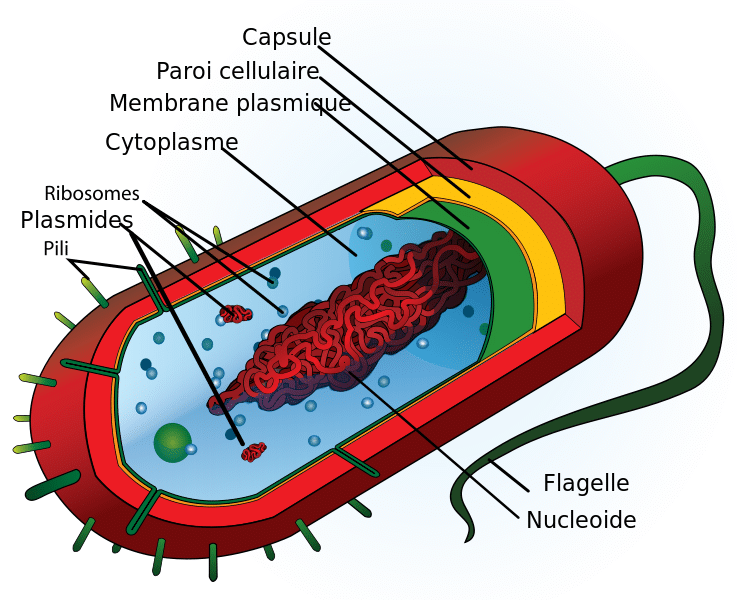
In general, a bacterium possesses :
- An cell wall that gives the bacterium its shape and maintains its structure, thereby preventing it from bursting.
- A plasma membrane, which separates the inside of the bacterium from the outside environment.
- A cytoplasm, which houses all the elements essential to the bacterium’s survival.
- A nucleoid, which is the bacterium’s DNA in a compact form.
- Ribosomes, which drive the production of proteins.
Some more specific bacteria may possess :
- A capsule, which entirely covers the bacterium and thus provides it with a certain resistance against the immune system.
- One or more flagella, for moving in its environment.
- A plasmid, a circular DNA that contains additional genetic information but is not part of the nucleoid and is separate from it. Moreover, it is not essential for the bacterium’s survival. Depending on the plasmid’s features, it can, through the information it codes, enable the bacterium to protect itself from certain antibiotics, or even to have sex pili.
- The sex pili are like tiny hairs and enable bacteria to exchange plasmids.
- The common pili promote the adhesion of bacteria to their surroundings. For example, they contribute to the adhesion of bacteria to our cells.
Different Bacterial Morphologies
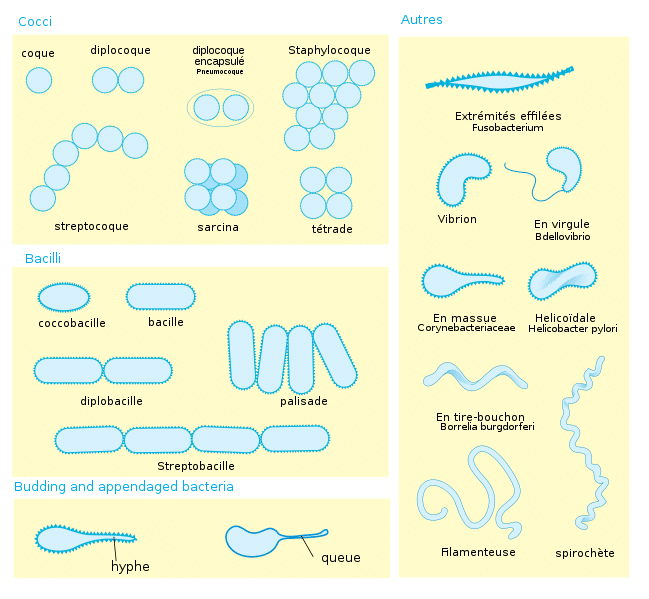
There are various morphologies among bacteria, the main ones being:
- the cocci, which are spherical in shape.
- The bacteria bacilli, which resemble small rods.
Two Main Classes of Bacteria
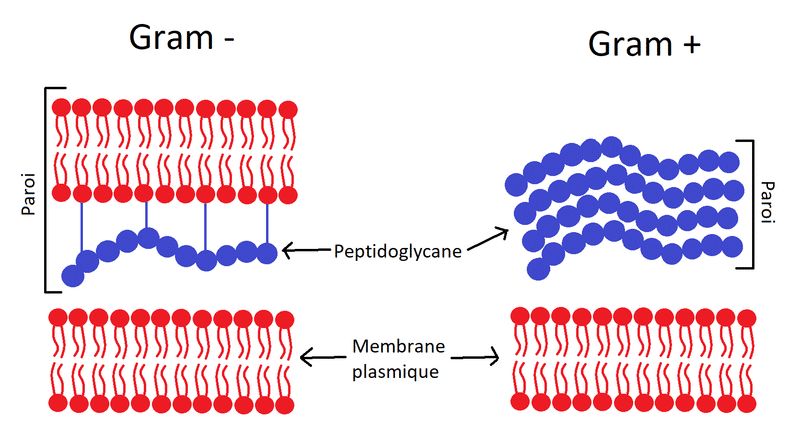
In the bacterial world, a division exists between two categories: Gram-positive bacteria (+) and Gram-negative bacteria (−). This distinction simply stems from the structure of the cell wall.
Gram-positive bacteria possess a cell wall made of peptidoglycan (the layer that composes the wall and protects the bacterium) that is much thicker than in Gram-negative bacteria. Moreover, this layer lies directly outside the bacterium. By contrast, in Gram-negative bacteria, this peptidoglycan is much thinner and is located between two layers of plasma membranes.
Sources : Encyclopédie Larousse – Microbes-edu – Wikipedia
Articles liés :
