
On May 20, 1964, in a remote corner of the Nevada desert, a locomotive-sized nuclear reactor roared to life. For five uninterrupted minutes, it spun at full power, hovering around 500 megawatts, with published figures ranging from 461 to 513 MW, generating roughly 35,000 pounds of thrust. Six weeks later, the program that had given birth to it was wiped off the map. This is the tale of Pluto, one of the Cold War era’s most audacious experiments: the attempt to create a cruise missile powered by an air-breathing nuclear reactor, unshielded, designed to fly over enemy territory and leave behind a radioactive wake.
Takeaways
- A revolutionary nuclear reactor outperformed every test in 1964, delivering unlimited endurance
- The SLAM missile could cruise at Mach 3 while leaving a radioactive trail in its wake
- A problem with no technical remedy doomed it six weeks after its greatest success
A ramjet that never burned a drop of fuel
The principle is one line long, almost childishly simple: air enters at the front, is heated, expands, exits at the rear, and propels the vehicle. That is precisely how a conventional ramjet operates. Yet here, there is no combustion. All ramjets before and after this one heated the incoming air by burning fuel, which fixed the range to how much fuel you could carry. Pluto’s ambition, launched in 1957 under the direction of the Lawrence Radiation Laboratory (the ancestor of today’s Lawrence Livermore National Laboratory), was radically different: substitute the combustion chamber with the heart of a nuclear reactor. The theoretical outcome? Unlimited endurance, since there is no fuel to exhaust.
The missile slated to host this engine bore the designation SLAM, for Supersonic Low Altitude Missile. The plan: launch it from a silo using conventional boosters, then let the reactor take over for a Mach 3 cruise at treetop height, capable of flying at Mach 3 with an unshielded nuclear reactor and carrying more than a dozen hydrogen bombs, its supersonic thunderclap capable of deafening anyone beneath. An unmanned, unstoppable bomber, invisible to radar of the era because it flew so low. On paper, an absolute weapon. In practice, an engineering and radioprotection nightmare.
Five minutes of total success at Jackass Flats
To test something like this, you needed a place where no one would raise questions. The choice fell on Jackass Flats, a Nevada Test Site location later renamed Site 401, where facilities were built for $1.2 million across eight square miles, including six miles of roads, a critical-assembly building, a control building, and workshops. It even required burying 25 miles of petroleum-well tubing necessary to store a million pounds of compressed air used to simulate Mach 3 at sea level.
The first prototype, Tory-IIA, had already proven itself in May 1961 by spinning for a few seconds on a remotely controlled railcar. But its successor, Tory-IIC, represented the real promise: a lighter reactor designed to resemble what genuine flight would demand. Its core housed an astonishing amount of fuel: about 500,000 fuel elements the size of a pencil, manufactured by the Coors Porcelain Company, the early ceramic specialty arm of the Coors brand, which produced high-performance ceramics at the time. These elements were intended to withstand air temperatures near 1,370°C without melting, while enduring aerodynamic stresses engineers estimated to be five times those experienced by the X-15 hypersonic aircraft.
On the day of the big test, anxiety hung heavy: the reactor-control rods that regulated power were themselves operating at extreme temperatures, and a failure could have made a safe shutoff before full power unreachable. None of that happened. On May 20, 1964, the Tory-IIC was wheeled to the test area, connected to a boosted air supply, and the test ran for five minutes at full power; after disassembly for inspection, everything worked perfectly, with no damage. An unexpected bonus: less radiation leaked from the exhaust than anticipated. Technically, the wager was won. Some engineers even celebrated by wheeling a piano to the nearest bar.
Buried in six weeks, for reasons that had nothing to do with technology
And yet, six weeks later, the axe fell. On July 1, 1964, seven years and six months after it began, the Pluto project was canceled by the Atomic Energy Commission and the Air Force. The paradox was stark: never had a program been halted after a technical triumph so clear. The reason wasn’t a defect in the reactor, but a question no one could answer: where could you test a flight test for a missile dragging an unshielded nuclear reactor behind it?
It was impossible to fly over the United States without exposing entire populations to radiation. It was also impossible to fly over the ocean and then drop the missile, since dumping tons of highly radioactive waste into the sea would be indefensible, even by 1960s standards. Due to contamination fears, no flight tests were ever performed: there was no safe terrestrial route, and sinking spent reactors in the sea was deemed unacceptable. Added to this was a stark strategic calculus: intercontinental ballistic missile technology advanced more quickly than anticipated, reducing the need for such costly and provocative cruise missiles. Why build a weapon so dangerous that it could spur the Soviets to develop a counterpart, when ICBMs already fulfilled deterrence duties more swiftly and without dragging a radioactive plume behind them?
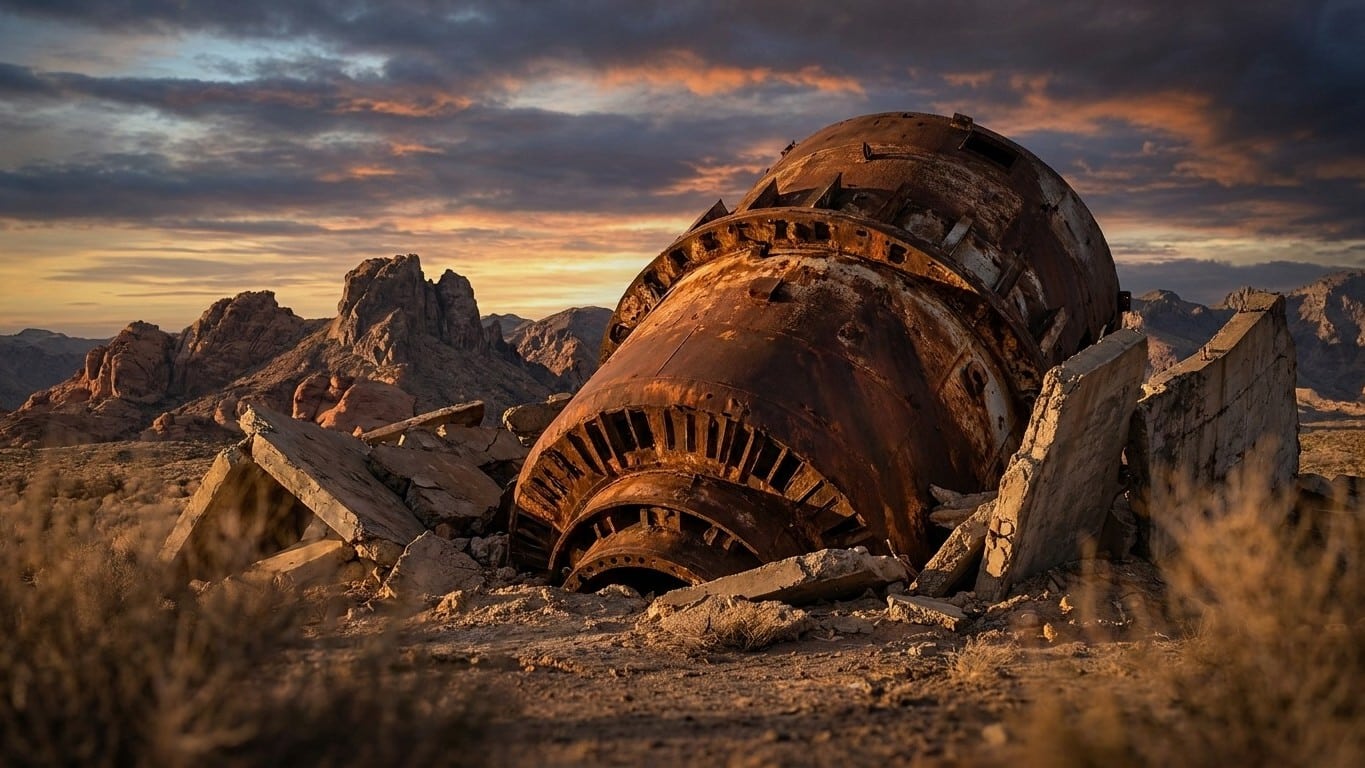
The Jackass Flats site eventually hosted other nuclear-engine tests, particularly the NERVA rocket program, before being permanently dismantled. Today, two Tory reactors lie rusting beneath a concrete and earth cover on this portion of the desert— remnants of a weapon that was technically flawless but never flown. History seldom honors abandoned projects that still worked. This one deserves remembrance: it reminds us that engineering prowess alone does not justify putting a weapon into service.
Sources: projectblackecho.com | aviatorsdatabase.com
