
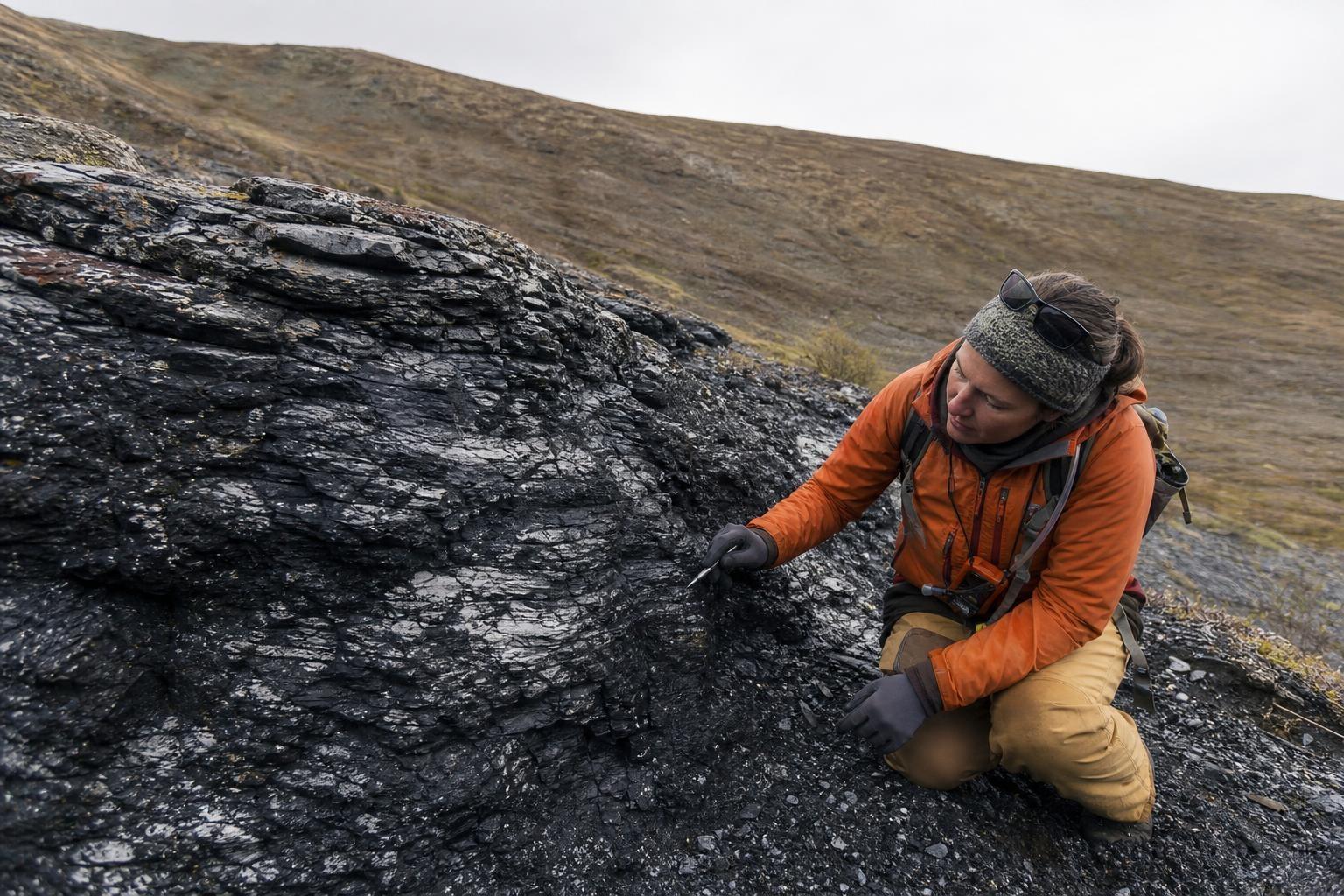
The news out of western Alaska lands with a thud: geologists have mapped an immense body of natural graphite in the hills near the coastal town of Nome, a find that could redraw the EV supply chain in the United States. The black, flaky mineral that becomes every battery’s anode isn’t flashy, but it is decisive—“the quiet workhorse of the battery age,” as the saying goes.
What’s in the rocks, and why it matters
Field teams have stitched together a detailed map of graphite-rich schist stretching along a tundra ridge, pointing to a deposit that is both laterally extensive and unusually consistent. In practical terms, that hints at long-life, scalable production, the kind an industry can plan around.
Graphite is the skeletal framework of a lithium-ion battery anode. Without it, lithium ions have nowhere to park during charging—“you don’t drive on electrons without anodes,” as battery engineers like to say. Today, over 90% of the world’s anode material is processed in China, a concentration that keeps automakers awake at night. A domestic source changes the math on cost, resilience, and national security.
From tundra to anode: the next steps
Finding a giant deposit is act one; turning it into anode-grade material is the play. Natural graphite must be mined, concentrated, purified, and then shaped into spherical particles before it’s coated and thermally treated. Each step has exacting standards—think parts-per-million impurities and micrometer-scale morphology. The goal isn’t just tons of concentrate; it’s meeting EV-grade specs, every day, for years.
Permitting in Alaska adds its own clock and complexity. Federal and state reviews, tribal consultation, wildlife and water studies, infrastructure routing through permafrost and muskeg—these aren’t footnotes, they’re the story. “The map is the starting line, not the finish,” is a mantra that’s already making the rounds in Nome.
Local stakes, local voices
Any big resource play touches people, not just ore. Western Alaska communities balance wage jobs and contracting opportunities against worries about fish, caribou, and subsistence. Roads that unlock a mine can also reroute lives. In a region where logistics can hinge on a single storm, trust must be earned, early and often.
Smart developers bring more than promises. They publish water baselines, co-design monitoring with local organizations, and map dust and traffic controls before the first drill turns. Benefits that feel tangible—training programs, scholarships, internet backhaul, clinic funding—speak louder than glossy renderings.
Strategic ripple effects
If this deposit advances to production, it could anchor a fully domestic anode supply: mine in Alaska, refine in the Lower 48, ship to cell plants rising across the Midwest and the South. That alignment dovetails with federal incentives that reward North American content and diversified sources.
Automakers want supply that is:
- Transparent and auditable on ESG metrics
- Stable across election cycles and trade spats
- Scalable to multi-gigawatt-hour demand
- Price-competitive without hidden subsidies
A large, verifiable resource with an integrated downstream plan ticks all four boxes.
The environmental ledger
Graphite can be produced by mining or synthesized from petroleum needle coke; neither path is impact-free. The bar for “responsible” is moving upward: lower acid use, closed-loop water, renewable power, and end-of-life recycling. Natural graphite with clean processing can beat conventional footprints, but only if the flowsheet is engineered for efficiency from day one.
There’s also the climate context. Every ton of graphite that displaces higher-emission routes helps compress the lifecycle emissions of EVs, turning a local project into a global benefit—provided safeguards actually hold in the field.
Money, markets, momentum
Graphite prices have been volatile, whipsawed by demand surges, policy shifts, and inventory cycles. Producers that survive the swings pair long-term offtake contracts with flexible capacity, and they keep a tight grip on quality so every shipment qualifies for premium pricing. Securing strategic backers—from automakers to defense-linked funds—can bridge the capital gap between geology and a running plant.
EV adoption isn’t a straight line, but the arc keeps bending upward. Even conservative forecasts point to a structural anode shortfall later this decade. Big, high-grade, logistically reachable resources—especially inside the U.S.—will set the tempo for battery manufacturing expansion.
What to watch next
Eyes now turn to three deliverables: an updated resource estimate that cements the scale, a pilot processing campaign that proves EV-grade specs, and binding agreements with buyers that validate economics. If the drill core and pilot furnaces keep singing the same song, the country may have found the black backbone of its battery future in the windy hills above Nome.
