
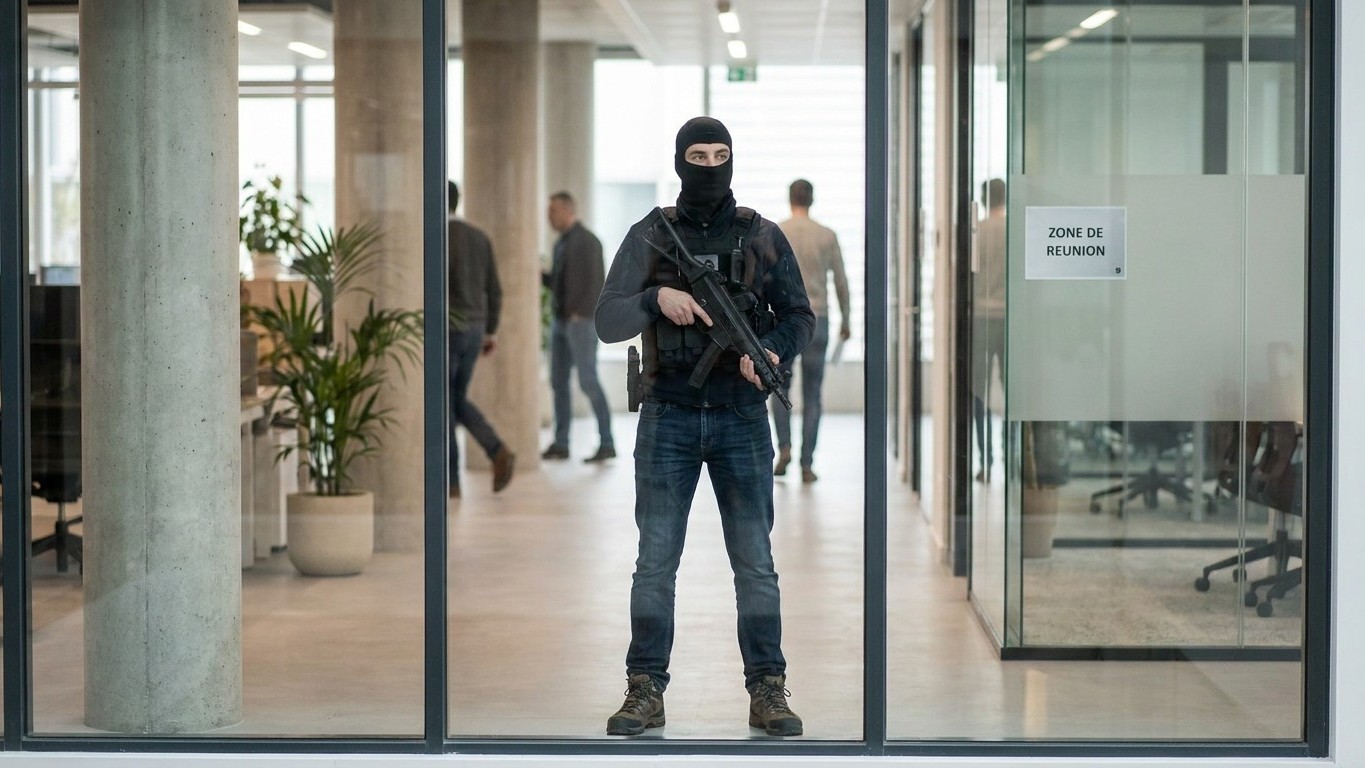
A lone man, dressed in jeans and sneakers, his face concealed beneath a balaclava, breaches the main entrance of a luxury hotel complex in Nairobi as gunfire continues inside. That day, January 15, 2019, a British serviceman on a training mission in Kenya would spend several hours moving back and forth within the besieged buildings to extract civilians hiding in offices and kitchens.
Key points
- A British elite soldier enters a besieged building alone, without a formal order
- He goes floor by floor to liberate more than 700 civilians holed up in offices
- His feat, initially secret, raises an ethical dilemma within the special forces
A complex of offices and a hotel turned into a trap
The assault strikes the DusitD2 complex in Nairobi’s upscale Westlands district, a hub favoured by expatriates and multinational headquarters. The attack begins around 2:30 p.m. local time, shortly after a suicide bomber detonates near the centre of the complex, at a restaurant, before four attackers linked to Al-Shabaab carry out a mass shooting for more than 22 hours. The final toll stands at 21 civilians killed, one Kenyan police officer dead, and the five assailants shot dead.
On the ground, panic is immediate. Some people hide under desks while bullets shatter glass doors, others leap from windows or flee outside under fire. More than 700 civilians would eventually be evacuated from the complex after a siege that echoed the 2013 Westgate mall attack in the same Nairobi district, which left 67 dead. The venue, known for housing international firms, quickly becomes a battlefield in an urban war.
Without orders, without a uniform, he enters anyway
The British serviceman, a member of the very discreet 22nd SAS Regiment, is not there by chance, but he is not on an operational mission either. He happened to be in Kenya to assist in training the country’s security forces when jihadist militants from Al-Shabaab launched their assault on the DusitD2 hotel complex on January 15. Warned of the situation as he went about a private errand, he receives no formal command to engage. The senior non-commissioned officer of the 22nd SAS squadron was on a personal outing when his help was requested as the incident unfolded, according to sources.
His response is captured in a single image that would become globally famous. At the height of the firefight, the seasoned British operator pulls on a balaclava and grabs his rifle, then enters the hotel, still wearing his jeans and hiking boots. Inside, he does not work alone for long: he is joined by Dan Prastalo, a Slovenian with the diplomatic protection service, and the two begin clearing floor by floor through the office block and the car parks while the attack rages on.
The two men advance methodically, room by room, kicking open doors to offices and kitchens where terrified employees had barricaded themselves. Footage shows the operator in jeans, sneakers and ballistic vest, with his face hidden by a balaclava, forcing doors and aiding the wounded. According to accounts gathered at the time, sources told the BBC that he opened fire on the Islamist militants as he entered. The siege lasts far longer than anyone could have anticipated: more than twelve hours pass before Kenyan forces declare the site secure.
A viral photo, a name kept secret then revealed
The image circulating in the global press the following day offers no hint about the identity of the masked man. In keeping with the secrecy surrounding Britain’s special forces, the AP photographs him as he chats with Kenyan security forces before entering a building in the hotel complex to secure it. The Ministry of Defence declines to comment, a standard stance for such units. The nickname “Obi Wan Nairobi” soon spreads on social media, in reference to his discretion and effectiveness.
Only later does official recognition arrive. The special forces soldier receives the Conspicuous Gallantry Cross for the bravery displayed during the DusitD2 hotel complex attack in Nairobi in January 2019. This award, the second-highest British decoration for valour in combat, crowns an intervention conducted without formal authorization. A rare case for a serving SAS member, his name would eventually become public: Christian Craighead.
The rest of the story takes an unexpected turn that outstrips the feat itself. Christian Craighead, a former SAS warrant officer, claims that colleagues in the chain of command felt he set a poor example for younger troops by not seeking permission to rescue hostages during the armed assault. A year after leaving the regiment’s discreet life at Hereford, his fame takes on an unanticipated diplomatic dimension: according to the British press, he joins Donald Trump’s security detail for his inauguration in Washington, an engagement announced for January 20.
Sources: x.com | lbc.co.uk | sofrep.com
