
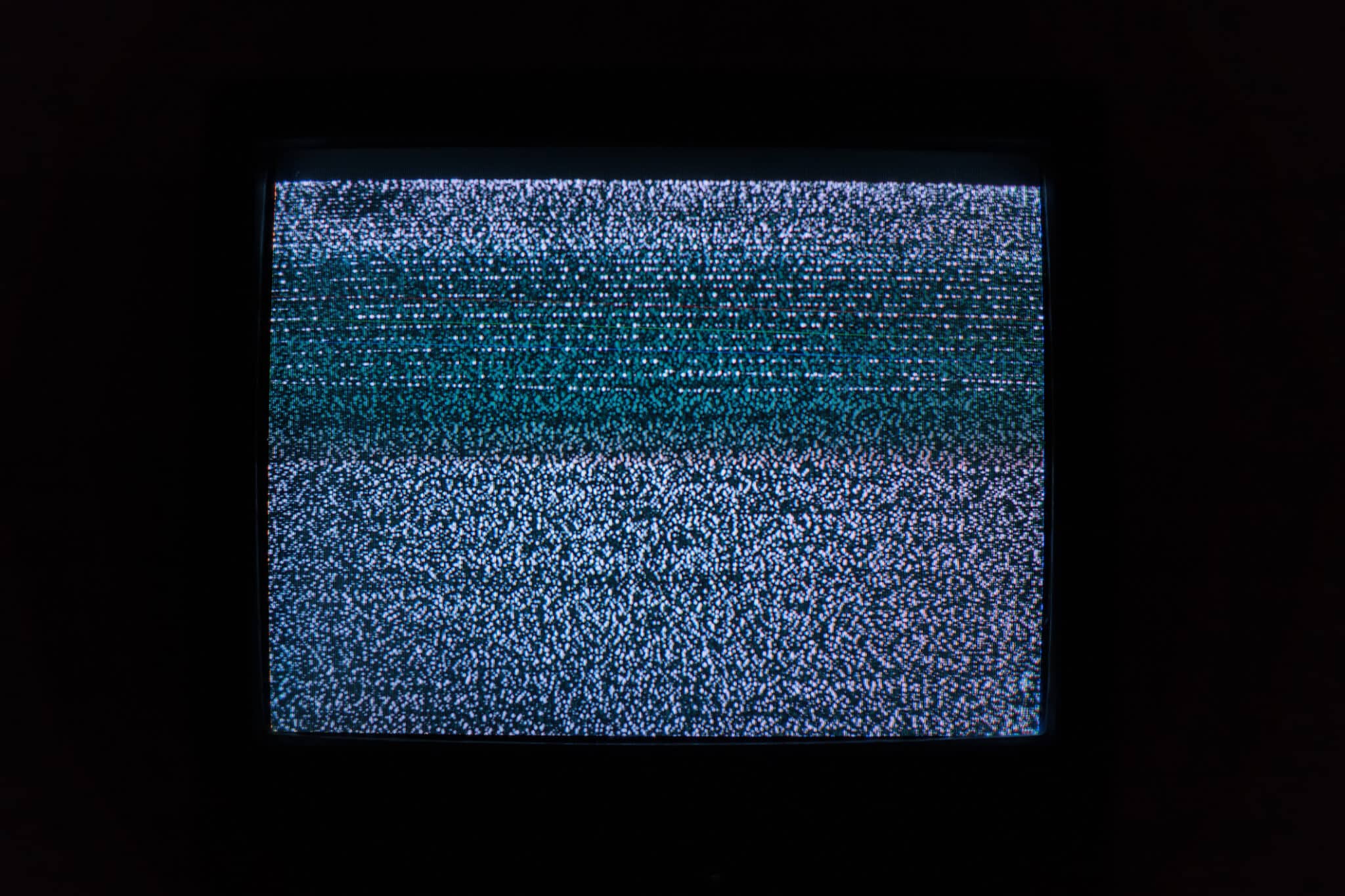
Several decades ago, a familiar static on old analog televisions became far more than mere interference. This visual phenomenon, often perceived as ‘snow’ on the screen, actually revealed a fascinating cosmological secret: the cosmological microwave background radiation from the Big Bang.
A Strange Omnipresent Signal Linked to the Big Bang
The fascinating story of the discovery of the cosmic microwave background (CMB), or cosmological diffuse background, goes back to 1964, when Arno Allan Penzias and Robert Woodrow Wilson were working at Bell Labs’ Holmdel radio telescope in New Jersey. Penzias and Wilson had initially detected a mysterious background noise, a constant signal present no matter which direction the telescope was pointed. This noise was comparable to the static you might hear on a poorly tuned radio.
At first, the two researchers suspected that the noise came from the telescope itself, from urban interference, or even pigeons nesting in the telescope’s antenna. However, after ruling out these potential sources of disturbance, the noise persisted in all directions irrespective of the portion of the sky toward which the telescope was oriented.
Ultimately, Penzias and Wilson realized that the noise was in fact the CMB, a residual radiation from the Big Bang that bathes the Universe. This radiation would have been emitted when the universe was still very young (about 380,000 years old).
What is the Cosmological Microwave Background?
For context, the Big Bang is the cosmological model that describes the origin of the Universe. It posits that it began from an extremely hot and dense state and has since expanded. Its early stages were characterized by extreme conditions with enormous temperatures and densities.
Around 380,000 years after the Big Bang, it had cooled enough to allow the formation of the first atoms, mainly hydrogen and helium. It was at this moment that the cosmic microwave radiation was emitted. At that stage, the Universe had become sufficiently transparent to allow photons (light particles) to travel freely through space. These emitted photons then cooled, dropping from extremely high temperatures to the cooler temperatures associated with microwaves.
The discovery of the CMB by Arno Allan Penzias and Robert Woodrow Wilson in 1964 thus provided crucial evidence for the Big Bang theory.
Un signal capté par nos antennes
Radio telescopes are not the only way to access the cosmic microwave background radiation (CMB). If you lived through the era of analog televisions or owned an analog radio, you are likely familiar with the remnants of the Big Bang. Here is how it works: when you were between channels on an old analog TV, the screen often displayed a snowy pattern or static. This visual interference was a common phenomenon during the era of analog signals. A portion of this static came from the famous cosmic microwave background radiation. Indeed, television and radio antennas picked up various signals, including a portion of the CMB.
In other words, the crackles on old analog televisions were partly the result of detecting the cosmic microwave background radiation, adding a cosmological dimension to a daily experience.
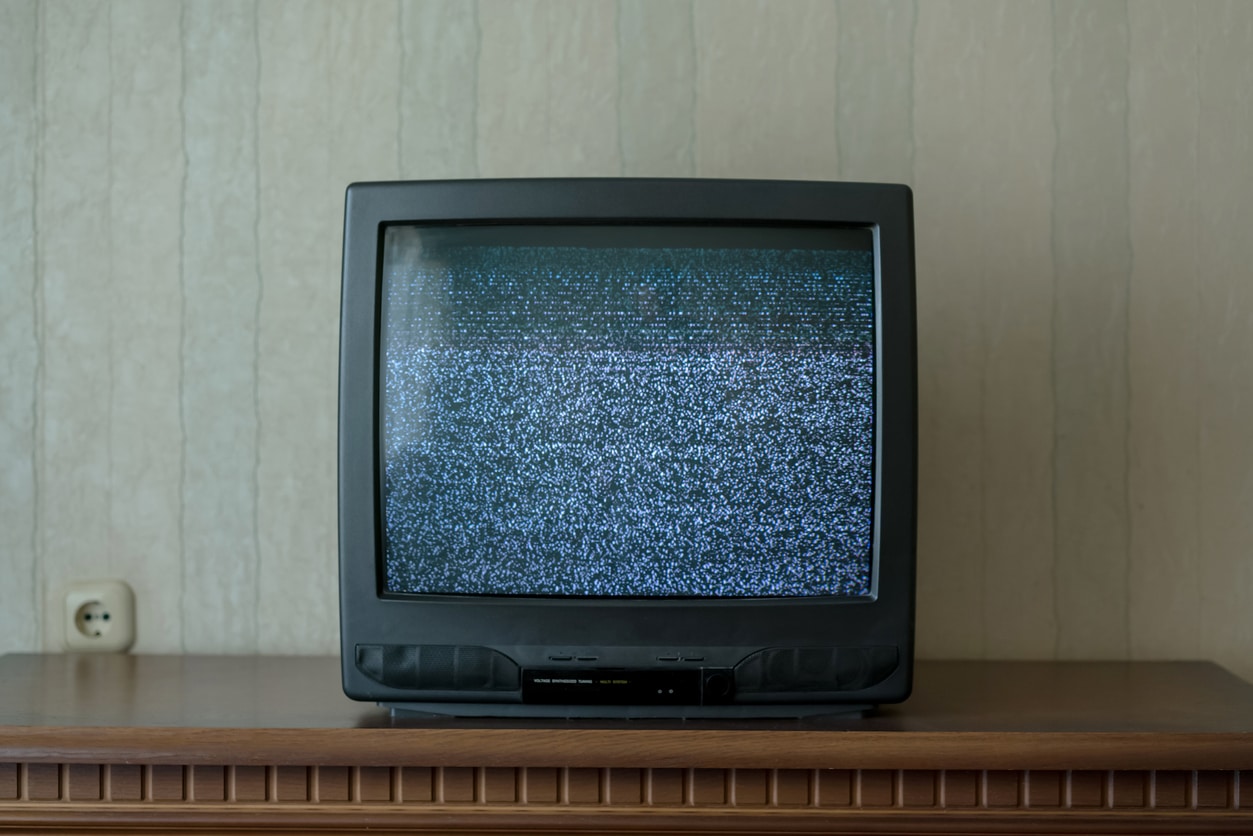
However, it is important to note that most of the static was due to other forms of interference, such as unwanted electromagnetic signals. This fossil radiation ultimately accounted for only about 1% of the “snow” visible on televisions of the era.
With the transition to digital television, the static as it was known on analog TVs has largely disappeared. Digital transmission is less prone to these forms of interference.
