
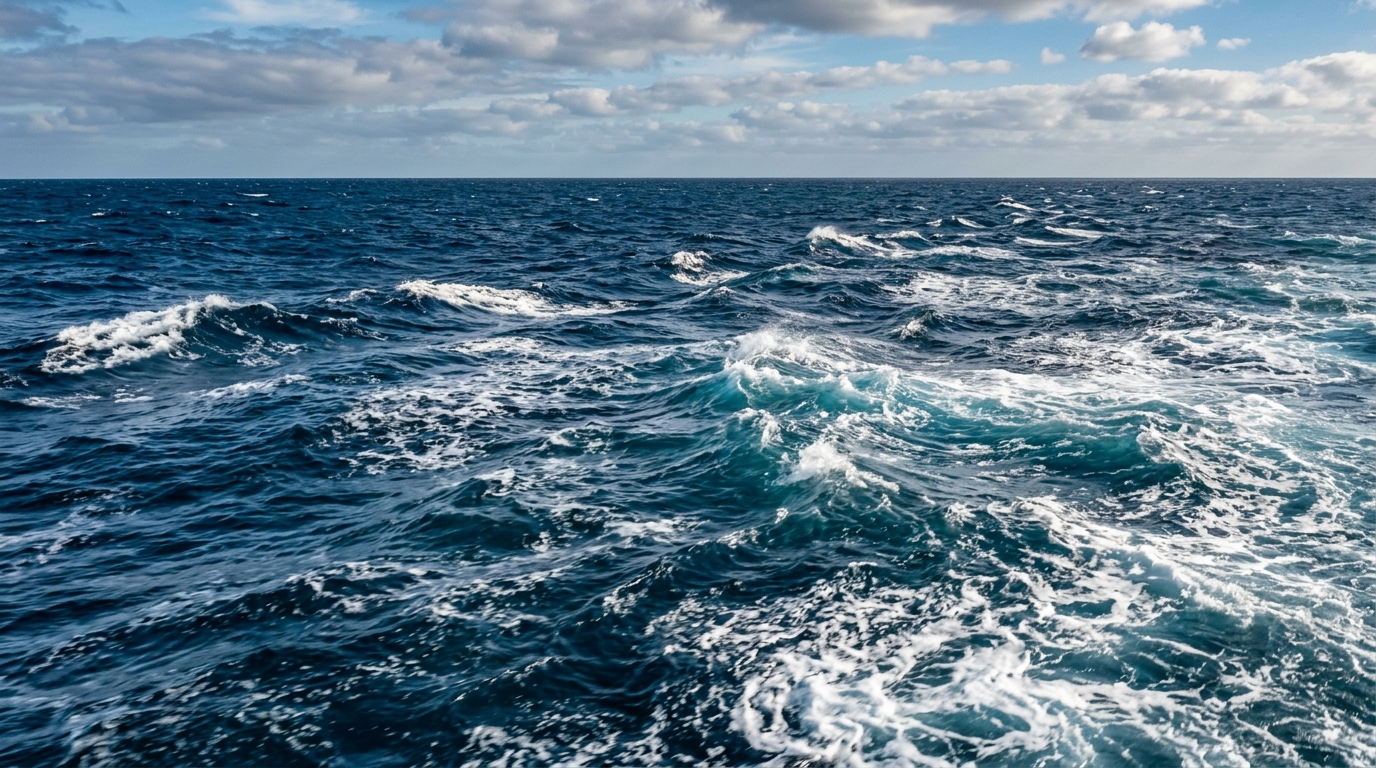
There was a time when marine heatwaves were discussed as if they were just oceanographic novelty—an heat spike here, an anomaly there, a few years separating two notable episodes. These phenomena intrigued scientists but didn’t really alarm the general public. But that era seems truly behind us. In the heat of summer, as our beaches welcome swimmers and the Mediterranean records temperatures, a much larger reality unfolds in the depths. What we once thought rare has become recurring, and what we deemed exceptional is now settling in as a new normal. Let us dive together into this transformation, as discreet as it is spectacular.
When the exceptional becomes the new normal for the oceans
Imagine a heatwave. You know, those days when the air becomes stifling, when asphalt seems to melt and everyone desperately seeks a shaded corner. Now transpose this phenomenon beneath the surface of the sea. That is exactly what a marine heatwave is: a prolonged period during which the water temperature exceeds well beyond the usual values for a given region and season. Except that underwater, you cannot simply turn on a fan or dive into a pool.
For a long time, these episodes were perceived as weather accidents, isolated surges in the grand balance of the oceans. But observations made on a planetary scale now tell a completely different story. What previously belonged to a point anomaly is becoming a permanent trait of the face of our seas. The oceans, these immense thermal regulators of the globe, are changing their behavior before our eyes.
What the numbers reveal: an acceleration no one had anticipated
This is where the picture becomes truly striking. A worldwide analysis, embracing all ocean basins, has allowed us to quantify the increase in the frequency and the intensity of marine heatwaves. The finding is unequivocal: these phenomena are now more numerous, longer-lasting, and more violent than they were just a few decades ago.
Practically, where the ocean formerly experienced only a handful of days of extreme heat per year, it now endures a far greater number. Some regions record episodes that stretch over several weeks, even months. And that’s not all: the intensity itself is increasing, with temperature anomalies more and more pronounced compared to reference averages. In short, not only do these underwater heatwaves strike more often, but they strike harder as well. A double acceleration that the scientific community had not anticipated with such clarity.
Under the surface, ecosystems that suffocate
Behind these figures lies a silent drama. Marine life, unlike us, cannot flee or adapt as quickly as the climate evolves. Coral reefs, true underwater cities housing a thriving biodiversity, are among the first victims. Exposed to excessive heat, they bleach, lose their vibrant colors, and, too often, die.
But reefs are not the only ones affected. The kelp forests, these vast seaweed meadows that blanket certain seabeds, the seagrasses, the shoals of fish, and even the tiniest planktonic organisms, bear the brunt of these heat waves. Some species migrate to cooler waters, disrupting entire food webs. Others, unable to move, simply disappear. It is a balance patiently woven over millennia that falters, with cascading repercussions whose scale we are only beginning to grasp.
What these upheavals portend for tomorrow
It would be tempting to believe that these events concern only deep-sea creatures. That would be a mistake. The oceans nourish billions of people, regulate our climate, and absorb a substantial portion of the heat and carbon dioxide we emit. When the seas warm persistently, it is the entire balance of our systems that becomes fragile.
The consequences are already taking shape: the depletion of fisheries resources, potentially more violent storms, changes in ocean currents that influence our weather even along the French coast. Fishing, coastal tourism, and even the food security of many populations could be directly affected. What is unfolding offshore from our summer beaches thus goes far beyond the mere comfort of the bather.
Ultimately, these marine heatwaves that we once believed to be exceptional prove to be the symptom of a much deeper and more enduring change. They remind us that the ocean, vast and mysterious as it is, is not an immutable entity but a living system that responds to our actions. The question now is simple and dizzying: will we heed this signal before the new norm becomes irreversible?
