
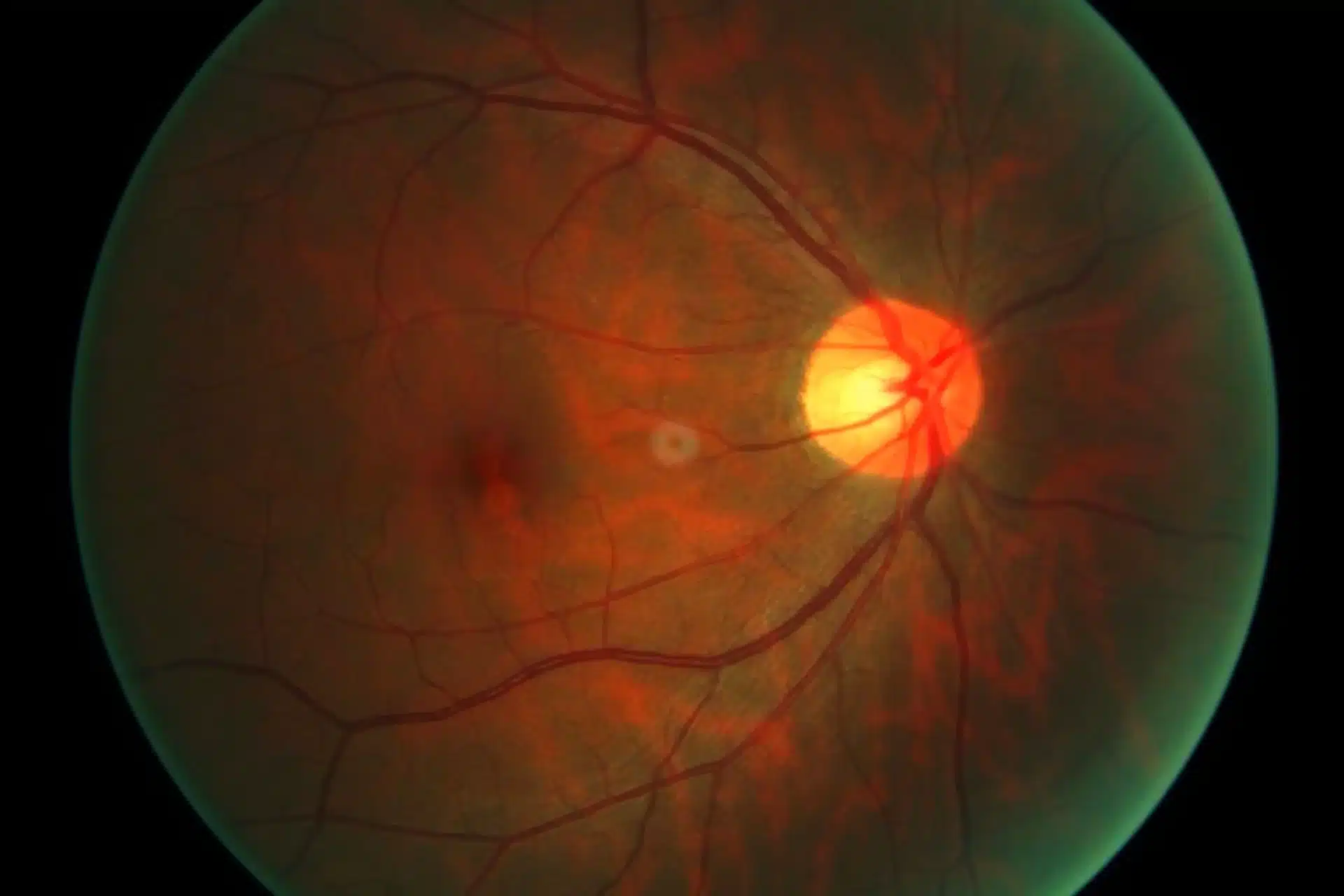
For the first time, a gene therapy designed to reverse aging at the cellular level has been administered to a human patient. The Boston-based startup Life Biosciences, cofounded by a Harvard geneticist, targets the neurons of the optic nerve in patients with glaucoma. A historical advance — but researchers warn that a failure could have disastrous consequences for the entire field.
What you will learn
- How ER-100 therapy actually works and why the eye was chosen as the first testing ground
- What is the real tumor risk associated with Yamanaka reprogramming factors
- What these trials represent in the global race for cellular rejuvenation
A First Patient, a World-First
Four months ago, the U.S. FDA gave its green light. This week, Life Biosciences crossed the symbolic threshold: a first patient received a dose of ER-100, the startup’s longevity-focused gene therapy.
The stated objective is precise and clinically legitimate: to treat glaucoma by regenerating retinal ganglion cells — the neurons that connect the eye to the brain and that the disease destroys gradually and irreversibly. But behind this concrete medical aim lies a far more vertiginous ambition: to demonstrate that aging can be reversed at the cellular level in a human being.
The Foundations: Harvard, a Nobel, and a Reset Promise
The therapy developed by Life Biosciences rests on two premier scientific pillars.
The first is the work of geneticist David Sinclair, cofounder of the company and a researcher at Harvard Medical School. His laboratory has shown that activating three specific genes can regenerate neurons and reverse vision loss in aged and glaucomatous mice. These results, published in reference journals, formed the proof of concept on which Life Biosciences built its strategy.
The second pillar is even more fundamental. The therapy leverages the Yamanaka factors — the genes identified by Nobel Prize in Medicine laureate Shinya Yamanaka, capable of reprogramming differentiated adult cells back to a state close to pluripotent stem cells. A kind of biological factory reset that erases the aging marks written in the epigenome.
The Eye as a Testing Ground: A Deliberately Prudent Choice
Life Biosciences did not choose glaucoma by chance. The eye is a relatively isolated organ from the rest of the body — a valuable feature when testing a therapy whose potential side effects remain poorly understood. If something goes wrong, the likelihood that consequences spread to other systems is significantly reduced.
The drug design adds another layer of safety. ER-100 is activated only when patients simultaneously take doxycycline, a common antibiotic. In the absence of this antibiotic, the therapeutic genes remain dormant. This control system allows the treatment to be activated for a defined period — eight weeks in this protocol — and then turned off.
Sharon Rosenzweig-Lipson, the company’s chief scientific officer, emphasizes the value of this prolonged and continuous activation compared with the episodic testing customary in the field: sustained exposure should enable more complete reprogramming and a better safety profile.
The Risk No One Wants to Downplay
But it is precisely the promise of these genes that alarms part of the scientific community. The Yamanaka factors are powerful — and that power comes with a documented downside. In earlier experiments, their activation produced teratomas: unusual tumors containing cells partially differentiated into teeth, hair, eyes, or fragments of organs.
More broadly, cellular reprogramming could theoretically lead to uncontrolled proliferation — cells that regain a juvenile yet undifferentiated behavior, akin to cancer cells.
Pete Williams, a neurobiologist at Australia’s Ophthalmic Research Centre, summarizes the risk with a candor that cuts against the usual industry excitement: if this goes wrong, the consequences for the entire field could be catastrophic. A spectacular failure would stall years of research and billions of investments — not to mention the repercussions for the patient involved.
Far from Immortality Dreams, but a Real First Step
It would be inaccurate to present these trials as the cradle of immortality. Karl Pfleger, an investor in a British rival of Life Biosciences, is blunt: the optimistic scenario is that this could treat certain cases of blindness and spur research. There is no miracle pill to instantly rejuvenate.
Yet David Sinclair envisions more. He announced plans to develop an oral form of his genetic reprogramming therapy, as part of an XPrize competition with a prize pool of $101 million. The official objective of the prize: to restore ten years of biological life in a patient within less than a year of treatment. An ambition that shows where some players in the field hope to go — even though the path there begins with cautious clinical trials, in an isolated organ, with a few dozen willing patients.
This first patient treated with ER-100 marks a date. Not the end of a quest, but perhaps the true beginning.
Sources: Life Biosciences Announces First Patient Dosed in Phase 1 Trial of ER‑100 for Optic Neuropathies (lifebiosciences.com) | ER-100 Enters Optic Neuropathy Trial (theophthalmologist.com)
Article prepared with the help of AI · Our method
