
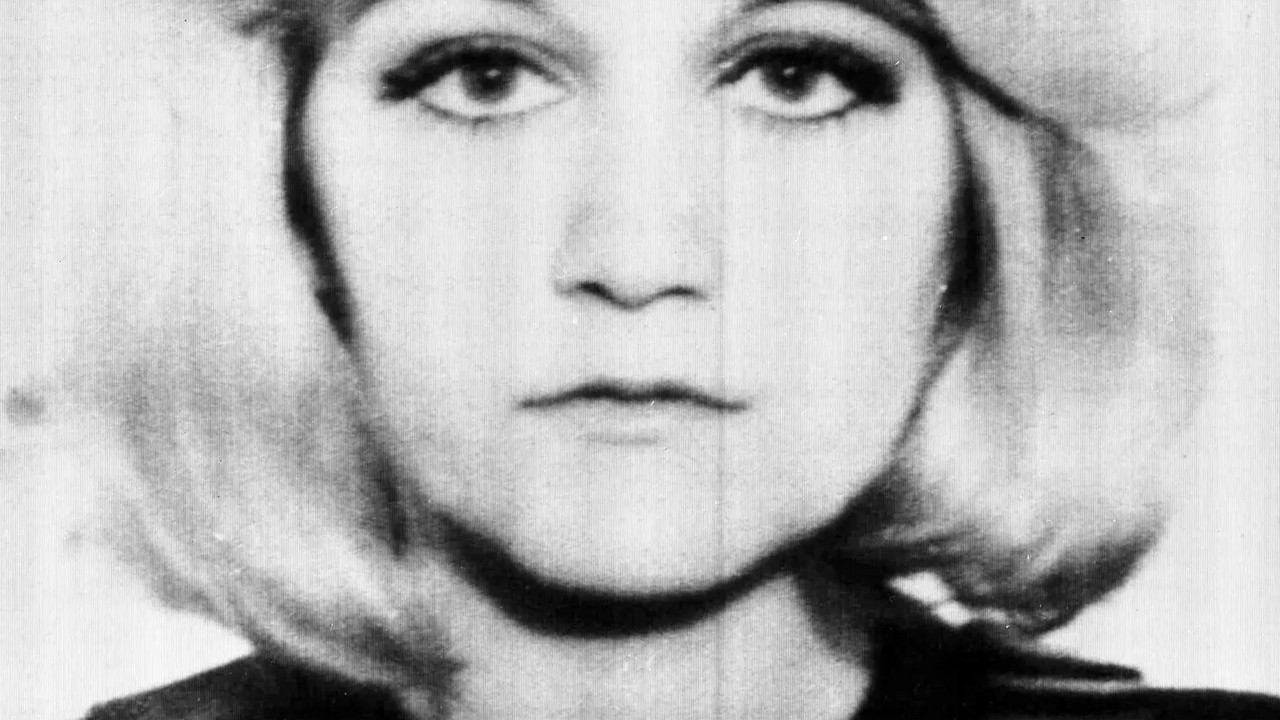
Twenty-eight people boarded this JAT Yugoslav Airlines flight on January 26, 1972. Twenty-seven would die. Only one would survive, literally plummeting from the sky, trapped in a section of fuselage amid a service trolley. Her name: Vesna Vulović, a 22-year-old Serbian flight attendant who ideally should not have been on that aircraft that day.
Vesna Vulović was not meant to be on the DC-9 of JAT that January 26, but a mix-up with another attendant who shared her first name caused her to board this Belgrade–Copenhagen leg. A simple administrative misunderstanding. The kind of error that is usually forgotten after a week, yet she paid for it with a lifetime of reconstruction. She understood immediately that it was a mistake, the airline trying to contact another Vesna. “A small error, yet I got my first trip to Denmark because of it,” she recalled.
To Note
- An airplane explodes in mid-flight over Czechoslovakia with 28 people aboard
- A sole survivor falls trapped inside a fuselage fragment at an altitude of 10,160 meters
- An incredible record: the highest fall survived without a parachute ever documented, recognized by Guinness in 1985
A Bomb, Three Fuselage Pieces, and One Survivor
The aircraft was flying well above ten thousand meters when everything changed. According to the official accident report, an explosion tore the DC-9 apart in flight. The route from Stockholm to Belgrade took the plane over Czechoslovakia, where the aircraft broke into three pieces. At the time, investigators concluded the catastrophe did not stem from technical failure or an accident; the Czechoslovak civil aviation authority determined the explosion was caused by a bomb planted in a suitcase in the aircraft’s baggage hold. Suspicions quickly pointed toward exiled Croatian nationalists, but no arrests were ever made.
The aircraft disintegrated over the snow-clad Bohemian mountains near the village of Srbská Kamenice. Of the twenty-eight occupants, twenty-seven died on impact. Vesna Vulović, however, fell trapped in the central section of the fuselage. She landed inside the central fuselage piece, her body wedged by a service cart; the pins and the snow cushioned the final impact. An almost improbable scenario: the metal cart, meant to transport drinks and meals, acted as a protective shell at the moment of ground contact.
Found by a Former Military Doctor in the Snow
The rest reads like a novel. A village resident heard screams coming from the forest. She was discovered by a villager, Bruno Honke, who heard her cries amid the wreckage. The man did not improvise: Honke had served as a doctor during World War II and managed to keep Vulović alive until help arrived. Without this skill learned three decades earlier on other battlefields, the tale might have had a very different ending.
The medical record at the hospital was staggering. Vulović spent days in a coma and months in the hospital. She sustained a skull fracture, three broken vertebrae, broken legs, fractured ribs, and a pelvic fracture. She remained in a coma for 27 days and faced temporary paralysis from the waist down, but she survived and eventually regained the use of her legs. Most strikingly, she walked again after just 10 months. For a spine broken in three places, that recovery time was a feat few surgeons would promise.
A Record Never Approached in Fifty Years
Thirteen years after the accident, the feat entered the annals. Vulović earned a place in the Guinness World Records in 1985 for “the highest fall survived without a parachute.” The ceremony had the air of a dream for a 1960s rock fan: at the Guinness World Records Hall of Fame ceremony in 1985, Paul McCartney presented Vesna with a certificate and a medal for this record-high fall without a parachute. Vesna and her friends had grown up in Yugoslavia listening to the Beatles, which made the moment particularly poignant.
To put the number in perspective: a fall of 10,160 meters, or 33,333 feet, above Srbská Kamenice. That is more than eleven times the height of the Eiffel Tower, or the equivalent of a free fall of more than a minute and a half before impact. Half a century later, no other documented case has matched this record. Vesna survived a fall of 33,333 feet (10,160 meters; 6.31 miles): 50 years on, it remains the highest fall survived without a parachute on record.
Some elements of the accident remain murky and continue to fuel discussions among aviators and amateur investigators. In 2009, a journalistic investigation claimed the aircraft disintegrated at a much lower altitude than stated in the official report, after being forced into a rapid descent before the disintegration, though one journalist conceded that the evidence was circumstantial. An alternate version even mentions an accidental shoot-down by Czechoslovak air defenses, according to investigative journalists who in 2009 argued the plane could have been accidentally shot down by the Czechoslovak Air Force. This point has never been definitively resolved.
Vulović herself never retained any memory of the flight after boarding. She had no recollection of the flight once aboard; her first memory was seeing her parents at the hospital. She returned to work at JAT, this time in an office role, and became a public figure in Serbia, later joining protests against Slobodan Milošević’s regime. A line she spoke years after the accident sums up, more than any statistic, what that seemingly “lucky” moment really was: “I do not have luck. People think I am lucky, but they are mistaken. If I had luck, I would never have had this accident and my parents would still be alive.”
Sources: guinnessworldrecords.com | facebook.com
