
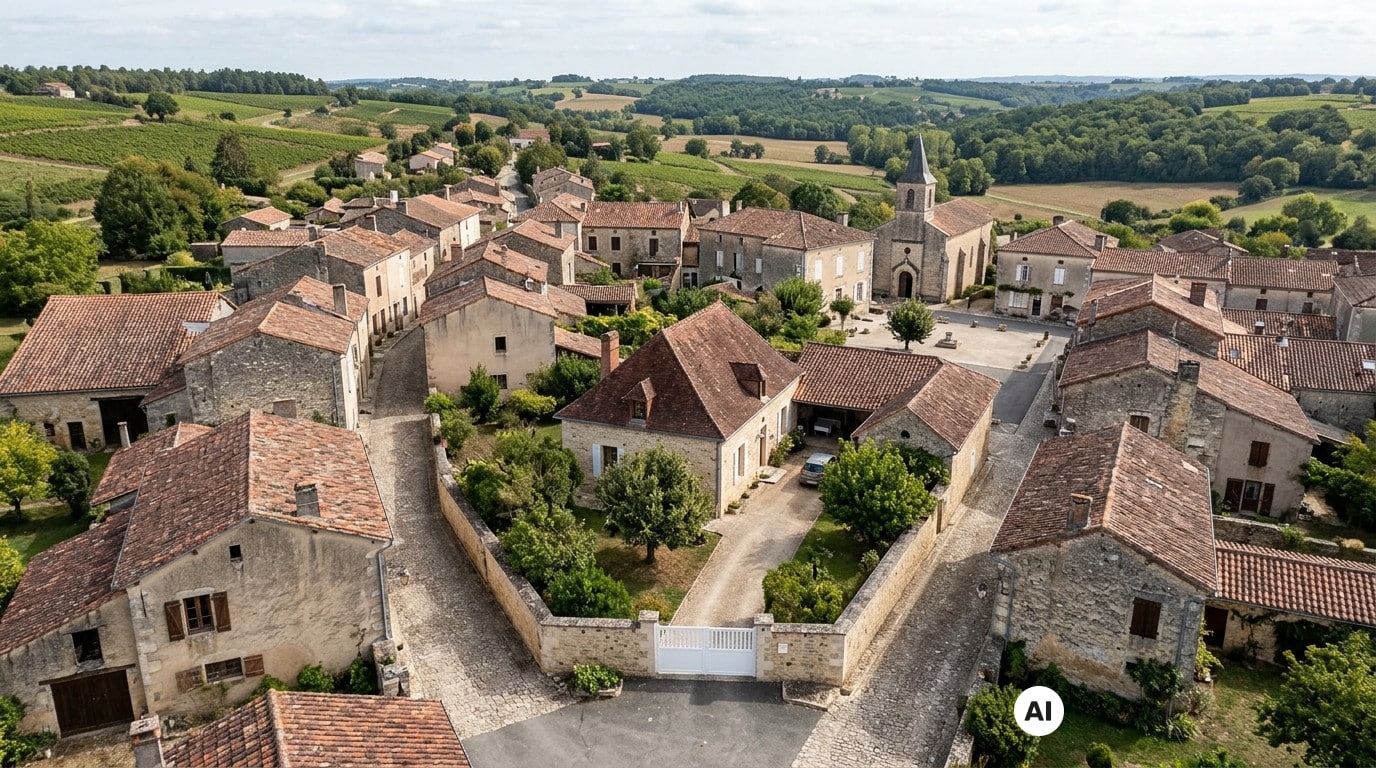
In protected or classified areas, installing a simple PVC gate is not something you improvise as you would in a standard subdivision. Between heritage regulations, color guidelines, and steps to anticipate, it’s best to know the rules of the game before you grab the drill. Here is what you need to know before getting started.
Why do historic villages regulate gate installations
A historic village is not merely its old stones and picturesque lanes. It is often a protected ensemble, either because it sits within a remarkable heritage site, or because it lies in the protected outskirts of a historic monument. In these zones, every modification to a facade or a fence can affect the overall visual harmony of the place. A white or gray PVC gate installed thoughtlessly can quickly clash with stone façades or wooden shutters weathered by time.
It is precisely to preserve this architectural coherence that the relevant communes impose strict rules. The aim is not to complicate residents’ lives, but to maintain the visual identity of heritage that has sometimes been protected for generations. In this context, a gateway is never just a practical piece of equipment: it becomes an integral part of the urban landscape, visible from the street and capable of influencing the village’s overall perception.
Administrative steps to take before installing a PVC gate
Even before choosing a model or color, one should consult the town hall. In a remarkable heritage site or near protected areas of a historic monument, installing a gate requires a prior declaration to the town hall. This formal step allows the planning authorities to verify that the project complies with local rules before work begins, preventing many hassles later on.
Concretely, this prior declaration is a crucial step, and it would be imprudent to treat the installation of a gate as a simple, inconsequential modification. The town planning department of the commune is the go-to contact for information about this process. It is wiser to begin this process upstream rather than later having to justify a choice already made, a situation far less comfortable to manage.
Material and color rules imposed by the local regulation
Once the prior declaration is contemplated, another important question remains: the appearance of the future gate. The local regulation may impose specific materials or colors, meaning that a PVC gate is not automatically allowed, or it may only be permitted in certain shades compatible with the existing built environment. This point deserves particular attention because it directly conditions the product choice before purchase.
It is therefore highly advisable to check the rules applicable to the commune concerned before selecting a model from a catalog. A standard white gate, appealing for its easy maintenance, may be refused if the regulation favors more subdued tones or materials deemed more in line with traditional construction. A few elements frequently recur in these local requirements:
- Imposed hues, sometimes close to the colors of shutters or surrounding façades
- Materials preferred according to the village’s architectural style
Getting informed beforehand saves many disappointments, notably the risk of having to modify a newly installed gate to bring it into compliance.
What to do if your PVC gate is already installed without authorization
Some homeowners find themselves in a delicate situation: the gate is already in place, perhaps for some time, without the prior declaration having been filed. Rather than panic or ignore the issue hoping it will go unnoticed, the most reasonable approach is to contact the town hall’s urban planning service directly. They can indicate whether the current situation can be regularized, or if adjustments are necessary to meet current rules.
Source: Quelles sont les règles pour construire ou installer une clôture ?
Article prepared with the help of AI · Our method
