
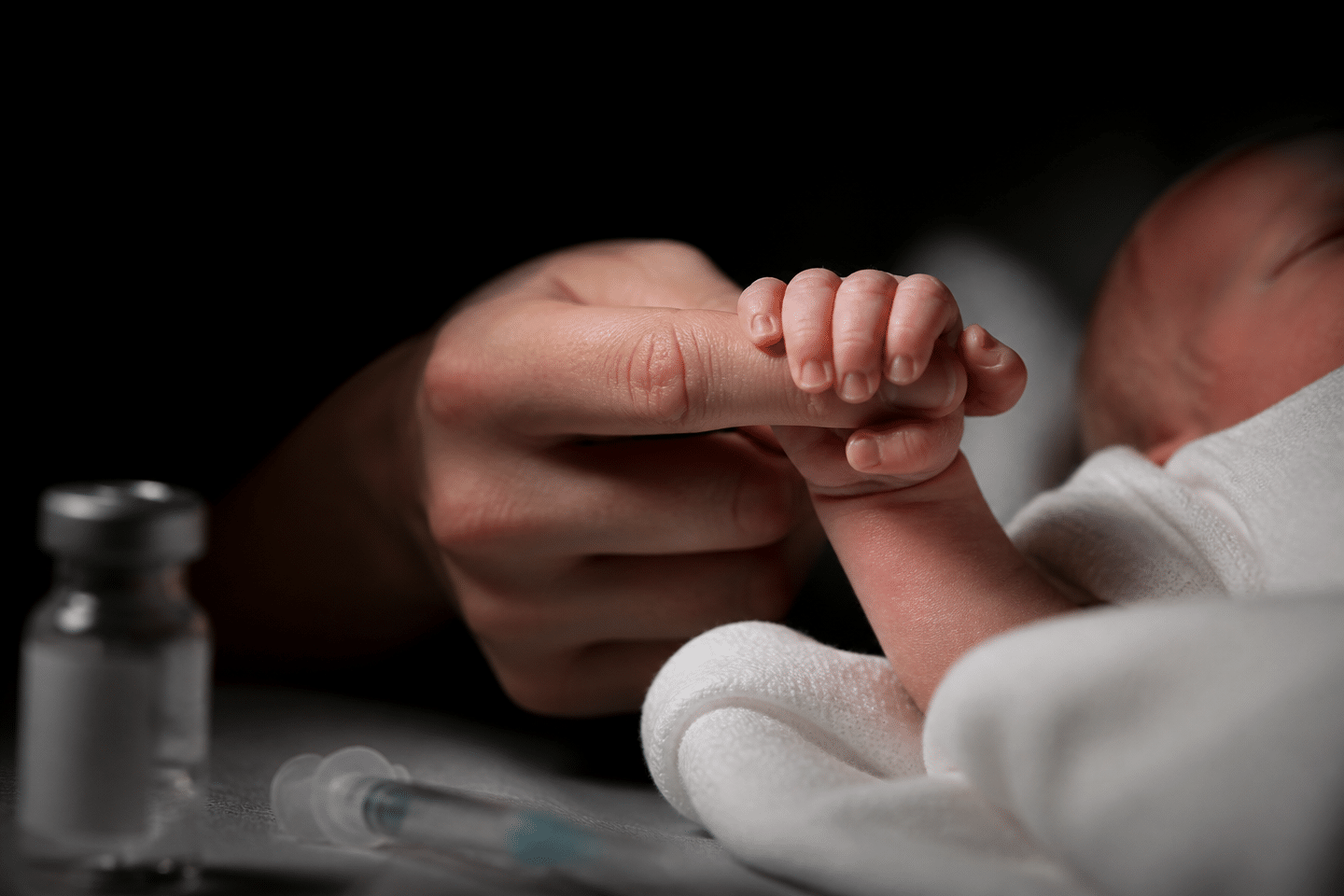
The vaccine against the human papillomavirus was said to harm the fertility of young girls, a claim tirelessly repeated by its detractors about twenty years ago. A Swedish study analyzing 624,713 births challenges this received wisdom. Far from harming pregnancies, Gardasil appears to be associated with fewer complications, including notably fewer premature births.
- A Swedish study on 624,713 births shows that the Gardasil vaccine is associated with a 5 to 15% reduction in pregnancy complications, including preterm births
- Contrary to concerns spread twenty years ago, no fertility impairment has been observed in vaccinated women
- The protective effect is stronger when vaccination occurs before age 17, likely because early vaccination prevents cervical lesions caused by human papillomavirus
- When anti-vaccine conspiracy theories backfire on their authors
- 624,713 births scrutinized: what the Swedish numbers really reveal
- The earlier the vaccination, the stronger the protective effect on pregnancy
When anti-vaccine conspiracy theories backfire on their authors
Twenty years ago, the arrival of Gardasil and Cervarix sparked a controversy of unusual intensity. These two vaccines protect against human papillomavirus, the main driver of cervical cancer.
Because HPV is transmitted primarily through sexual contact, some opponents saw vaccination as an invitation to what they called “sexual promiscuity.” A moral argument masked as a medical concern.
To bolster their narrative, those opponents asserted that the vaccine could alter the fertility of young girls years later. A fear that was widely echoed at the time.
The new Swedish results give an unexpected twist to this story. These results still require confirmation, but those who claimed Gardasil would harm fertility now appear rather foolish: the opposite seems to be emerging.
624 713 births scrutinized: what the Swedish numbers really reveal
Scandinavian researchers pored over data covering all first births registered in Sweden between 2006 and 2023, for mothers aged 16 to 35. After excluding twins, triplets and a few special cases, the sample comprised 624,713 births.
Among these mothers, 14.8% had received Gardasil, which protects against four HPV strains, before pregnancy. The team then catalogued all complications occurring during or just after childbirth, from preterm birth to stillbirth.
Result: vaccination was associated with a reduced risk for nearly all studied complications, with decreases ranging from 5% to 15% depending on the indicators. The figure is modest, but statistically significant in most cases.
To rule out obvious bias, the researchers compared each at-risk pregnancy with up to ten other pregnancies matched on age and year of conception, adjusting the results for smoking and education level. The association between vaccination and lower risk withstood this check.
The younger the vaccination, the stronger the protective effect on pregnancy
Another finding from this study, published in the British Medical Journal, is that the protective effect appears more pronounced among women vaccinated before the age of 17. This observation challenges the view of reserving vaccination for adulthood.
To understand this link, one must recall the concrete effects of papillomavirus infection. Even without causing cancer, the virus can lead to cervical lesions. The treatments for these lesions themselves may increase the risk of premature labor.
By preventing infection from adolescence onward, vaccination would therefore limit these lesions upstream and, in turn, the obstetric complications that may follow years later. The authors note, however, that their method cannot prove a direct cause-and-effect relationship.
This vaccine already has a strong track record on other fronts. It has dramatically reduced genital warts in regions where it is widely used, and it has nearly eliminated cervical cancer in certain populations. Benefits against several other cancers, in both men and women, are also documented.
As the study authors write, these data “support the global HPV vaccination strategy and its ongoing implementation in routine immunization programs.”
Ultimately, this Swedish study, published in The British Medical Journal, does not close the scientific debate, but it adds a further piece to a well-developed edifice. The feared harmful impact on fertility, once wielded as a scare tactic two decades ago, has never materialized. Instead, thousands of mothers may have been spared from complications, and an even greater number of children avoided the risks associated with prematurity.
