
A covert plot fused Cold War paranoia with American ingenuity. In the mid-1970s, U.S. spies built a ship that pretended to scour the seafloor for minerals, while secretly reaching for a sunken Soviet submarine. The result was an operation so audacious that it birthed the phrase, “we can neither confirm nor deny.”
The coldest prize in the deepest water
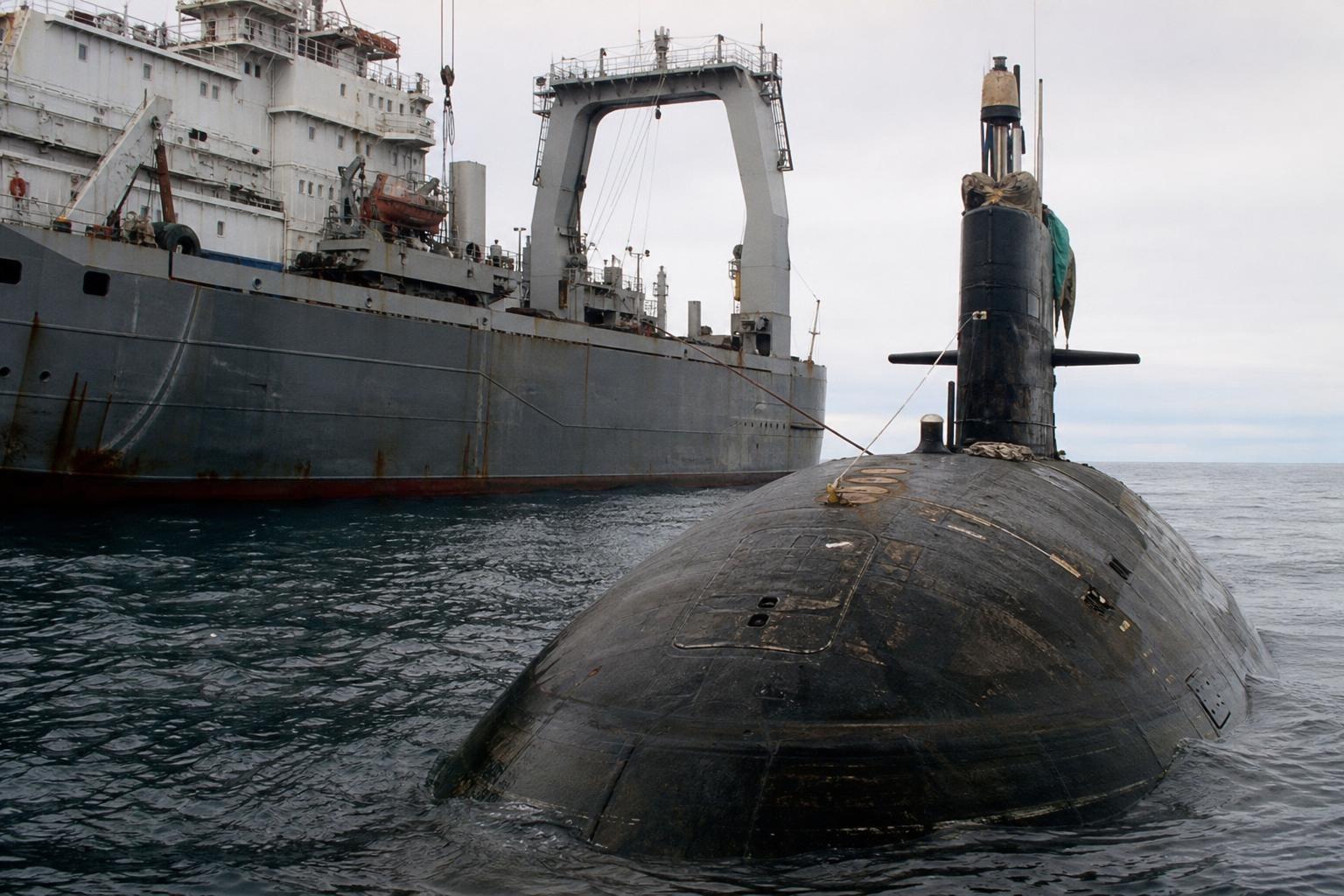
At nearly three miles of Pacific blackness, a Soviet ballistic-missile submarine lay broken and silent. It had sunk in 1968, a disaster the Kremlin never announced, but one the United States tracked with global acoustic ears. Inside the wreck might be codebooks, nuclear components, and the heartbeat of Soviet seamanship.
The CIA saw more than a relic—it saw a Rosetta Stone of adversary capability, a chance to read another navy’s most guarded pages.
A billionaire as a cover story
To touch that wreck without sparking war, the Agency needed a myth, and it found a flamboyant mask: Howard Hughes. The reclusive mogul fronted a tale about harvesting manganese nodules, a fashionable dream of deep-ocean mining. The ship would be built by Global Marine, paid for through shell companies, and waved along by Hughes’s bizarre, quasi-plausible aura.
“Mr. Hughes is pioneering a new frontier,” press releases chirped, while CIA case officers quietly smiled. As one later quipped, the best cover is something “too weird to doubt.”
Engineering a machine for the abyss
The vessel—Hughes Glomar Explorer—was not a miner. It was an instrument designed to pick up a multi-thousand-ton corpse of steel in crushing pressure. A gape-mouthed capture vehicle nicknamed “Clementine” would descend on a string of massive pipes, like an oil rig turned vertical and set adrift.
Beneath the hull lay a cavernous moon pool, a secret bay where the catch could be raised out of ocean and satellite sight. To hide the claw during fitting, engineers used a submersible barge, the HMB-1, which could flood and sink, swallow equipment, then surface like a mechanical whale.
The ocean, however, is a merciless critic. Heave-compensation systems had to cancel ship motion with exquisite timing, while pipes the width of tree trunks were screwed together into a miles-long spine.
The lift that almost rewrote history
In 1974, the operation crept into position, ringed by Cold War caution and Pacific swell. Soviet tugs loitered at a distance, suspicious of American oddities, yet lacking proof of anything beyond a billionaire’s noisy hobby.
“Hold your breath,” one operator reportedly murmured, as Clementine clamped around the sunken hull. Slowly, the ship began to haul the steel cadaver, foot by grueling foot.
Then the abyss took its payment. A section of the submarine broke free, plummeting back into the night of five thousand meters. What reached the moon pool was only a portion, twisted, heavy, and still fiercely secret.
Remains, secrets, and a new kind of silence
Inside the recovered section, crew remains were found. In a rare moment of humanitarian clarity, the Americans conducted a formal burial at sea, complete with Orthodox rites—footage the CIA later released. As for intelligence, the public record remains hazy.
What the Agency truly obtained—missile components, cryptologic gear, metallurgical samples—has been debated for decades. A veteran intelligence hand put it plainly: “There are successes we don’t celebrate, and failures we don’t explain.”
- Items reportedly sought included codebooks, fire-control electronics, nuclear warhead or torpedo components, navigational data, and hull metallurgy samples for comparative naval analysis.
When a cover story becomes vocabulary
The ship’s oddities drew journalists like iron filings to a magnet. Confronted with Freedom of Information Act requests, the CIA coined a line that became a cultural artifact: “We can neither confirm nor deny the existence or nonexistence of the information requested.” It began as a shield for this very operation and still echoes in court filings to this day.
That stance—soon branded the “Glomar response”—transformed a single maritime caper into a doctrine of elegant, deniable silence.
Legacy of a hidden harvest
What endures is not only the classified haul, but the audacity of the attempt. The project fused aerospace-grade mechanics with offshore industrial alchemy, proving that covert action could be as much about cranes and bearings as about codes and couriers.
It also mapped the edges of geopolitical theater. A fake mining venture, a real mega-ship, patient lawyers, and a phrase designed to keep the state’s mouth shut—together they sketched a manual for 20th-century secret power.
Looking back, the saga reads like science fiction rendered in steel and seawater: an American leviathan hovering over the Pacific void, lowering a mechanical hand into darkness, and bringing up whatever the deep and destiny would allow. As a CIA historian later noted, “Sometimes the only way to learn the unlearnable is to build the impossible—and then act like you didn’t.”
