
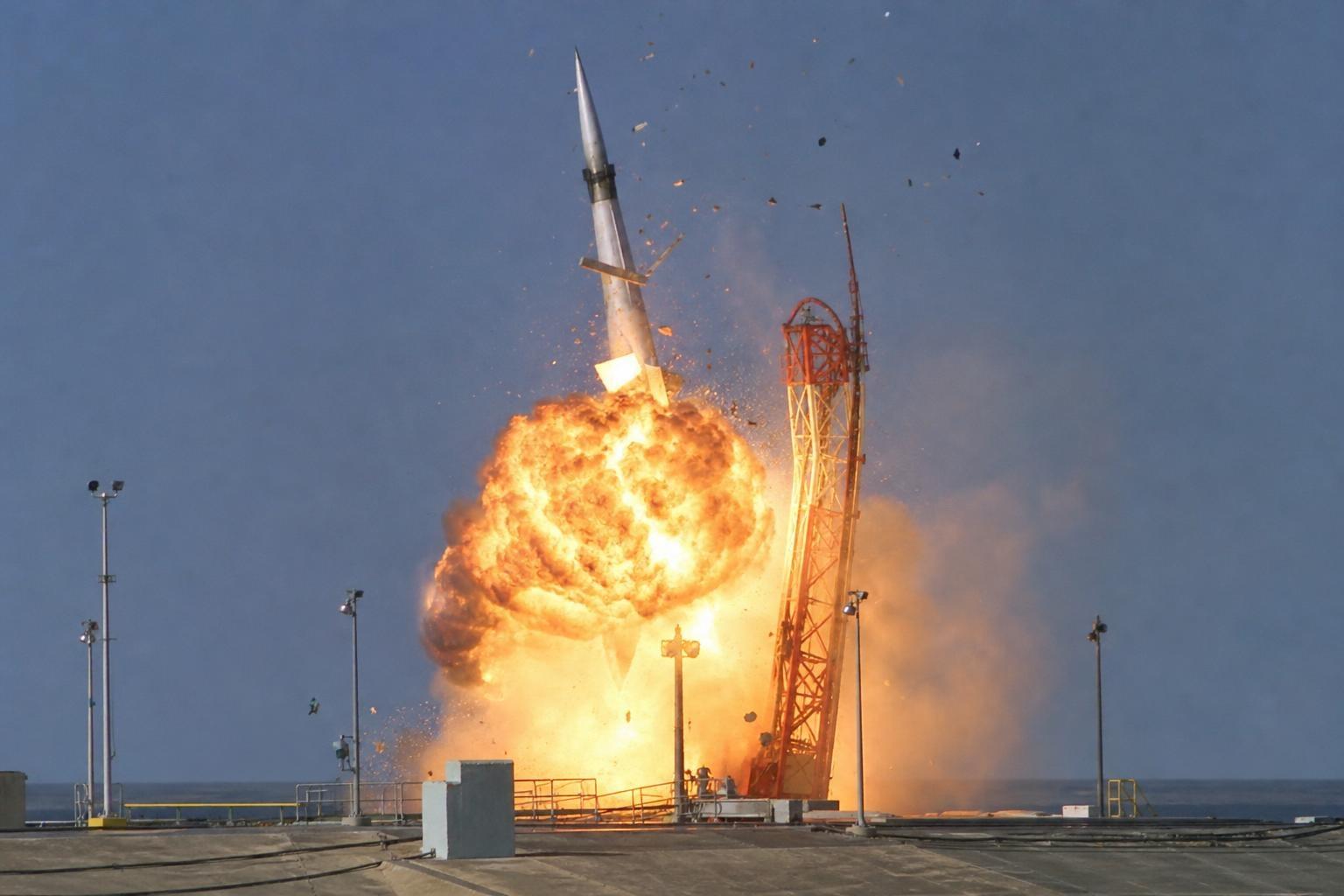
The cameras were ready, the crowd hushed, and a nation leaned in with hope and dread. In the aftershock of Sputnik, every second felt historic and fragile. Then the flame bloomed, the vehicle lifted just a few feet, and the moment cracked into smoke and silence. On living-room screens, the American space age began with a stumble that felt painfully public.
The Two-Second Launch That Changed Everything
It was supposed to be a carefully staged answer, an orderly debut. The Vanguard booster rose, lost thrust, and folded back onto the pad with a hiss and a roar. Tanks ruptured, fire blossomed, and hardware scattered like confetti made of metal. “We have ignition,” turned, in an instant, into “we have a problem,” and the world had a front-row seat.
Engineers later traced the failure to a fuel system malfunction. Pressure dropped, the engine quit, and gravity did what it does. The small grapefruit-sized satellite was hurled clear and found in the sand, a mute emblem of ambitions not yet realized.
Why This Rocket, And Why Then?
The choice of Vanguard was as political as it was technical. The Navy-led project promised a civilian veneer and a scientifically tidy payload. The Army’s von Braun team, standing by with a more muscular booster, watched from the sidelines. “We’ll do this the right way,” Washington had said, favoring openness and order over speed and spectacle.
Sputnik, however, reset the clock. What had been a patient program suddenly carried the weight of national prestige. Every schedule grew urgent, every tolerance felt tight. In that squeeze, delicate systems show their edges and their limits.
Humor, Humiliation, And Headlines
The nicknames arrived with unkind precision. “Flopnik.” “Kaputnik.” “Stayputnik.” The satire stung because it was simple and visual. A rocket that barely left the ground looked less like spaceflight and more like a punchline with plumes.
“On live television,” one anchor sighed, “the launch has failed.” The phrase settled like a blanket of ash across the airwaves. Yet even in the mockery, there was a current of resolve. Failure televised is still data, and data is the start of progress.
From Embers To Urgency
The policy world moved with surprising speed. Within weeks, the Army-JPL team launched Explorer 1, salvaging pride with science that counted—the Van Allen belts sketched by a tiny detector and a hard-won trajectory. By mid-1958, NASA emerged from agencies and acronyms, a consolidation born of urgency and clarity.
“Never waste a good lesson,” an engineer quipped, eyes on charred footage looping in conference rooms. Budgets grew, walls came down between services, and a national roadmap gained ink and authority.
Engineering Lessons That Stuck
What did that short hop and hot landing teach? More than a decade of tidy memos ever could.
- Build for graceful failure, not perfect success: redundancy, isolation, and margins that survive the unimagined.
- Test like it will fly, and fly only what you’ve tested: environments, sequences, and burns that mirror brutal reality.
- Integrate systems, not silos: propulsion, guidance, structures, and telemetry sharing one hard truth.
- Manage public risk with public honesty: expectations set early, and narratives shaped by facts instead of fear.
Each bullet sounds obvious now, but obvious is what you learn after you’ve been burned.
A Culture Rewired By A Single Flameout
Inside the labs, the mood shifted from tentative optimism to disciplined urgency. Reviews became sharper, interfaces cleaner, and dissent more welcome. “Argue now,” managers began to insist, “or hold your peace on the pad.” That is how an engineering culture turns corners—with candor, with checklists, and with time bought by previous pain.
The public, too, learned a strange patience. Rockets are mercilessly binary—they work, or they do not—and television is mercilessly archival. Yet in the weeks after the blast, Americans watched a second launch, then a third, and felt the country’s narrative tilt forward again.
The Long Tail Of A Short Flight
Vanguard’s story did not end in flames. A later vehicle placed a tiny sphere into orbit that still circles the Earth, a faint, persistent marker of early American tenacity. The legacy of that first failure is written in procedures, in test stands, and in the quiet confidence that comes from having truly stumbled.
“We went up a few feet,” a veteran recalled years later, “but we fell a long way—and then we climbed higher.” The line is part rueful, part proud, and entirely true. That smoky morning on the Florida coast did not end a dream; it focused it with heat and with light.
In the end, the live broadcast that made America wince also made it work. The pad was cleaned, the tanks were rebuilt, and the country adjusted its aim. Out of two seconds of flight came a decade of momentum, and a habit of learning in public that still makes spacefaring nations better.
