
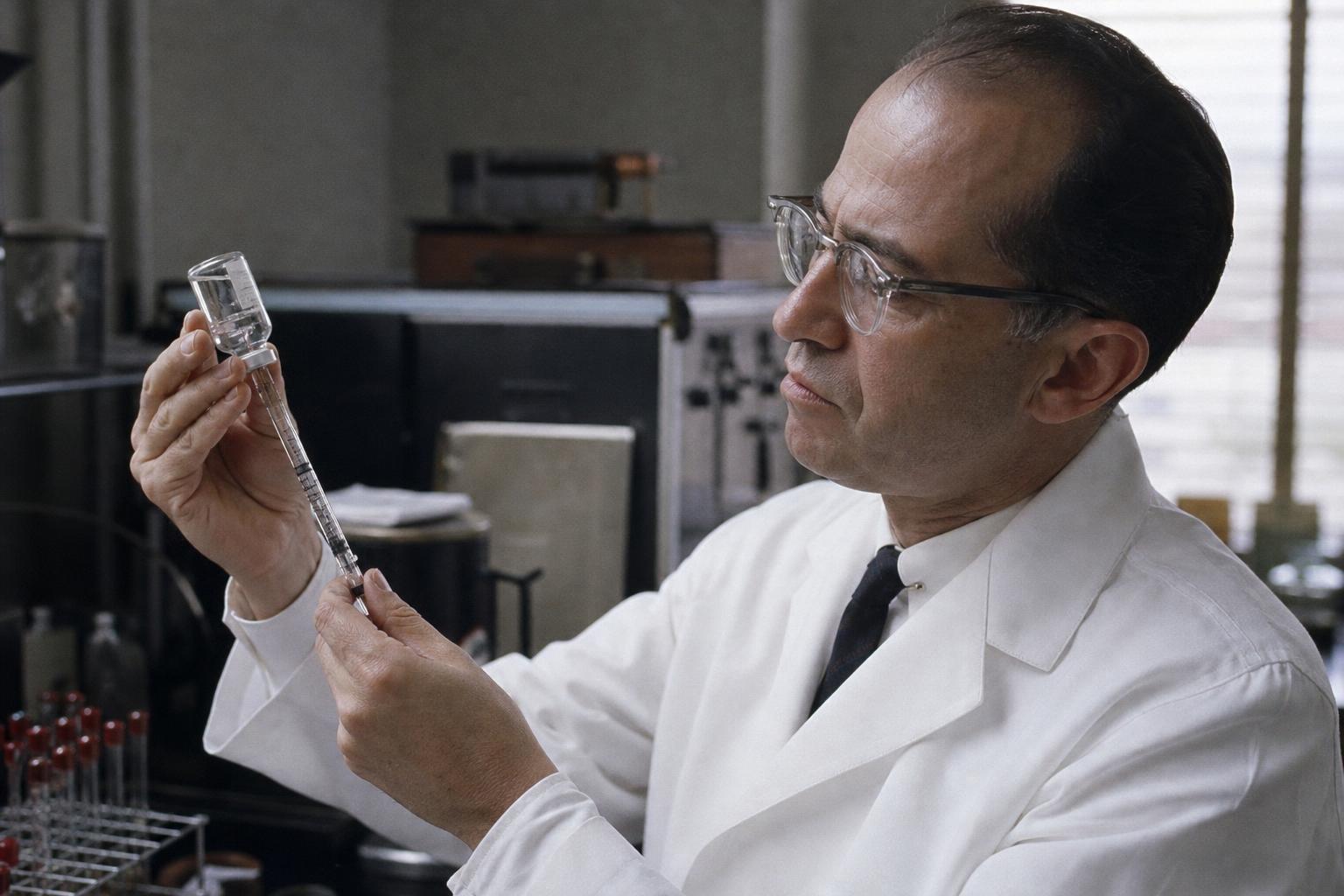
The spring of 1955 offered a rare moment when science, ethics, and public need aligned. In a world haunted by summer outbreaks, a young researcher chose a path that confounded conventional wisdom. He turned away from ownership, and toward something stubbornly civic.
The choice that reset the compass
In the wake of historic field trials, the vaccine was declared “safe, effective, and potent.” Cameras flashed, parents wept, and a nation exhaled years of fear. When asked about a patent, the scientist answered, “Could you patent the sun?”
That quiet sentence landed like a thunderclap, reframing what scientific success could mean. It wasn’t ascetic self‑denial; it was a decision rooted in who had paid and who suffered. The work was fueled by nickels, dimes, and a vast public experiment, not by a private bet.
A crisis that demanded speed
Mid‑century summers brought closed pools, shuttered cinemas, and restless quarantines. Tens of thousands fell ill each year in the United States, with paralysis measured in the thousands. Parents learned the vocabulary of braces, crutches, and iron lungs.
Against that backdrop, the vaccine felt like a truce, not a trophy. Speed mattered more than scarcity, and access mattered more than exclusivity. The goal was to throttle transmission before the next season, not to meter out doses behind a tollbooth.
Public money, public ethos
The March of Dimes turned household coins into clinical muscle. Volunteers flooded towns with pledge cards, and small gifts built enormous capacity. The research lived inside an ecosystem of public trust, charity, and government oversight.
There was also legal and practical complexity, including questions of prior art and patentability. But the cultural thrust was clear: an innovation born of public risk and public fear should return to the public swiftly. In that framing, monopoly rights felt misfit, more artifact than necessity.
The billions left on the table
Later analysts mapped counterfactual ledgers, estimating that exclusive rights could have yielded many billions. The figure varies by model and by assumption, yet the silhouette is unmistakably large. A global standard of care, priced under a single flag, is a fountain of steady revenue.
But value can be counted in more than dollars, and sometimes timing is the core currency. An open field allowed rapid manufacturing, cross‑border know‑how, and competition that bent costs downward. The dividend wasn’t just money not made; it was paralysis not seen.
What openness unlocked
- Faster scale‑up by multiple manufacturers, reducing supply bottlenecks
The effect compounded as science iterated, with inactivated and oral formulations diverging. Technical rivals still collaborated at the level of standards, refining protocols and surveillance. The forest grew because no one fenced off the clearing, and sunlight reached every sapling.
Trust as infrastructure
Public confidence is elusive infrastructure, and here it proved decisive. Parents lined up for school clinics, church basements, and county fairs, turning fear into a public routine. The story of no patent became shorthand for integrity, a pocket‑sized myth that nonetheless moved real behavior.
Journalists called it “the shot heard ’round the world,” and for once the metaphor felt modest. Here was a civic ritual: roll up your sleeve, protect your neighbor, and carry a tiny fragment of collective hope.
Complications, clarified
None of this is a hymn to one man, nor a denial that incentives matter. Pharmaceutical systems still need predictable returns, strong regulation, and mechanisms to seed risky work. Patents can be bridges, not barricades, if paired with equitable licensing and tiered pricing.
Yet the episode asks a sharper question: when research is publicly financed, what obligations flow back? Prize funds, advanced market commitments, and open‑license pools are tools that split the difference with pragmatic elegance. They reward ingenuity without strangling access.
Echoes in our present
Recent pandemics exposed brittle supply chains, contested licenses, and yawning gaps in global immunization. We learned, again, that delay has a real body count, and that trust can accelerate uptake as surely as any logistics fix. We also learned that transparency isn’t charity; it’s part of the engineering of impact.
“Could you patent the sun?” was never doctrine; it was a compass bearing. It points toward a world where scientific glory is measured by lives made ordinary again. In that light, the most expensive thing might have been the thing not shared, and the richest return the one distributed.
