
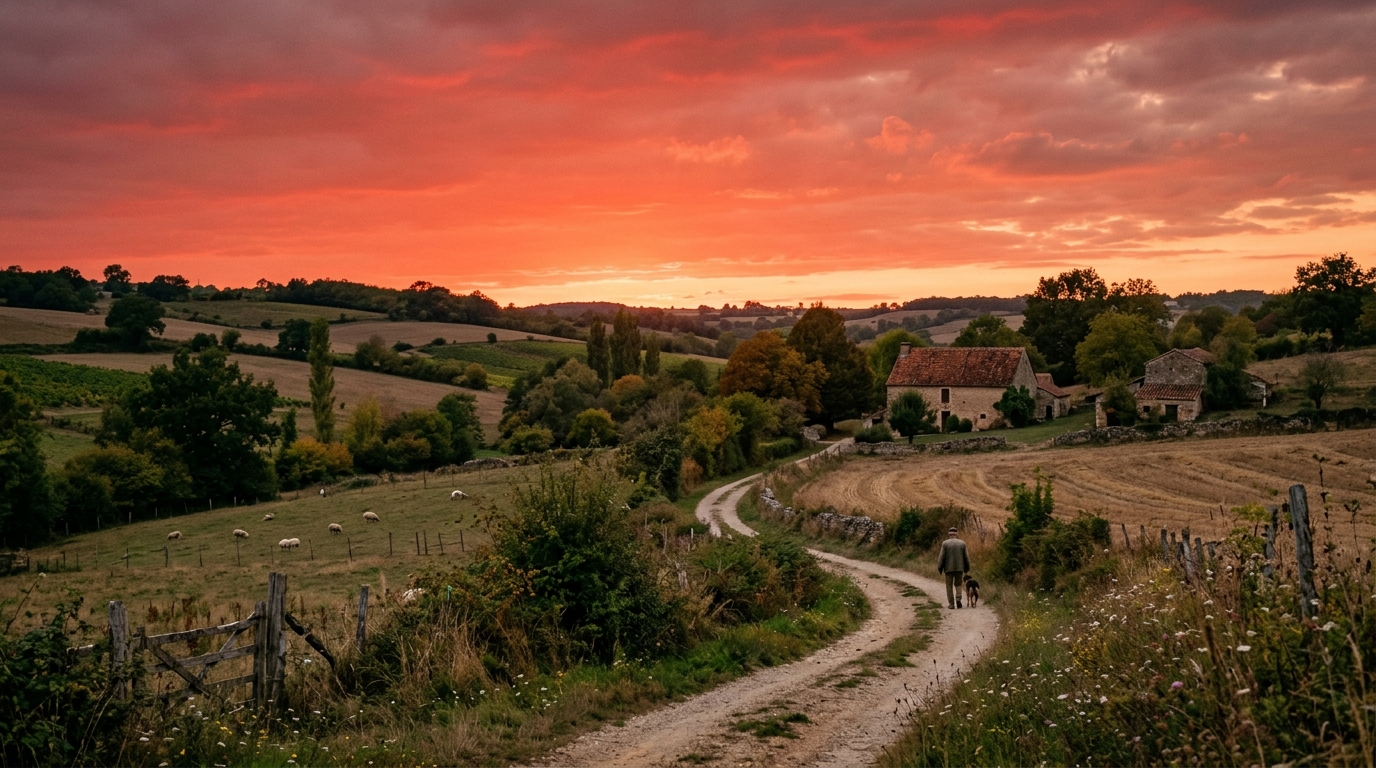
A sky that turns scarlet at dawn is not merely a visual display: it is a signal that shepherds, and later sailors, have been learning to read for centuries. In this period of meteorological transition that favors shifting skies, knowing how to interpret these colors can spare you a fair amount of trouble. Behind this proverb, popular since antiquity, lies a solid physical explanation, but also traps worth knowing before you rely on it blindly.
- A red sky in the morning generally signals the incoming of rain and wind, while a red sky at night foretells fair weather, due to weather systems moving from west to east in France.
- This phenomenon is explained by Rayleigh scattering, intensified by dust present during high-pressure phases, but it should be cross-checked with other signs such as cirrus.
- This proverb, born in antiquity and used by shepherds and then sailors, must be inverted near the tropics and never constitutes absolute meteorological certainty.
- A biblical proverb that became the compass for shepherds and mariners
- Why the sky flames: dust, pressure, and diffused light
- Evening or morning: what the color of the sky really reveals about tomorrow
A Biblical Proverb that Became the Compass for Shepherds and Mariners
The saying “red sky in the morning, sailor take warning” is far from new. Its trace can be found even in the Gospel of Matthew, where people already scanned the sky to anticipate the whims of the weather. Shepherds used it for generations to safeguard their flocks, before sailors took up the same guideline. These observers had to make quick decisions, unlike farmers who weighed longer seasonal cycles. A simple glance toward the horizon was enough to adjust a sea voyage or a shift in cattle. This empirical reflex, passed down orally from generation to generation, has journeyed through the centuries to reach us.
Why the Sky Burns Red: Dust, Pressure, and Diffused Light
This striking phenomenon rests on a well-known physical principle: Rayleigh scattering. This mechanism explains why red wavelengths dominate at sunrise and sunset. Dust and particles in the air accumulate more during periods of high pressure, which further intensify this red hue and can complicate the reading of the proverb. Yet beware: this vivid red glow is not always a reliable omen. One must also take into account cirrus, those thin high-altitude clouds that appear in some traditional maritime sayings, hinting at a link between morning cirrus and evening wind, or vice versa. Additional natural signs, such as the cries of seagulls or the behavior of certain animals, completed this sky-reading in the past to anticipate storms and abrupt changes.
Evening or Morning: What the Sky’s Color Really Reveals About Tomorrow
Here lies the core of the message behind this glowing sky. In France, weather systems generally move west to east. Therefore, a red sky in the morning often signals the arrival of a low-pressure zone from the west, bringing rain and wind: now is the time to plan for a raincoat rather than an improvised stroll. Conversely, a red sky at night indicates that the high-pressure area and clear weather are moving eastward, suggesting an improvement for the following day, a good omen for organizing an outdoor outing. However, beware: this meteorological adage must be inverted near the tropics, between the 30th parallels north and south, where disturbances circulate in the opposite direction. Experts remind us that this kind of saying remains primarily an empirical observation, not a 100-percent reliable weather bulletin: atmospheric circulation can always disrupt the classic interpretation. In September, a transitional period marked by more frequent disturbances from the Atlantic, this visual cue is especially observed at dawn, and often for good reason.
Remembering this saying offers a small, free observational tool accessible to everyone, provided you keep its limits in mind. A red sky is never an absolute certainty, but a valuable clue to cross-check with other everyday signals. So, next time the horizon flares, will you take the time to look up before heading out?
