
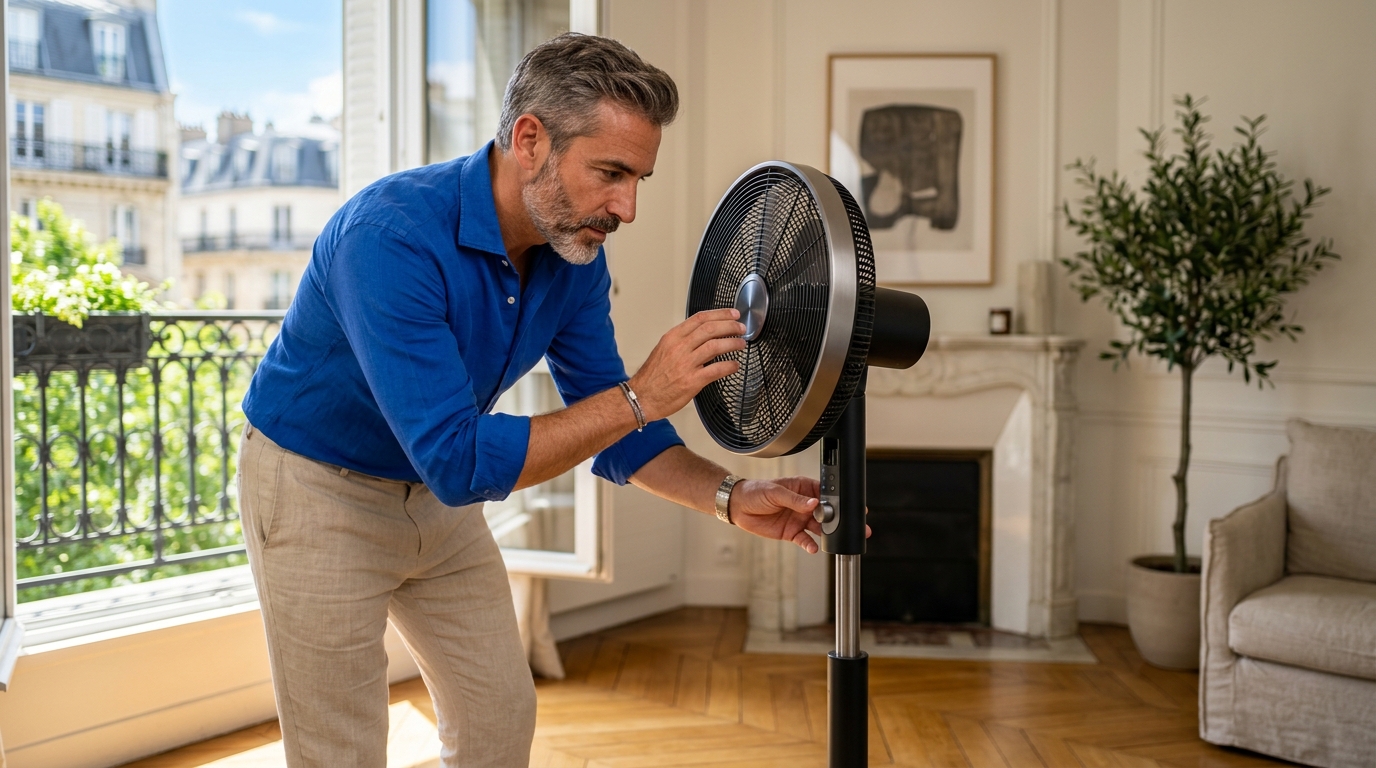
It is two in the morning in the middle of July. The suffocating heat turns the bedroom into a real oven, and the device meant to bring a refreshing breeze rumbles in the corner of the room with the gentleness of an agricultural tractor. Sleep is nowhere to be found, the circulated air remains stubbornly warm, and frustration climbs to a fever pitch. As soon as the first heat waves hit, we all repeat the same rash mistake: rushing to the shelves to buy the largest or cheapest fan available. Very quickly, the purchase becomes a true nocturnal nightmare in front of a machine that sounds like an airplane engine without actually cooling the atmosphere. And if the sole key to saving our nights lies behind a tiny note on the packaging label? This little technical detail, too often neglected by consumers, has the power to change absolutely the entire summer experience.
The false promise of a high-powered breeze that instantly disrupts our peace
Faced with the urgency of a heat wave, the most natural reflex often pushes us to favor blade size or to scrutinize watts with avid eyes. The visual illusion is striking: we imagine that generating an air movement worthy of a late-summer storm is the only valid remedy to lower body temperature. Yet this frenzied chase for raw performance hides a far less rosy reality. An excessive and poorly oriented ventilation can dry out the ambient air, irritate the airways over time, and cause muscle stiffness that is particularly unpleasant upon waking.
Even worse, the vast majority of these entry-level devices quickly turn into intolerable noise nuisances. Low-quality plastics tremble at the slightest spin, the motor hums with a sharp whine, and the living room becomes as loud as a machine room. By making an impulse purchase in the heat of the moment during these heatwaves, we sacrifice acoustic comfort. This parameter is, however, vital to allow the body to rest and recover. That is how millions of models end sadly relegated to the basement or tossed into the recycling bin just a few months after purchase, feeding a damaging cycle of overconsumption for the environment.
The delicate balance of decibels: the one detail on the spec sheet that truly counts
Sometimes a simple gesture is enough to spare oneself a lot of trouble: gently turning the packaging over to discover the most crucial information about the device. Lost among features touting a modern design or a wide oscillation is a small line of text always measured in decibels (dB). It is precisely this figure, often printed in tiny characters, that will make the enormous difference between a night of deep sleep and hours of insomnia. The level of sound emission is the true indicator of a quality design.
To better grasp this abstract measurement, here are precious benchmarks to keep in mind when decoding shelf labels:
- Above 60 decibels: this volume is largely comparable to a very animated conversation, making it completely incompatible with a restful atmosphere.
- Around 50 decibels: it corresponds to the hum of an old refrigerator, tolerable in the afternoon but quickly becomes a nuisance in the quiet of night.
- Below 40 decibels: this matches the soothing murmur of a grand library, which marks the absolute and ideal threshold to fall asleep without even noticing the machine.
The ultimate trap is to ignore this crucial data in favor of aesthetics. A device with dazzling power that peaks at 65 decibels will, in the end, never be used at full capacity because the noise becomes auditory torture. Learning to read this technical detail is the first step toward wiser and more responsible consumption.
Rowenta Turbo Silence: the competition swept away by its almost imperceptible technology
It is precisely on this slippery ground that certain engineers have managed to stand out brilliantly by focusing on users’ real expectations. The renowned Rowenta Turbo Silence embodies this shift in philosophy with striking efficiency. Rather than joining the absurd race for the most gusty wind, this product line prioritizes a redesigned aerodynamic concept. The aim is to reduce air friction against plastic components to nearly zero. Result: the device delivers a deliciously refreshing breeze surrounded by monumental acoustic discretion.
The magic of this model lies especially in its famous night mode, designed to drop to near 35 decibels. It is a truly imperceptible breath for the human ear at a few meters distance, achieving the feat of combining pleasant coolness with a near-sacred silence. Beyond immediate comfort, its robust and high-quality architecture demonstrates that performance can be paired with durability. No more blades poorly secured that start resonating after three weeks! By opting for well-insulated hardware, enduring heat becomes much easier to withstand without polluting your own sound space.
A lasting investment to regain sleep and weather summers with total serenity
Changing our purchasing habits often requires the courage to resist the seductive lure of bargain products. Wasting money each summer on mediocre, unreliable, and loud devices makes no economic or ecological sense. Choosing gear genuinely designed to pamper domestic well-being, with accurate sound specifications, changes the game entirely.
Choosing to spend the money on a silent device that lasts is, in the end, a gift of preserved health. Nothing replaces the quality of a true night’s rest to face the heaviness of long summer days. This purchasing decision becomes a sensible one: the object fulfills its mission for many years, and we avoid piling up the waste of defective small appliances.
In the end, paying close attention to this ridiculous little line dedicated to decibels has the magical power to turn a simple shopping chore into a formidable shield against suffocating heat. Fresh air is essential, but silence is golden. So, next time the thermometer climbs, what criterion will you look at first on the cardboard box?
