
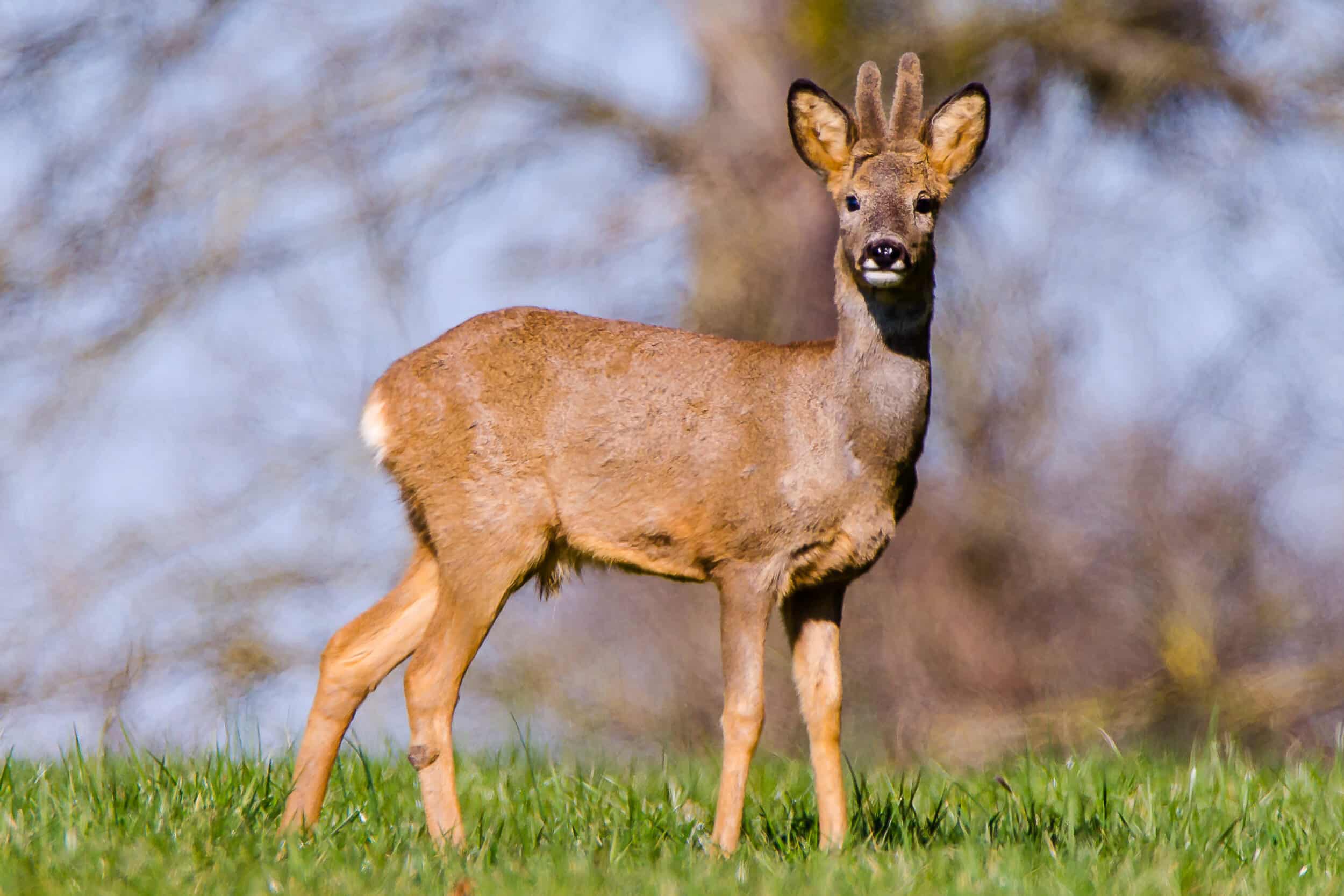
A few weeks ago, the Saône-et-Loire gendarmerie released a video on social media in which a deer appears utterly disoriented. While the post blends humor with road safety messaging, the animal’s behavior can still be explained scientifically.
A post full of humor
In 2024, a British study challenged the idea that only humans consume alcohol. Since ethanol is abundant in nature, it is a lso ingested by a sizeable number of animal species in the form of fermented fruits, sap, and nectar. This is the case for some chimpanzees, gorillas and bonobos, frugivorous bats, fruit flies, as well as bees, butterflies, and hornets.
Moreover, animals are not on an equal footing when it comes to the effects of ethanol. The latest evidence certainly comes from the Saône-et-Loire gendarmerie video that was published on May 6, 2026 on its Facebook page. The footage shows a roe deer in the middle of a field, frantically circling and losing balance before collapsing.
“ Heeee no Ladies and Gentlemen… not all road users are sober. Proof in the image.”, one can read on the post, whose humorous tone is evidently intentional.
The key: the roe deer’s metabolism
But how can the animal’s behavior be explained? First, note that unlike some primates who deliberately seek out alcohol, the roe deer is not at all trying to get drunk. With the arrival of spring, the animal targets young shoots and buds – notably from black locust or ivy – because these are very rich in sugar.
The fact is that the roe deer is a ruminant: in its digestive system, housing these plants, heat and bacteria trigger rapid fermentation, converting the sugar into ethanol. However, given that its metabolism is not equipped to eliminate alcohol quickly, the animal exhibits typical symptoms such as disorientation (circling, staggering, etc.). This is referred to as a “forest hangover,” whose effects fade after the alcohol is eliminated.
A corrective note to prevent misunderstandings
In the face of widespread reactions and the input from wildlife professionals, the gendarmes who posted the video issued an official corrective update. For experts, it is impossible to make a definitive diagnosis from a brief video lasting only a few seconds. It turns out that other medical causes – neurological disorders, illnesses such as “pseudo vertigo,” injuries or trauma – can also explain the animal’s behavior. The aim of the correction was to avoid spreading false medical certainties.
Nevertheless, it is essential to recall that the tone used by the gendarmes was meant to grab users’ attention more effectively for road-safety purposes. Indeed, the intent was to remind drivers to ease off on secondary roads, particularly at night. During this period, wildlife is more prone to undertaking unpredictable trajectories.
Finally, according to Road Safety estimates and insurance data, there are about 40,000 collisions per year in France, i.e., more than 100 accidents per day. While between 36% and 45% of collisions involve wild boars, roe deer nonetheless account for 17% of impacts.
