
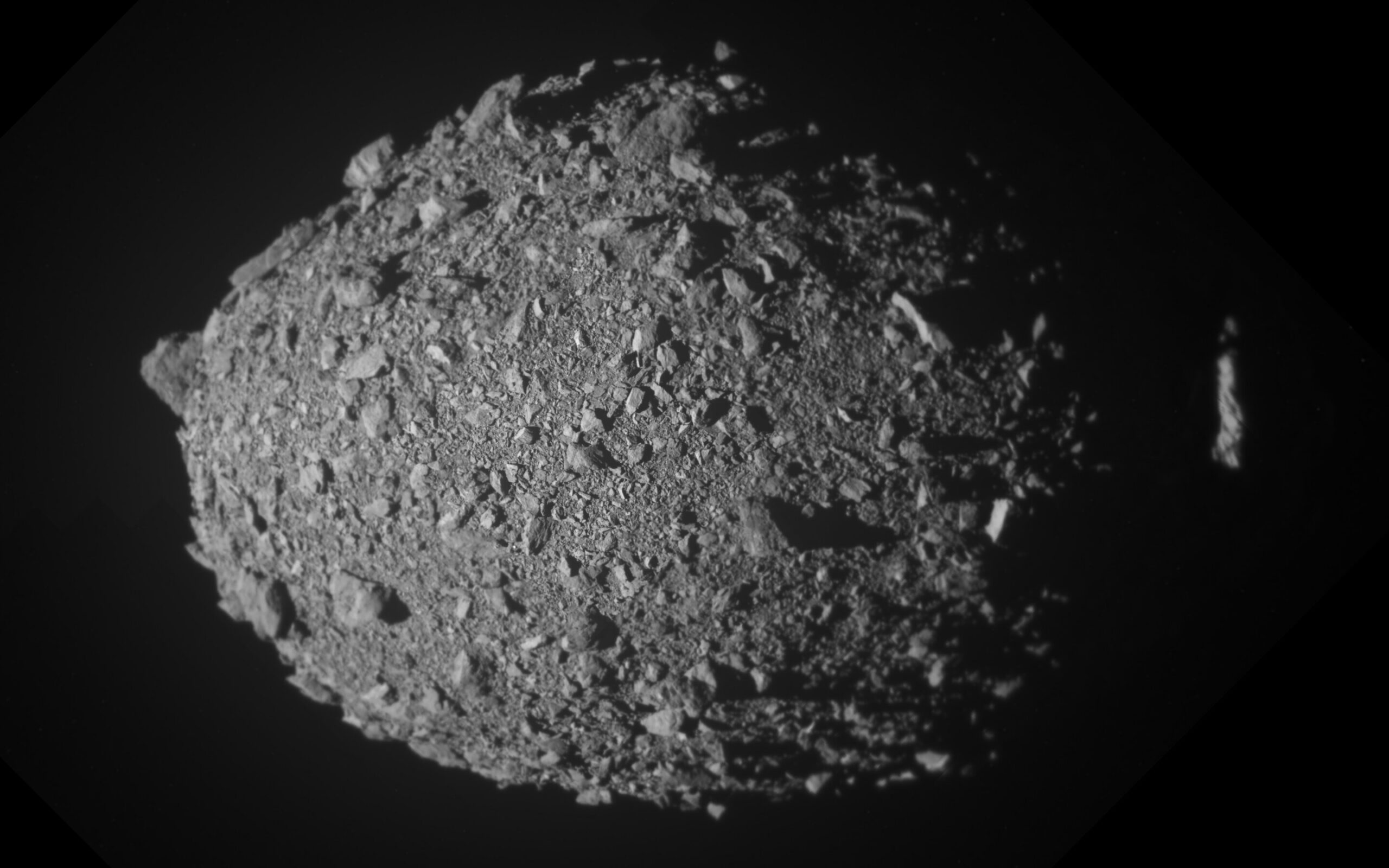
On Sunday, the Japanese spacecraft Hayabusa2 performed one of the closest flybys ever recorded of a near-Earth asteroid — within less than 800 meters of Torifune, at speeds exceeding 18,000 kilometers per hour. The maneuver was as precise as “hitting a yen coin somewhere between Okinawa and Hokkaido,” according to JAXA engineers, as part of a planetary-defense test.
What you will learn
- Why this flyby is a crucial test for asteroid deflection technologies — and how it differs from NASA’s DART mission
- Why the surface composition of the asteroid — hard rock or loose sand — radically changes the effectiveness of a deflection
- What Hayabusa2 has already accomplished since its 2014 launch — and what lies ahead in 2031
An Extremely Precise Flyby
On Sunday, JAXA’s Hayabusa2 — refrigerator-sized — skimmed past the asteroid Torifune at a distance of less than 800 meters, traveling at more than 18,000 kilometers per hour. If the measurements are confirmed, this will count as one of the closest flybys of a near-Earth asteroid ever recorded.
The objective wasn’t to strike the asteroid, but to demonstrate that engineers can precisely control a spacecraft’s trajectory at that speed and proximity — a critical capability for any future planetary-defense mission. “It’s as difficult as trying to hit a yen coin somewhere in the zone stretching from Okinawa to Hokkaido,” said Yuya Mimasu of JAXA to illustrate the precision required.
Hard Rock or Sand: A Question of Planetary Life or Death
Onboard cameras also captured data about Torifune’s surface — its texture, geography, and temperature. These details are crucial for planning a real deflection mission. Patrick Michel, the project’s scientific lead at the ESA, explains the challenge: if you aim to deflect an asteroid by impact, the reaction will not be the same depending on whether the asteroid behaves like a sponge — a loose “pile of rubble” — or like solid material. The same force will produce very different effects.
Complementary to NASA’s DART Mission
In 2022, NASA deliberately directed the DART spacecraft against the 160-meter-diameter asteroid Dimorphos, successfully altering its orbit. Hayabusa2 fits into a complementary framework: where DART tested impact, this mission tests the precision of trajectory control and collects data on the diversity of near-Earth asteroids. “Every new image helps us be better prepared,” sums up Michel.
A Veteran of Space Exploration
Hayabusa2 is no rookie. Launched in 2014, the probe has already landed on the asteroid Ryugu, collected material, and returned samples to Earth in 2020 — materials that have given scientists clues about the state of the solar system at its birth 4.6 billion years ago. After Torifune, the spacecraft is set to attempt a rendezvous with another asteroid, 1998 KY26, in 2031 to collect new surface data.
