
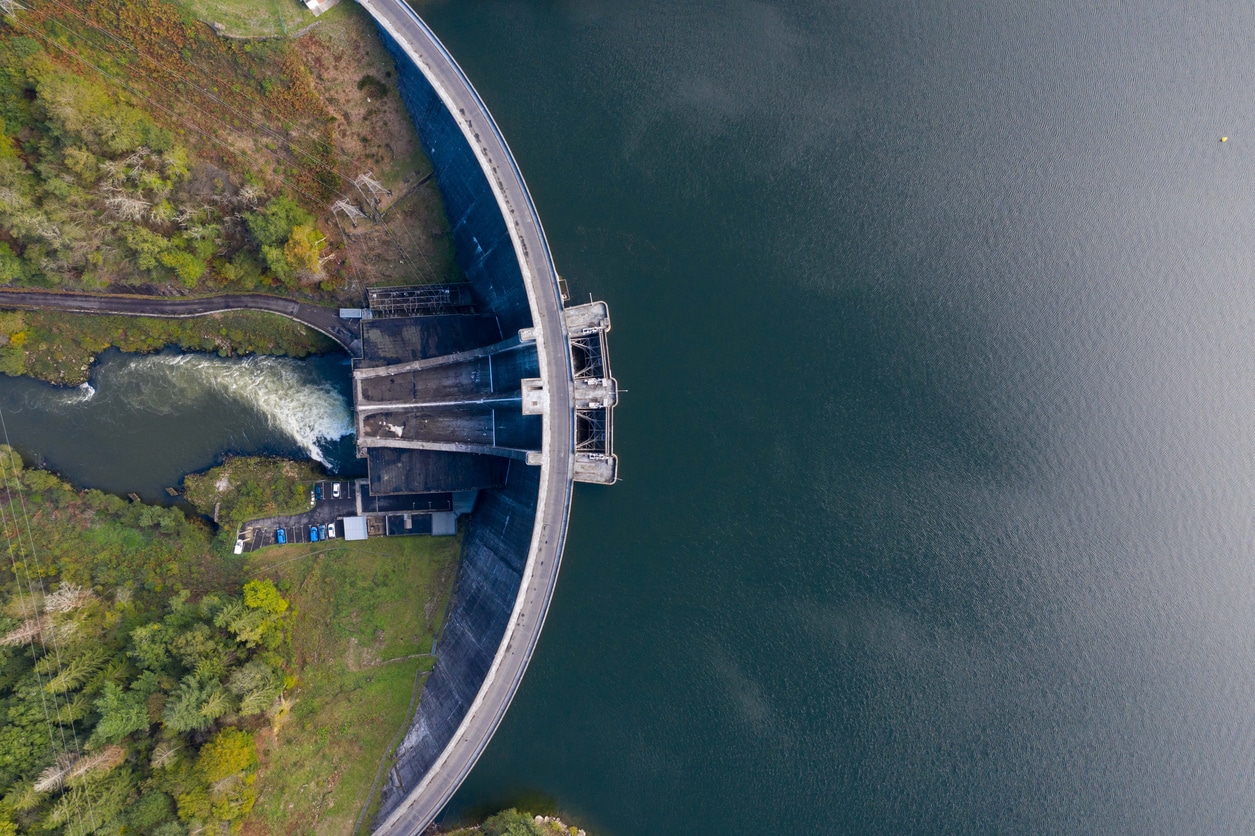
Recently, an international study revealed an issue affecting water security and the durability of dams that now ranks among the world’s greatest threats. Moreover, this threat is directly linked to sedimentation, a phenomenon that isn’t new but whose intensity is increasing.
A Particular Phenomenon: Sedimentation
Natural reservoirs experience the accumulation of millions of tons of soil, silt, and rocks every year. Unfortunately, these sediments progressively occupy the space reserved for water, placing additional pressure on structures that were not designed for this. The fact is that this phenomenon isn’t truly new in itself; however, its acceleration and current magnitude lead experts to speak of a global crisis. The Institute of Geography and Limnology of Nanjing (China) led an international study on the subject, published in Nature Sustainability on July 5, 2026.
These findings show that due to this sedimentation phenomenon, global reservoirs lose an average of 7.3% of their storage capacity every decade. Moreover, while about one in five reservoirs is already affected by the problem, 58.6% of small reservoirs and 38.1% of large reservoirs could become inoperable by 2060. In other words, although enormous facilities like the famous Three Gorges Dam in China attract attention, most of the dams affected are not among the largest. If nothing is done in the next two decades, the water supply for around two billion people will be at risk.
“These results underscore the urgency of targeted and environmentally mindful sediment management, particularly in arid regions where small reservoirs are essential for access to drinking water and food production.”, according to the study.
Risk of Rupture and Impacts on Electricity Production
In practice, sedimentation gradually turns water-management infrastructures into logistical and economic time bombs. As sediments replace water, the dams lose their primary utility, namely to store water for irrigation, drinking water, and drought periods. It should be recalled that originally, dams are designed to resist the pressure of water rather than that of compacted sediments. Yet these sediments exert a far greater mechanical force on the dam walls. However, this rupture risk is accompanied by infiltration into the gates and pipes, leading to the blockage of hydroelectric turbines.
Moreover, increasingly frequent wildfires destroy the vegetation that holds soils in place. Thus, the extreme rains that sometimes follow can wash away these bare soils, transporting record volumes of mud directly into the reservoirs.
What Are the Possible Solutions?
According to the study’s authors, the approach must shift from a construction-centric logic to a preservation-minded one. Upstream, one option is to reforest catchment areas and restore vegetation to stabilize soils and trap sediments before they reach the river. Within the reservoir itself, another possibility is to pump and extract the mud from the lake bottom. This solution is effective but extremely costly and energy-intensive.
We should also consider sediment management, namely the periodic opening of the bottom valves during floods to allow turbid waters to escape. However, this option carries the risk of major pollution to ecosystems downstream from the reservoir. Finally, the ultimate choice would be to dismantle aging dams completely to restore the river to its natural course and ecological continuity.
