
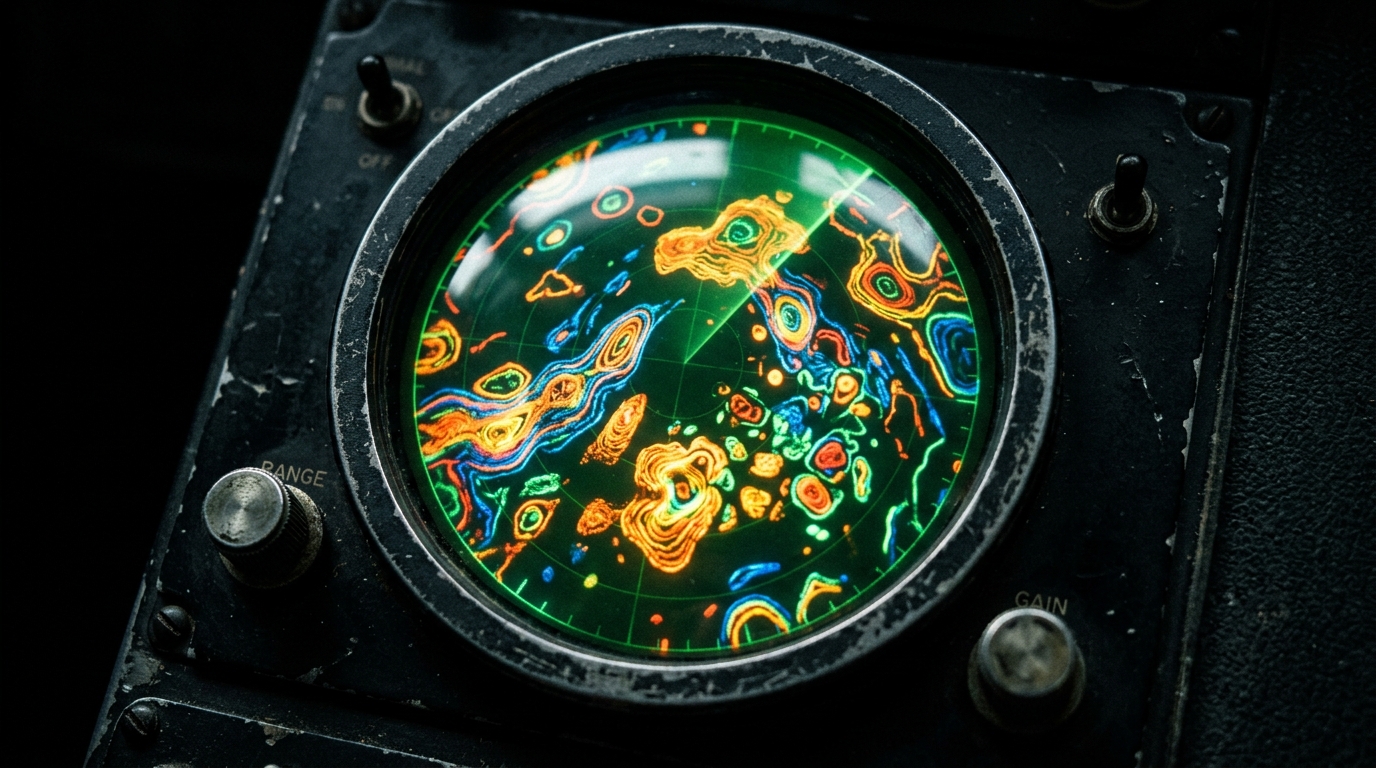
There is a fundamental distinction between scientific innovation, no matter how bold, and a technological chimera dressed up in the attire of rigor. The former rests on verifiable evidence, reproducible trials, and a peer community capable of challenging it. The latter feeds on opacity, state secrecy, and the fascination that promises “too good to be true” can exert on decision-makers eager to secure a miracle solution. It is precisely within this second category that one of the most flamboyant scams in French industrial history found fertile ground. For nearly four years, one of the country’s largest oil groups believed it possessed an absolute weapon to locate oil from the sky, never suspecting that the images rolling across the control screens bore no relation to the ground being flown over.
- Between 1975 and 1979, Elf Aquitaine financed “sniffer” aircraft intended to detect petroleum from the sky, at a total cost of one billion francs.
- The setup was a fraud: the control screens displayed pre-recorded images of known deposits, unrelated to the ground actually flown over.
- Physicist Jules Horowitz, by comparing the signals captured with the real geology of the terrain, uncovered the deception after four years of pretense.
- A billion francs vanished for planes that detected nothing
- The oil-detecting machine that never existed
- Elf Aquitaine, a state-owned company trapped by its own leaders
- The scandal that shook the French state and its judicial consequences
A Billion Francs Gone for Planes That Detected Nothing
From 1976 to 1979, Elf Aquitaine poured nearly a billion francs into a program billed as revolutionary: aircraft fitted with a device said to locate hydrocarbon deposits without any prior drilling. On paper, the idea looked tailor-made for a public company immersed in the post-shock oil race to secure resources. In practice, the technology never existed. The control screens aboard the planes displayed data that came neither from the earth beneath nor from the subsurface survey, but from prerecorded recordings released at the right moment to simulate real-time detection.
This affair, known today as the sniffer aircraft affair, remains one of the most striking examples of how a well-constructed fraud can mislead the highest echelons of economic and political decision-making. It also illustrates the vulnerability of large institutions when the lure of quick gains eclipses the most basic scientific verification.
The Oil-Detecting Machine That Never Existed
It all began in 1975, when individuals presenting themselves as genius inventors approached Elf Aquitaine’s leaders with a remarkably tempting proposition: a process capable of remotely detecting oil reserves from an airborne reconnaissance craft. The proposed principle mixed vaguely some notions of nuclear physics and magnetism, expressed in a jargon dense enough to impress non-specialists while remaining vague enough to avoid rigorous verification.
Enchanted by a promise that could upend the world oil industry, the Elf officials secured state approval to fund the research and development of this phantom technology. A second contract was signed in June 1977 at the Castle Wolfsberg in Belgium, where one of the main instigators of the scam, a certain de Villegas, set up a supposed center for fundamental research intended to perfect the device. Then, in June 1978, a third contract of 500 million francs was signed, bringing the total spent on this illusion to one billion francs. In effect, the fraud relied on rigged screens that displayed, at the precise moment the aircraft overflew a test zone, prerecorded images corresponding to known deposits. The illusion was perfect as long as no one questioned how a simple electronic box could “see” through kilometers of rock.
Elf Aquitaine, a State-Owned Company Trapped by Its Own Leaders
To understand how such a hoax could endure for so long, one must place it in the context of the 1970s. The successive oil shocks had plunged industrial powers into deep anxiety about securing energy supplies. In this climate of feverish competition for resources, any technology promising to locate oil without the heavy costs of conventional exploration appeared as a strategic windfall, almost providential. That urgency likely dulled the critical sense of certain leaders more concerned with international rivalry than with rigorous scientific scrutiny of the promises laid before them.
Governance flaws within Elf Aquitaine also played a decisive role. The absence of independent oversight on such a colossal program allowed the fraud to fester for years without triggering serious alarms. Albin Chalandon, who became Elf’s president in 1977, ultimately tasked two young physicists with evaluating the device’s credibility. At first, they surprisingly found no obvious signs of fraud, given how sophisticated the arrangement appeared. The company even ended up wasting another hundred million francs on drilling tests in basalt—a rock type that, unlike sedimentary rocks, generally yields few if any hydrocarbons. A basic geological check that no one at the top deemed necessary before committing such vast sums.
The Scandal That Shook the French State and Its Judicial Consequences
The resolution of this affair came through a man whose method was almost embarrassingly simple. Jules Horowitz, a renowned physicist at the Atomic Energy Commission, demonstrated the fraud by a straightforward trick: verify whether the signals allegedly captured in flight actually matched the geology of the terrain being overflown, which they never did. This discovery abruptly ended four years of collective illusion and opened the way to a series of thorough investigations into the responsibilities of each actor involved.
The subsequent report by the Cour des comptes laid bare the scale of financial manipulation within Elf-Erap, with direct losses estimated at over 750 million francs, and criticized the laxity with which public authorities allowed the dossier to proceed without serious oversight. In 1984, a parliamentary commission of inquiry delivered its conclusions: former president Valéry Giscard d’Estaing was exonerated, while former prime minister Raymond Barre faced harsher criticisms regarding his handling of the case. To this day, the affair remains a case study illustrating how public enterprises can be led astray when grand technological ambitions outrun basic scientific prudence.
What can be recalled from this story is the ease with which brilliant minds, versed in managing complex dossiers, could be blinded by the lure of a miracle solution. The sniffer-airplane affair is not merely a quaint anecdote of French economic history: it raises a perennial question about our collective ability to resist the siren call of innovations that are too good to be true, whether in the search for oil or in today’s dizzying promises of technology.
