
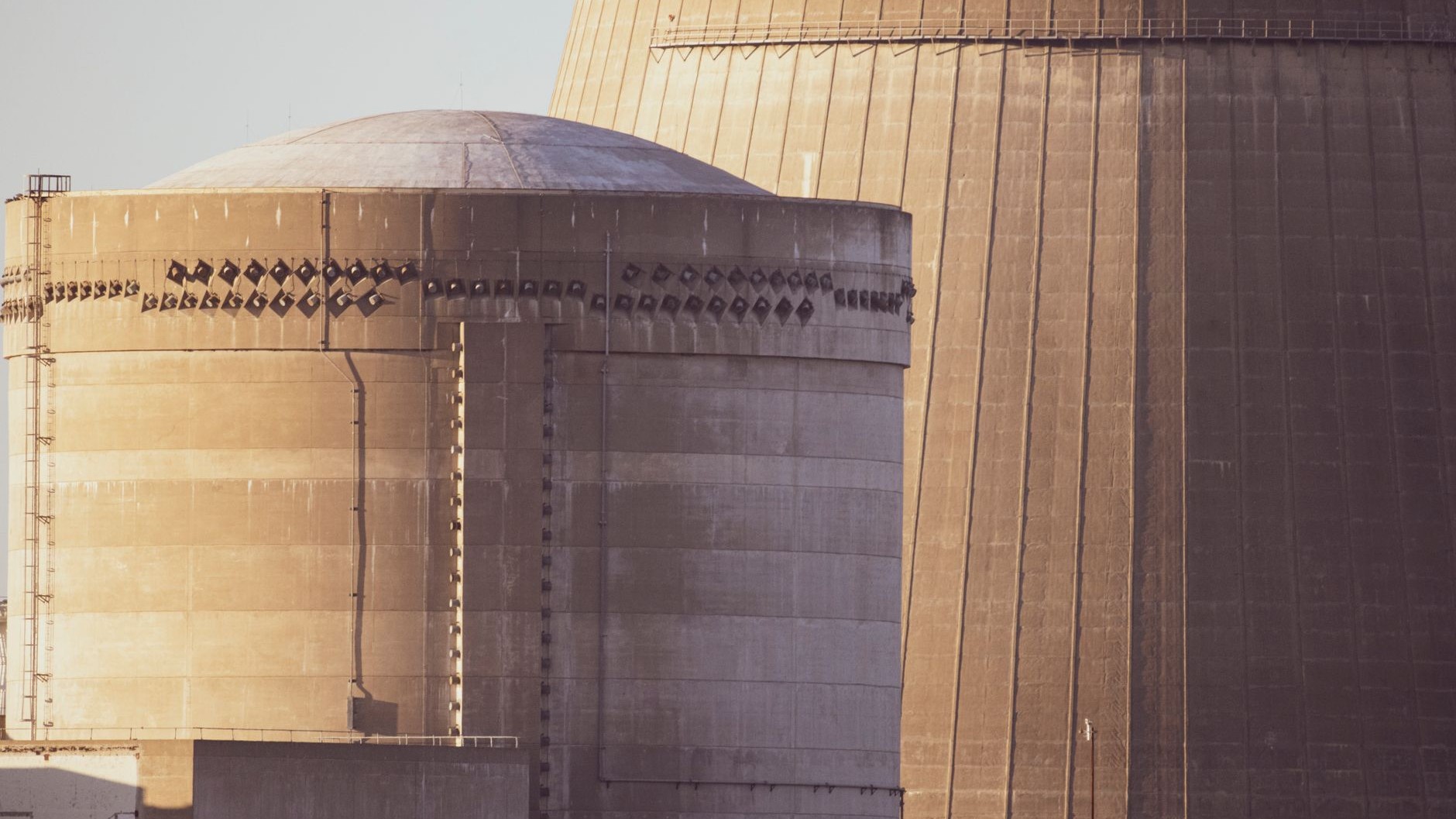
Twenty-three point seven billion euros. This is the amount the Court of Auditors calculated for the Flamanville EPR in its report published on January 14, 2025, a figure to compare with the 3.3 billion announced when the project was launched in 2007. Seven times more expensive than planned, twelve years behind schedule, and a profitability the financial magistrates do not hesitate to call “mediocre.” The flagship of France’s nuclear industry in its new-generation form carries a track record that leaves observers dizzy.
The reactor was due to enter service in 2012. It was only connected to the electricity grid on December 21, 2024, with a twelve-year delay. Between those two dates, delays piled up: welding problems, defects in the vessel, delays in the qualification of equipment. Each new milestone set by EDF was accompanied by a higher bill, a mechanism that has almost become routine for those following the file.
Key takeaways
- A nuclear reactor seven times more expensive than planned: how did this come about?
- The Court of Auditors reveals figures that no one wanted to hear about real profitability
- Six new EPR2 reactors are in preparation: a repeat of history or lessons learned?
How the bill doubled in five years
The figure of 23.7 billion euros did not fall from the sky. According to the financial magistrates, the total cost of the project now stands at 20.4 billion euros in 2015 euros, or 23.7 billion euros in 2023 euros, after adjusting for inflation. This reassessment far exceeds the previous estimate: this new figure is 1.3 billion euros higher than EDF’s 2020 estimate of 19.1 billion euros in 2015 euros.
The difference with EDF’s own figures is notable. According to the Court, EDF now puts its total cost at 19.3 billion euros in 2015 euros, i.e., 22.6 billion euros in 2023, including financing costs. The public electric utility understates the bill by roughly another billion euros compared with the Court’s calculation. The Court explains this gap by elements EDF tends to under-value: pre-operation costs, taxes before industrial commissioning, the cost of acquiring the first reload of fuel, the cost of the public debate, the procurement of a stock of spare parts necessary for tests and commissioning, preparation for the first shutdown, the completion of the initial full inspection, and expenses for replacing the vessel lid.
Where does this surge come from compared with the 2020 estimates? This re-evaluation is notably explained by adjustments in the calculation of the financial provisions presented by EDF and in the financing costs, the Court of Auditors states. Added to general inflation are financial costs that automatically inflate the longer a project lasts: the longer the project stretches, the more interest accumulates on borrowings. A vicious circle that has transformed a technological gamble into a budgetary abyss.
A profitability deemed “mediocre”
Beyond the construction cost, it is the return on investment that most worries the Court of Auditors. The magistrates on the rue Cambon have precisely quantified the expected level of profitability. Assuming a sixty-year operating life, an 85% capacity factor, and a selling price of 90 euros per megawatt-hour, the Flamanville EPR’s profitability would reach 2%. A financial magistrate summarized the situation plainly at the press briefing: this is lower than the cost of the capital EDF has had to deploy, whether from equity or debt. A project whose profitability is below its borrowing cost is problematic. It is not profitable.
To generate meaningful profitability, electricity would have to be sold much higher than the 90 euros per megawatt-hour cited above. The Court of Auditors states that each megawatt-hour produced by the Flamanville EPR, in 2023 euros and at an 85% load factor, would need to be sold at 122 euros to yield 4% profitability and at 176 euros to yield 7%. These price levels raise questions in a power market that is already strained and under careful scrutiny by consumers.
Another troubling element highlighted by the jurisdiction: EDF’s lack of transparency on these questions. The magistrates note that EDF still refuses to provide them with information about the profitability and the projected production cost of Flamanville and the EPR2, as requested in 2020. Five years after a first recommendation that went unheeded, opacity persists on a file that is nonetheless largely financed with public money.
The shadow over the six future EPR2 reactors
The real issue of this report is not limited to the past. The Court of Auditors is especially concerned about the future, namely the EPR2 program which is planned to see six new reactors built on French soil by 2038. Here too, the numbers are rising. According to EDF’s late-2023 estimate, the construction cost for the first six EPR2 reactors has already surged by 30%, from 51.7 billion to 67.4 billion euros, assuming unchanged economic conditions and excluding inflation. The Flamanville scenario seems to be repeating itself even before the first shovel is struck on the EPR2 program.
In the face of these uncertainties, the financial jurisdiction recommends caution. The Court asks that EDF’s final investment decision for the EPR2 program, planned for early 2026, be held off until funding is secured and the detailed design studies have progressed, a stage only started in July 2024. A clear warning to the government and EDF: do not repeat Flamanville’s mistakes on a sixfold scale.
Despite these caveats, the Court recognizes progress in organizing France’s nuclear sector. Steps have been taken to revive nuclear power: restructuring the sector around Orano and EDF, which has taken back control of Framatome and Arabelle Solutions, internal reorganization of EDF’s nuclear activities, and the Nuclear Acceleration Law. Yet these structuring efforts do not fully reassure the magistrates, who believe the country remains “far from ready” for this new, large-scale project.
The Flamanville reactor itself continues to ramp up since its connection to the grid in late 2024, proceeding through progressive milestones toward full capacity. One question remains that the Court of Auditors itself leaves open: who will ultimately bear the cost of this profitability deemed insufficient? French households’ electricity bills, already under scrutiny, could provide part of the answer in the years ahead.
Sources: vert.eco | connaissancedesenergies.org
