
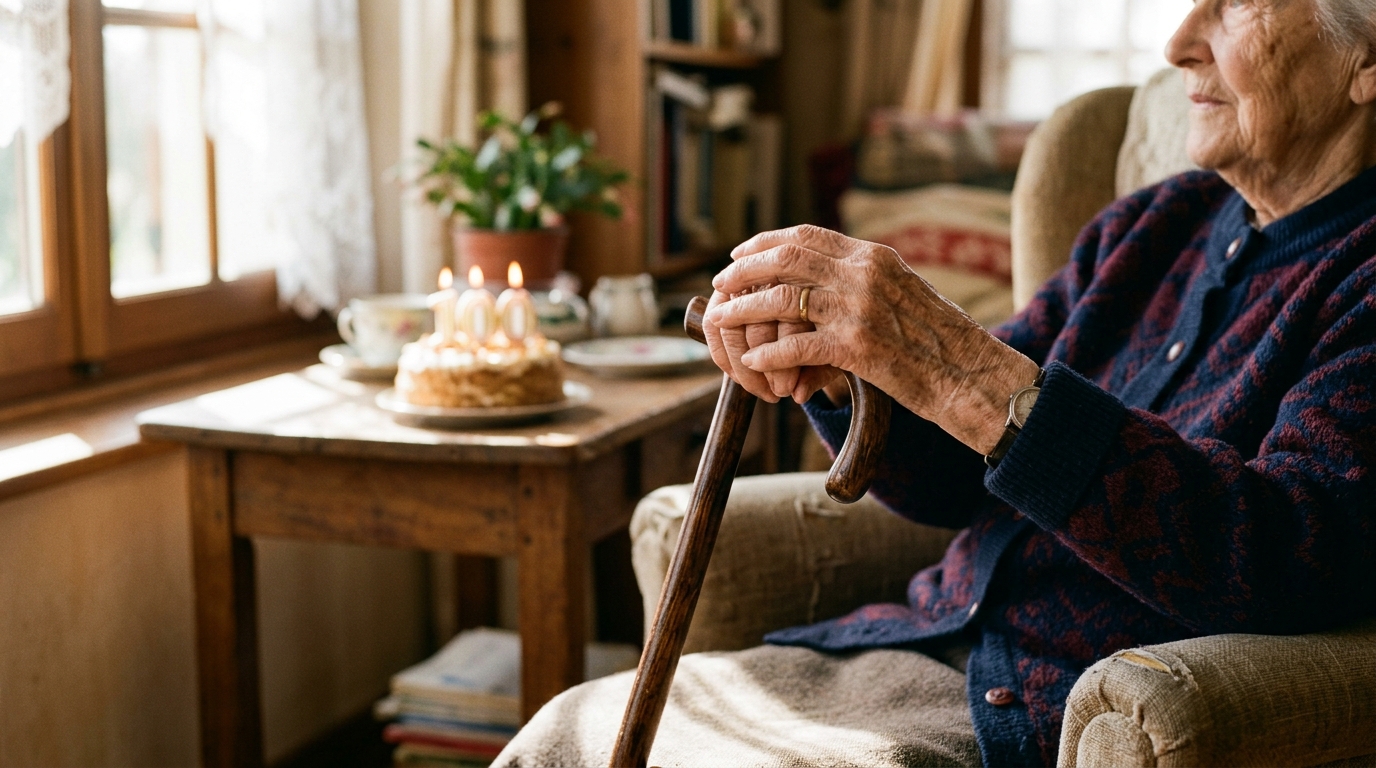
If you have the impression of seeing centenarians more often in local newspapers, in senior residences, or even at family meals, it isn’t just imagination: France now counts nearly 37,000 centenarians, almost three times more than at the start of the 2000s, when there were about 8,000. A figure that can be dizzying and naturally invites us to look for an explanation in medical breakthroughs or in better nutrition. Yet the true answer lies elsewhere, in a demographic phenomenon that is far more subtle but infinitely more powerful.
- The France today counts nearly 37,000 centenarians, versus around 8,000 at the start of the 2000s.
- This jump is explained by the generational effect, the probability of reaching 100 years having been multiplied by one hundred between people born in 1850 and those born in 1920.
- By 2070, France could count between 160,000 and 360,000 centenarians depending on the scenarios considered.
- Nearly 37,000 centenarians in 2026: a leap no one anticipated
- Why medicine and nutrition tell only a small part of the story
- The generational effect: the true silent engine behind this explosion
- What this wave of centenarians signals for France tomorrow
Nearly 37,000 Centenarians in 2026: a Leap No One Anticipated
Let’s trace the thread of time a little to gauge the scale of the phenomenon. In 1970, France counted just over 1,000 centenarians. That figure surged over the decades, exceeding 31,000 by January 1, 2024, and today stands at nearly 37,000 individuals. This progression, far from linear, accelerated notably in the last twenty years, to the point of tripling the number of centenarians since the 2000s.
Behind this overall figure lies a profile that is strikingly consistent: about 86 % of centenarians are women, a share that remains predominantly high despite expected demographic shifts. It is also observed that half of these individuals still live at home, while the other half reside in specialized facilities. An additional statistical detail stands out: becoming a centenarian is more common among people who pursued higher education, which invites us to consider a life course in its entirety, not only questions of health.
Why Medicine and Nutrition Tell Only a Small Part of the Story
It would be tempting to explain this surge by the dazzling advances in medicine or by a diet that has become more balanced over the decades. These factors certainly play a role, but they account for only a fraction of the observed phenomenon. If medicine were the main engine, we would expect a gradual and steady rise in the number of centenarians over a century. Yet the reality is different: most of the leap occurred over a relatively short period, betraying the existence of a more structural cause.
Similarly, the argument about nutrition struggles to persuade when one considers that the generations of centenarians today grew up in a dietary context often much more rudimentary than today’s. These individuals did not benefit, during childhood or adolescence, from modern nutritional breakthroughs. The true trigger of this demographic transformation lies elsewhere, in a mechanism that is almost invisible over the course of a single lifetime, but perfectly legible when viewed across generations.
The Generational Effect: the Real Silent Engine Behind This Explosion
The central phenomenon, the one that truly explains this shift, bears a name little known to the general public: the generational effect. Concretely, the probability of reaching 100 years has been multiplied by one hundred between people born in 1850 and those born in 1920. In other words, it isn’t that today’s centenarians suddenly live better than their elders: it is the living conditions of their entire generation, from birth and throughout childhood, that have radically altered the long-term prospects for a century-long life.
This effect appears like a wave slowly spreading through time. The generations born at the start of the twentieth century benefited from a set of major social transformations, whether access to drinking water, the dramatic reduction in infant mortality, or work conditions that were less destructive to the body. These changes, accumulated over a lifetime, translate today into an unprecedented capacity to cross the symbolic century mark. It is precisely this accumulation of factors, and not a single episodic medical advance, that explains why the curve of centenarians has literally shifted.
What This Wave of Centenarians Signals for France Tomorrow
If the current trend continues, France could count up to 160,000 centenarians by 2070 under the central scenario, i.e., a quadrupling from today. A more optimistic scenario, factoring in even higher life expectancy and favorable migration flows, even mentions the possibility of reaching 360,000 centenarians by that horizon. Even with these impressive figures, centenarians would still account for only 0.24 % of the total population in 2070, compared with 0.05 % today, which both relativizes the scale of the phenomenon and confirms its underlying momentum.
Another notable development: the share of men among centenarians should double, from 15 % today to around 30 % in 2070, narrowing the gender gap at such advanced ages. This aging fits within a broader trend, as people aged 80 and over are expected to grow from 4.3 million today to nearly 9 million in 2070. This context resonates since 2025, the year when France entered for the first time a post-war period of natural deficit, with deaths now exceeding births on the national territory.
As we contemplate this autumnal moment of discussions about the aging of the French population, these figures sketch the contours of a society that has been profoundly transformed. The longevity of certain generations is not the product of chance, nor of a single technical breakthrough, but the inheritance of a century of silent social mutations. The question remains how France, balancing natural deficit with extraordinary life extension, will organize the daily life of hundreds of thousands of citizens who have crossed the symbolic century threshold.
