
An airport with not a single spade of earth dug, yet with a potential nine-figure bill on the slate. This is the paradox of Notre-Dame-des-Landes: the project shelved for eight years continues to cost the state dearly, and the final amount of the bill remains, to this day, still unknown.
Back in time. On January 17, 2018, the government of Édouard Philippe settled a dossier half a century old. The government ultimately abandons the construction of an airport at Notre-Dame-des-Landes, a controversial project fifty years old, whose abandonment led to violent expulsions and left a land dispute to redistribute the lands of the Deferred Development Zone. On the ground, dozens of squatters had occupied the site for years, preventing any start of work. The project dies therefore without a single square meter of runway being surfaced.
Problem: a concession contract had been signed in 2010 with the company Aéroports du Grand Ouest (AGO), owned 85% by Vinci. The concessionaire company was then demanding compensation of “several hundreds of millions of euros,” Elisabeth Borne had stated at the time, when she was Minister of Transport. Six years later, the amount had more than quadrupled.
Key takeaways
- An airport planned for 50 years never built, but whose bill is exploding
- Vinci is claiming €1.6 billion for virtual profits never realized
- The court rejects the State’s fault but promises compensation: the battle continues
An exploding bill: from a few hundred million to 1.6 billion
In March 2024, the case returned before the Nantes Administrative Court. Vinci Group is seeking compensation of 1.6 billion euros from the State for the abandonment of the Notre-Dame-des-Landes airport project, of which it was to be the concessionaire; the court examined two matters brought by Aéroports du Grand Ouest and its main shareholders against the State regarding the project’s abandonment. An astonishing sum for a project that has existed only on plans.
How to justify such an amount? Vinci’s argument rests on the projected lost earnings over the entire duration of the concession, not merely the costs incurred. Yet those actual costs were modest. An opinion of the Conseil d’État issued in 2018 had already set the tone: Vinci would have invested only nine million euros in the operation between 2011 and 2018, which, according to a calculation taking into account the money invested and the 2.2 billion euros in expected dividends, would justify an indemnity between 305 and 425 million euros. Nine million invested, up to 425 million claimed at the time: the figure is dizzying, and the High Court magistrates themselves had worried that such compensation would generate an internal rate of return “between 65% and 73% over seven years instead of 13.42% of the concession contract signed in 2010.” The more the airport remains virtual, the higher Vinci’s theoretical return climbs. A nearly absurd mechanism, where abandoning a project becomes, on paper, more profitable than its execution.
The 2024 ruling: a hollow victory for the State
The verdict came on April 10, 2024. The Nantes Administrative Court rejected the request by Aéroport du Grand-Ouest, which is 85% owned by Vinci, to compel the State to pay 1.6 billion euros for the wrongful termination of the concession granting Notre-Dame-des-Landes airport, as well as those of Nantes-Atlantique and Saint-Nazaire-Montoir. The judges knocked down Vinci’s central argument: there was no fault by the State. The court held that “the termination of the concession is justified by considerations of public interest,” and that the State did not commit fault by abandoning the project.
But this rejection is not the end of the matter. Not by a long shot. The court nonetheless opened the door to “a termination indemnity and to the compensation for the missed profits” for the concessionaire. A crucial nuance: the State did not commit fault, but it must still compensate. The difference is not trivial legally, because it changes the basis for calculating the amount owed, but it does not relieve public finances of footing the bill. The amount of this indemnity will be determined later: the court will notably have to take into account any gains granted to AGO or to its shareholder companies by their possible designation as new concessionaires of Nantes-Atlantique’s current airport.
Vinci, for its part, refuses to view this decision as a defeat. For the group, cited by the AFP, the case is far from over: the administrative court has “rejected at this stage only ancillary requests and in contestable terms,” but not “the AGO claim based on the contract clauses,” and the dispute over compensation will continue before the administrative court, until it rules on the merits. A procedural battle that promises to drag on for a long time: according to estimates reported by trade press, a decision on the merits is not expected before 2026, or even 2027.
An endless legal saga, set against record dividends
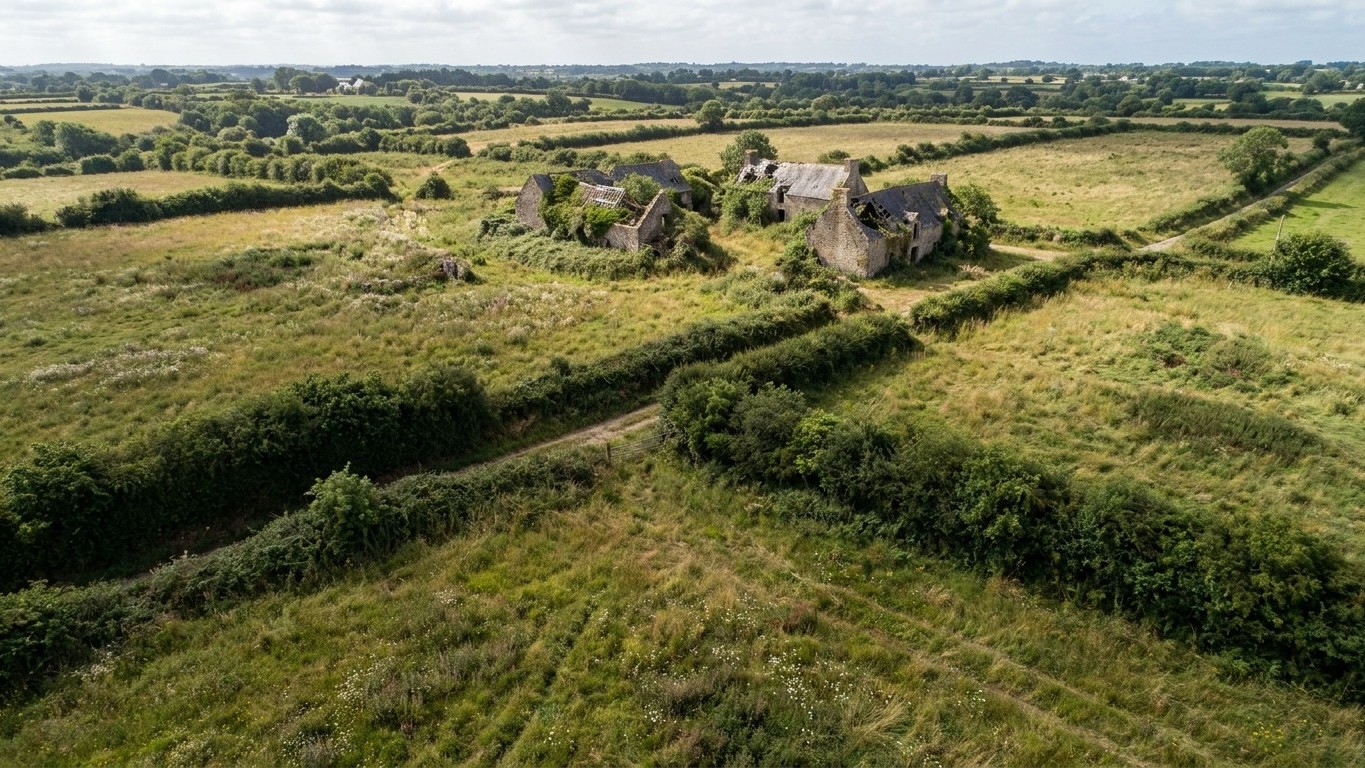
What strikes in this case is the disparity between the magnitude of the litigation and the physical reality of the land involved: fields, bocage hedgerows, a few agricultural buildings reclaimed by former squatters, but no runway, no control tower, no terminal. The losses claimed by Vinci are almost entirely virtual, based on projected profits that were never realized.
Meanwhile, Nantes-Atlantique airport, the one Notre-Dame-des-Landes was supposed to replace, continues to operate at full tilt and is reaching saturation. It logged more than 6.6 million passengers in 2023, a traffic volume that pushes the State to advance modernization at all costs. But even there nothing is simple: the previous call for bids, launched in 2019, was declared unsuccessful for “insufficient competition,” with two candidates having withdrawn from the bid, judged too complex. A new call for bids has since been launched, with no certainty on its timetable, while Vinci continues to operate the current facility while awaiting a new operator. The Notre-Dame-des-Landes file is therefore not merely a dispute over numbers among lawyers: it also conditions the future of a real airport, already saturated, and one that exists today.
Sources: franceinfo.fr | air-journal.fr
