
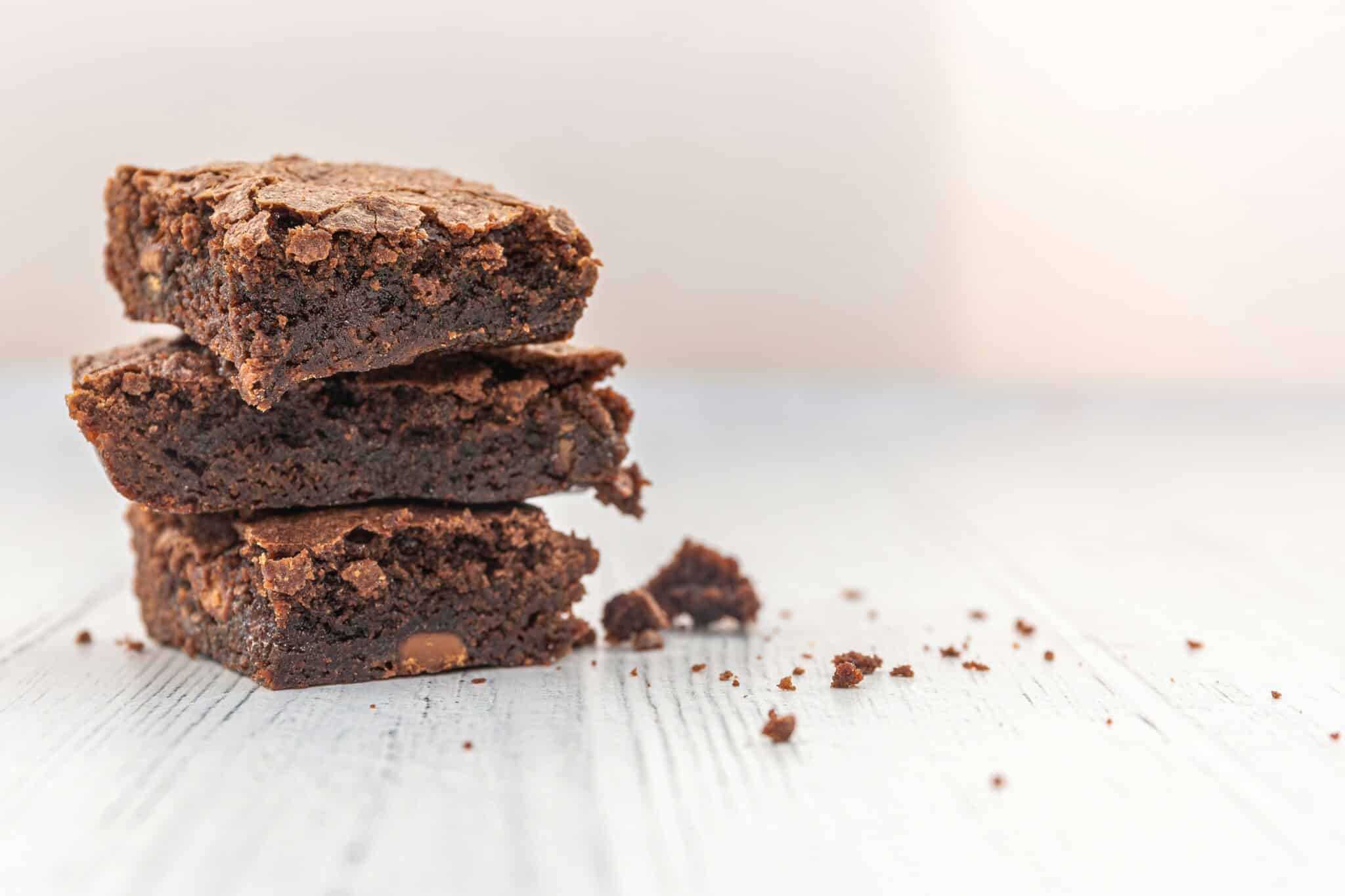
Baking has nothing to do with intuition or grandma’s secrets. It is pure chemistry. Behind the universal comfort of a chocolate brownie lies a complex network of molecular reactions. Science has already decoded the exact role of each ingredient, proving that by tweaking a few variables you can transform a basic batter into a dense, airy, or elastic cake at will.
The Architecture of the Batter: Flour and Eggs
The fundamental structure of your brownie rests on two pillars: gluten and proteins.
Flour is the master builder. When it meets water, its molecules (gliadin and glutenin) fuse to create gluten. The more flour you add and the more vigorously you mix, the stronger this structural net becomes, trapping air to yield a texture close to a classic cake. Conversely, minimizing flour and mixing results in a dense, heavy center.
Eggs act as the cement of this architecture, but with a cunning nuance. The whites are rich in proteins that, when coagulated by heat, provide lightness and volume. The yolks, meanwhile, are fat bombs: increasing their amount weighs the batter down, yielding a far richer result.
Sugar and Fat: Hydration and Flavor Agents
Sugar does more than sweeten; it is a multifunctional chemical agent. In the heat of the oven, it triggers the Maillard reaction, caramelizing with the proteins to develop those distinctive roasted aromas. It also travels to the surface of the batter to crystallize, forming the iconic crackly crust. For a moister texture, chemists recommend brown sugar: its molasses content superbly traps and retains water.
On the fat side, the showdown between butter and oil has been settled by laboratories. Tests show that oil (notably walnut or almond oil) surpasses butter in producing a brownie that is chewy and moist, while offering a lipid profile healthier for cardiovascular health.
The Density Catalyst: The Shape of Chocolate
The choice of cocoa determines the fate of your dessert. Melted chocolate contains pure cocoa butter. As it cools after coming out of the oven, this fat solidifies, locking in the fudgy texture of the cake.
Cocoa powder, lacking that fat, mechanically dries the crumb, making it more crumbly.
Finally, the bake follows thermodynamics: the residual heat from the pan (especially if it’s glass or ceramic) keeps cooking the batter long after it leaves the oven. To preserve a gooey center, you must anticipate this by removing the dish when the knife’s tip still comes out damp.
The Three Absolute Equations of the Brownie
To move from hoping for a good result to planning it scientifically, here are the three formulas validated by chemistry:
-
The Absolute Fondant: Minimal flour, maximal fat, excess yolks, melted chocolate required, and strict prohibition on using leavening agents. Shorter baking time.
-
The Moist (Cake-Style): Abundant flour, less fat, excess whites, cocoa powder favored, addition of baking soda or baking powder. Full bake.
-
The Elastic (Chewy): Replace white sugar with brown sugar, use vegetable oil instead of butter.
