
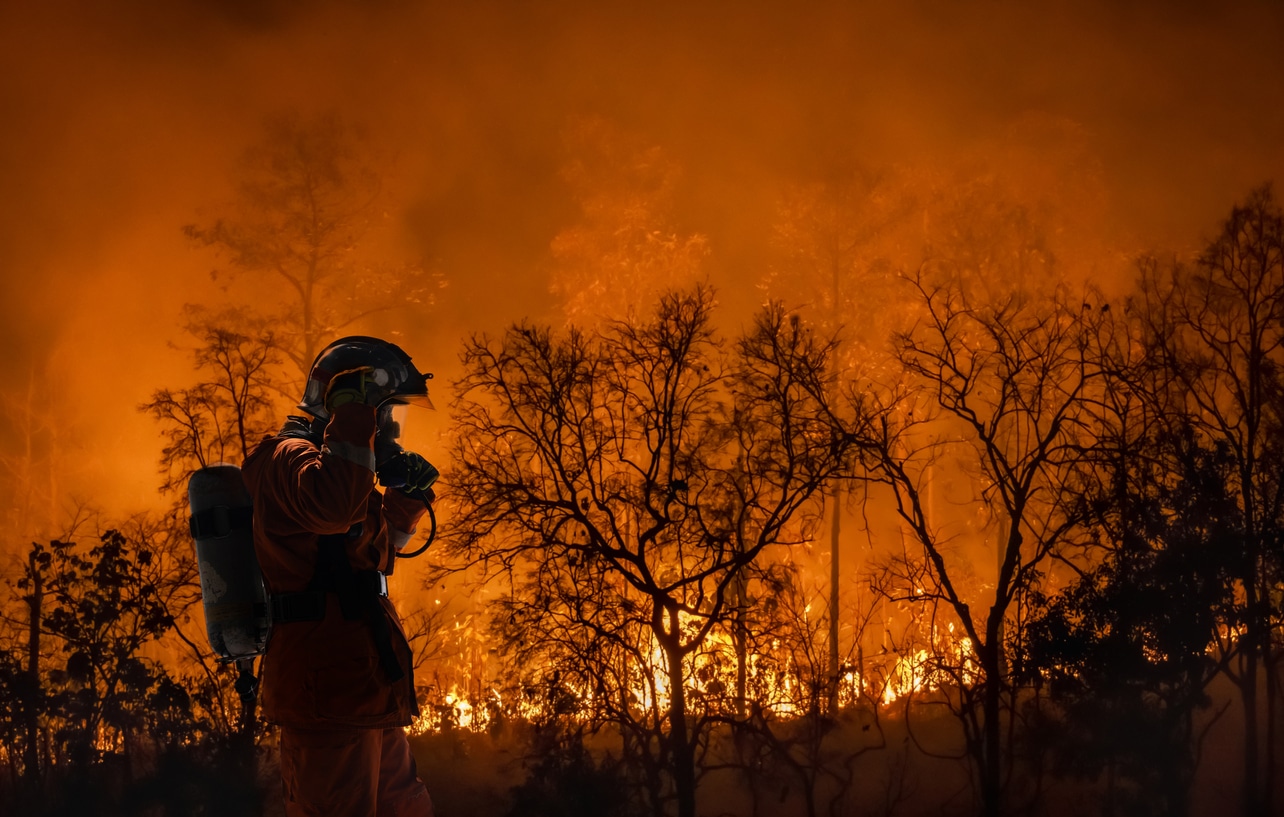
While establishing the link between wildfire smoke and brain damage goes back more than a decade, a recent Canadian study brings new insights. The authors highlighted the extreme speed of short-term effects as well as the social inequalities surrounding these risks. The study’s findings come as the country faces a gravely serious wildfire crisis.
Harmful effects even in the very short term
Over the past decade, several studies have helped show that the effects of fine particles—famously PM2.5—do not stop at the lungs. Autopsies conducted in Mexico revealed brain lesions similar to those characteristic of Alzheimer’s disease. In the early 2020s, other research advanced the understanding of how wildfire smoke affects the brain.
As Canada currently faces a very intense wildfire crisis, local researchers recently conducted work involving 7,000 citizens, as reported by Global News and the newspaper La Presse on July 17, 2026. The scientists noted that PM2.5 particles penetrate deeply into the lungs, before entering the bloodstream and crossing the blood-brain barrier. Some particles entering through the nose could even reach the brain directly. Once lodged in brain tissue, these particles trigger systemic inflammation, as well as intense cellular stress.
In the short term, even after a brief exposure of about three hours, wildfire smoke can provoke headaches, fatigue and headaches. There is also talk of “brain fog,” an immediate brain fatigue state characterized by confusion, reduced attention and short-term memory lapses. In the long term, chronic exposure to smoke—season after season—accelerates cognitive decline and dramatically increases the risks of dementia, stroke, complications related to epilepsy, or even multiple sclerosis.
Unequal Exposure to the Risks Among Citizens
For observers like Bhavini Gohel of the O’Brien Institute for Public Health at the University of Calgary (Canada), the risk is not the same for everyone. She already explained in a 2025 publication that people with low socio-economic status and those who are socially isolated suffer a double burden in the face of wildfires. Indeed, these groups experience heightened exposure to fine particles combined with a lack of resources to protect themselves effectively. This notion includes, notably, poor housing insulation, the high price of purifiers and other N95 masks, or outdoor work that is forced by need. Thus, these individuals are more exposed to risks of early cognitive decline and other adverse effects.
“The children, the elderly, Indigenous peoples, low-income households and people with chronic illnesses are disproportionately affected,” said Bhavini Gohel.
Canada Grappling with the Flames
These findings, whose results are quite concerning, come at a moment when Canada is facing a grave wildfire crisis. If a very rainy spring in 2026 delayed the fire season, June’s heat domes produced the first outbreaks, notably in the Northwest Territories. In early July, waves of dry thunderstorms—lightning without rain—simultaneously generated hundreds of fires in dense forested areas that were inaccessible by road, in the provinces of Ontario, Manitoba and Quebec.
Between July 13 and 23, 2026, the situation grew even more critical with hundreds of additional fires whose smoke filled the sky of the northeast. Canada has also surpassed 3.2 million hectares burned, thus exceeding the total for 2025. For the remainder of the summer, weather forecasts are not very optimistic, with temperatures staying above normal. There are reasons to believe that the peak of the fires may not have yet been reached.
