
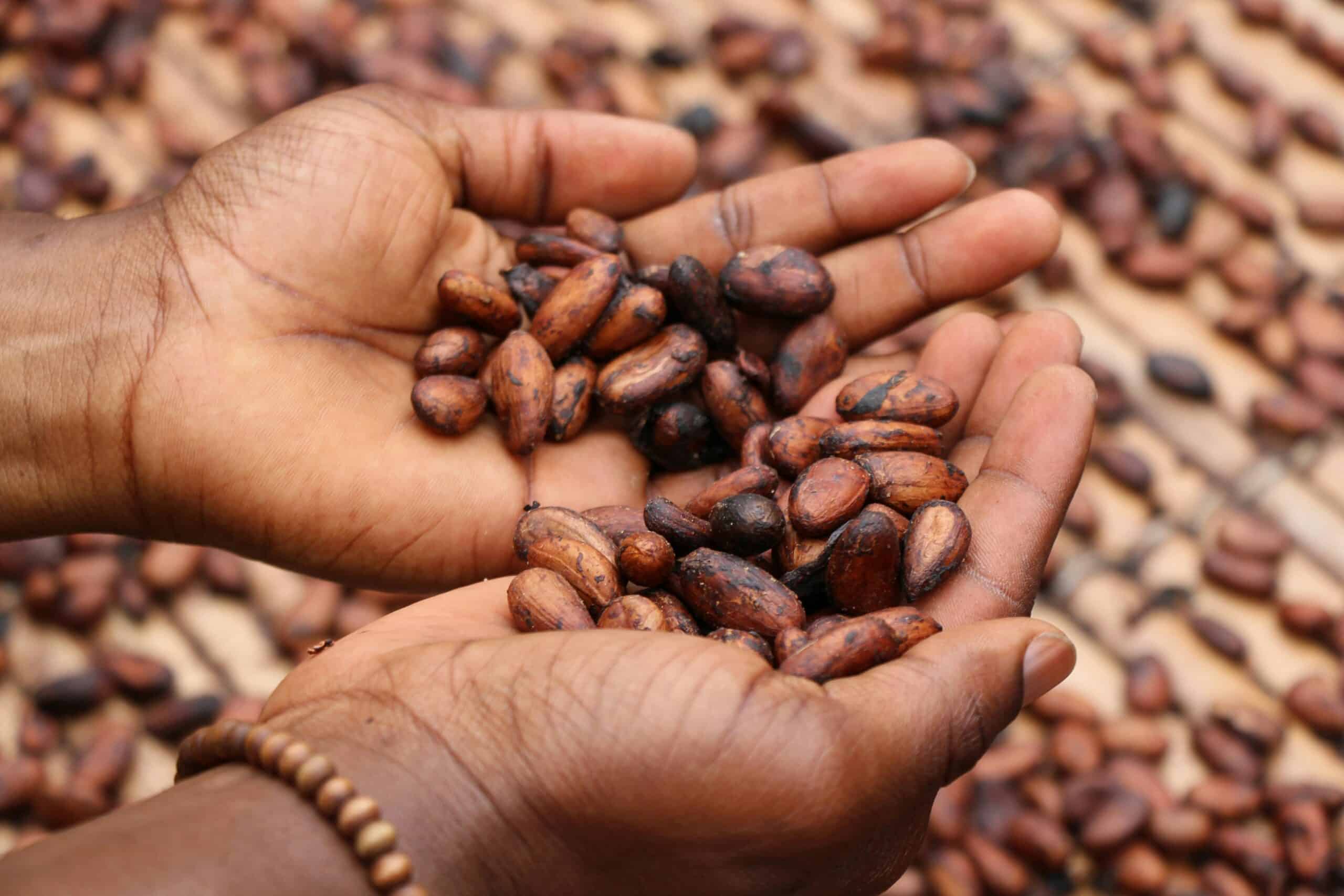
Longtemps portée par ses cultures d’exportation, la Côte d’Ivoire entend désormais rééquilibrer son modèle agricole. Sans remettre en cause le rôle central du cacao, le pays accélère ses efforts pour réduire sa dépendance aux importations alimentaires, diversifier ses productions et adapter son agriculture aux effets du changement climatique. Une stratégie qui se traduit déjà sur le terrain et qui s’inscrit dans une réflexion plus large sur la souveraineté alimentaire du continent africain.
The imperative to reduce food imports
Côte d’Ivoire ranks among Africa’s leading agricultural powers. As the world’s top cocoa producer, it also exports coffee, rubber, cashew, and palm oil. Yet this performance masks a more mixed reality: a large share of foods consumed by households is still imported. In 2024, purchases of food products abroad reached 2,161 billion CFA francs, representing an increase of nearly 10 % in a single year. The country is now the second-largest food importer in West Africa, after Nigeria.
In this context, strengthening domestic production also appears as a way to better manage risks and secure the population’s food supply. The government clearly embraces this stance. “Between food security and food sovereignty, we have chosen food sovereignty: to produce ourselves what we want to consume,” summarized the Minister of Agriculture and Rural Development, Kobenan Kouassi Adjoumani. This ambition aims to reduce the country’s exposure to international shocks while creating more value on its territory.
Rice illustrates this evolution. Self-sufficient in the 1970s, Côte d’Ivoire gradually turned to imports to meet changing consumption habits. Since 2012, authorities have pursued a shift in course through the National Agricultural Investment Program (PNIA) and the National Strategy for Rice Development (SNDR). The stated objective is to achieve rice sovereignty by the end of 2026.
The challenge of climate adaptation
However, producing more will not be enough. It is also essential to produce where conditions allow and with crops able to withstand an increasingly uncertain climate. In Côte d’Ivoire, variations in rainfall and rising temperatures are gradually pushing public authorities to rethink how agricultural production is organized. The challenge is no longer solely to improve yields, but to adapt each sector to the specificities of the territories. This approach involves better knowledge of microclimates, the development of higher-performing seeds, improvements in inputs, as well as investments in irrigation, mechanization, and technical support for producers. The aim is twofold: to strengthen the resilience of farms to climate risks while sustainably boosting their productivity.
The development of a potato value chain in the northern part of the country illustrates this logic. Early assessments conducted in several northern zones have highlighted an underutilized production potential. With the support of ANADER, CNRA, and GUDE-PME, authorities now aim to structure a genuine local supply chain, from seed production to commercialization. Here, the government seeks to better supply the domestic market, curb foreign exchange outflows, and offer new economic opportunities to local producers. In the long term, the structuring of this sector could also help stabilize prices and secure incomes in the affected regions.
Beyond Côte d’Ivoire, strengthening continental cooperation
The challenge extends far beyond Ivory Coast’s borders. While many African countries are seeking to boost their agricultural production today, many still face the same imbalances between a rapidly growing food demand and an insufficient local supply. Rice is a good illustration. According to the FAO (Food and Agriculture Organization of the United Nations), its consumption is rising by about 6% per year in Sub-Saharan Africa, while regional production still covers only around 60% of needs. This deficit continues to drive imports and exposes many states to fluctuations in international prices and to tensions in supply chains. To address this, several countries are leaning on stronger cooperation. For years, FAO has supported South-South cooperation programs, which rely on the sharing of technologies, expertise, and solutions developed in other countries facing similar problems. Partnerships with China, Brazil, Morocco, Vietnam, and even Venezuela have thus helped disseminate new practices in irrigation, mechanization, and yield improvement.
Alongside this technical cooperation, there is now a clear economic framework embodied by the African Continental Free Trade Area (AfCFTA); it is set to progressively facilitate agricultural exchanges among African countries by reducing tariff barriers and harmonizing certain trade rules. For food crop sectors, the aim is to streamline the movement of productions across the continent, strengthen regional value chains, and create new outlets for African producers.
This evolution will not, by itself, solve the sector’s difficulties. The development of infrastructure, modernization of logistics, improvement of storage capacity, and the harmonization of sanitary standards will remain essential prerequisites for these exchanges to truly scale up.
