
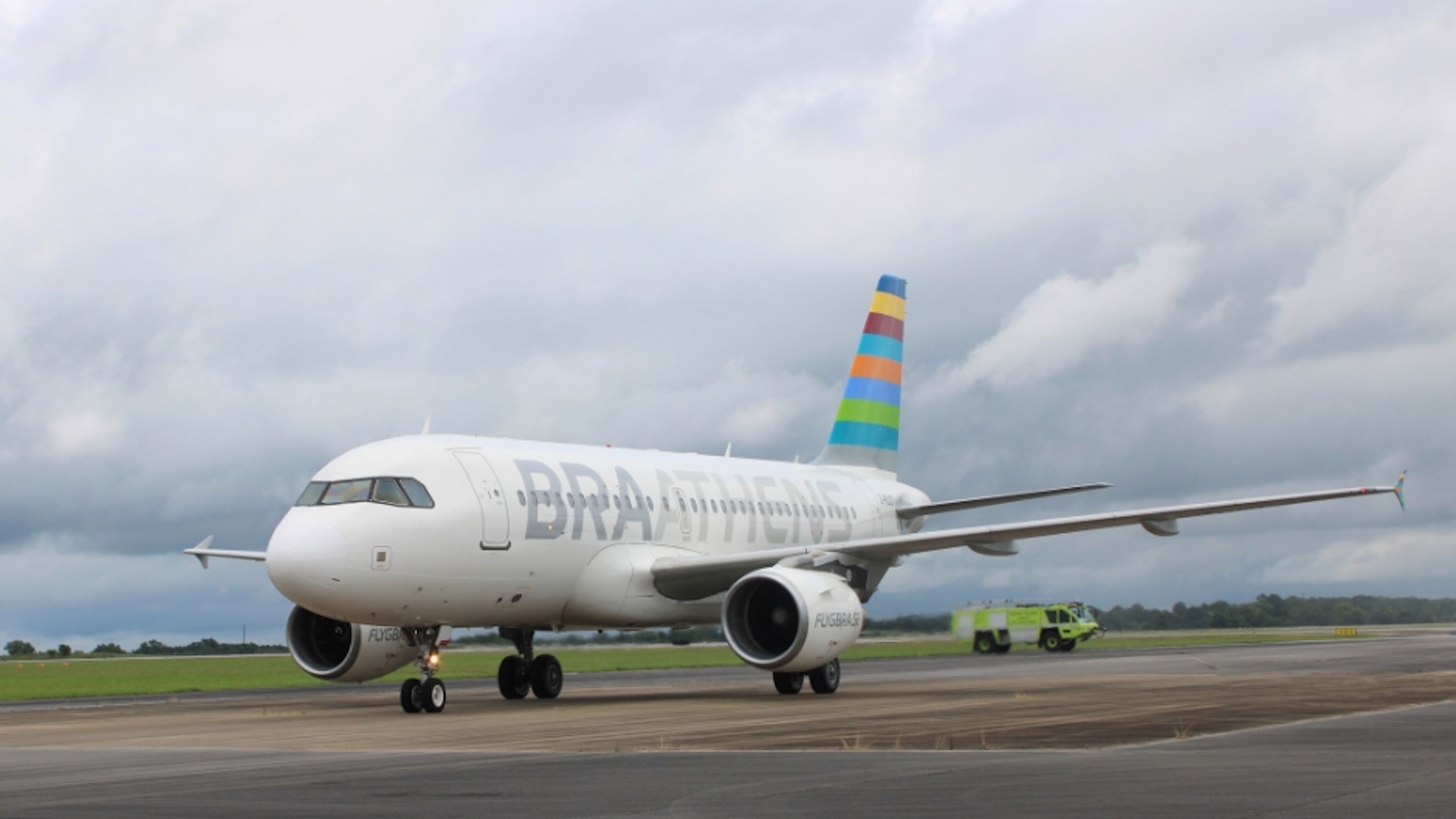
For the first time, an Airbus A319 will be converted into a water bomber to combat forest fires. Neptune Aviation, an American specialist in aerial firefighting, has taken delivery of the aircraft, which will be operational in 2028 with a retardant capacity of 4,500 gallons — 50% more than the current aircraft in the fleet.
What you will learn
- Why Neptune Aviation chose the A319 after two years of evaluation to replace its BAe 146s
- What modifications will be made and what concrete advantages in terms of capacity and response time
- How this acquisition fits into the global response to worsening forest fires
A Fleet Modernization Driven by More Intense Fires
Neptune Aviation Services has, for more than 30 years, been one of the leading aerial firefighting service providers to the U.S. Forest Service. Its current fleet of nine BAe 146 water bombers has taken part in operations around the world. But faced with the surge of extreme wildfires linked to climate change, the company decided to move to the next generation of aircraft.
After more than two years of evaluation focusing on retardant capacity, fuel efficiency, availability, and long-term maintenance ease, Neptune selected the Airbus A319.
From 3,000 to 4,500 gallons of retardant
The A319 has just been delivered to the Commercial Jet maintenance center in Dothan, Alabama, where it will be converted into a tanker aircraft by the French engineering firm Aerotec & Concept. Modifications are expected to take around 18 months, with entry into service planned for the 2028 wildfire season.
Retardant capacity will rise to at least 4,500 gallons, up from a maximum of 3,000 gallons on the BAe 146 — a 50% increase. The A319 also features a larger fuel capacity, which reduces the need for reloading and extends the time it can operate above the fires. Its higher cruising speed enables shorter response times from base.
The aircraft is equipped with fly-by-wire avionics — computer-processed electronic flight controls — which enhance safety, reliability, and handling while reducing the aircraft’s weight compared with traditional mechanical systems.
A Strategic Investment in the Face of a Growing Threat
Neptune plans to expand its A319 fleet in the coming years as part of a long-term modernization strategy for its capabilities. This decision aligns with a global movement to strengthen firefighting air fleets as the scale and complexity of wildfires continue to rise.
