
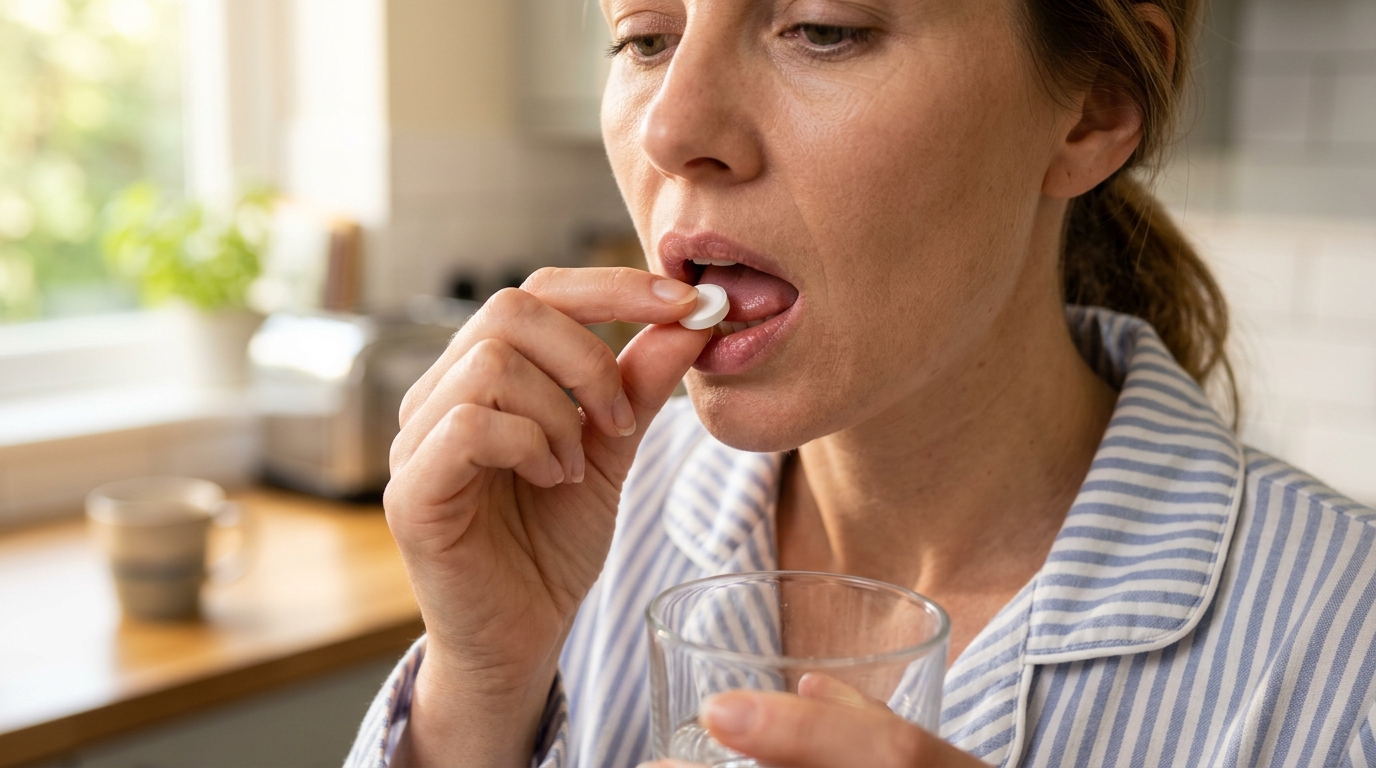
On one side, a medication that you can buy over the counter, in every home, almost banal. On the other, the leading cause of medication-origin liver transplants in France. Between these two realities, there are sometimes only a few pills too many. In emergencies, healthcare workers see it regularly, but the message struggles to reach the general public as paracetamol seems harmless. With the return of the first colds and headaches tied to the start of the school year, the temptation to take it as a precaution, without counting, resurfaces. Yet behind this widespread habit lies a safety margin far narrower than most people imagine.
- Never exceed 4 grams of paracetamol in 24 hours, with a maximum of 1 gram per dose spaced 4 to 6 hours apart.
- Combining it with alcohol is particularly dangerous because both substances tax the same organ, the liver, increasing the risk of toxicity even at therapeutic doses.
- If there is any doubt about a possible overdose, contact a poison control center immediately or go to the emergency department, as liver injuries can become irreversible.
- The paracetamol, this medication we swallow without counting
- When alcohol and paracetamol meet, the liver pays the price
- Regain control: simple reflexes that change everything
Paracetamol, the drug we swallow without counting
Hard to find a medication more familiar. For fever, muscle pains, migraines, or the aftermath of a night out, paracetamol is often the first reflex, and sometimes the only one. This almost absolute confidence explains a large part of the problem: the recommended dose is 1 gram per dose, up to three times a day, never exceeding 4 grams in 24 hours. A threshold that seems large, but which is crossed more easily than one might think, especially when several medicines already contain paracetamol in the background. This is the case with many cold or flu remedies, which combine this active ingredient with other substances, often without the consumer realizing it. As a result, an overdose can occur without any intention to misuse it, simply through unintentional accumulation. It is also for this reason that the ANSM has imposed a warning message directly on the boxes of medicines containing paracetamol alone, bluntly reminding that exceeding the dose can destroy the liver.
When alcohol and paracetamol meet, the liver pays the price
The pairing of alcohol and paracetamol perfectly illustrates why the safety margin is tighter than it seems. Both substances are metabolized by the same organ, the liver, which can quickly become overwhelmed when it has to process both at once. In a person with regular alcohol consumption, hepatic glutathione reserves, essential for neutralizing the toxic metabolites of paracetamol, are naturally diminished. A dose that is still considered therapeutically acceptable can then become dangerous. For reference, the MSD Manual places the threshold for acute poisoning at around 150 mg per kilogram, that’s roughly 7.5 to 10 grams in an adult over 24 hours, a figure that may seem distant but becomes dangerously close in the case of cumulative intake or preexisting liver fragility. People under 50 kilograms, the elderly, those with hepatic or renal insufficiency, and chronic alcohol users are among the profiles to watch most closely. Experts also advise waiting several hours after a heavy alcohol intake before taking paracetamol, so as not to overburden a liver that is already hard at work.
Regain control: simple reflexes that change everything
Good news: avoiding this kind of misadventure does not require extraordinary vigilance, just a few well-established habits. Here are the main reflexes to adopt:
- Count doses precisely and keep at least 4 to 6 hours between each one
- Check the composition of other medications taken concurrently, especially those for colds or flu
- Avoid alcohol during paracetamol treatment, especially if it extends over several days
- Ask a pharmacist before combining several treatments, even when they are sold over the counter
If there is any doubt about a possible overdose, it is wiser not to wait for symptoms to worsen: contacting a poison control center immediately or going to the emergency department remains the best option, because liver injuries can become irreversible if not addressed in time.
Paracetamol is not candy, even if it sometimes looks banal. Keeping track of doses, respecting intervals, avoiding alcohol, and never hesitating to seek advice before stacking several treatments are simple but life-saving gestures. Next time your hand hovers over the box, it is better to read the label twice than to regret it once too many.
