
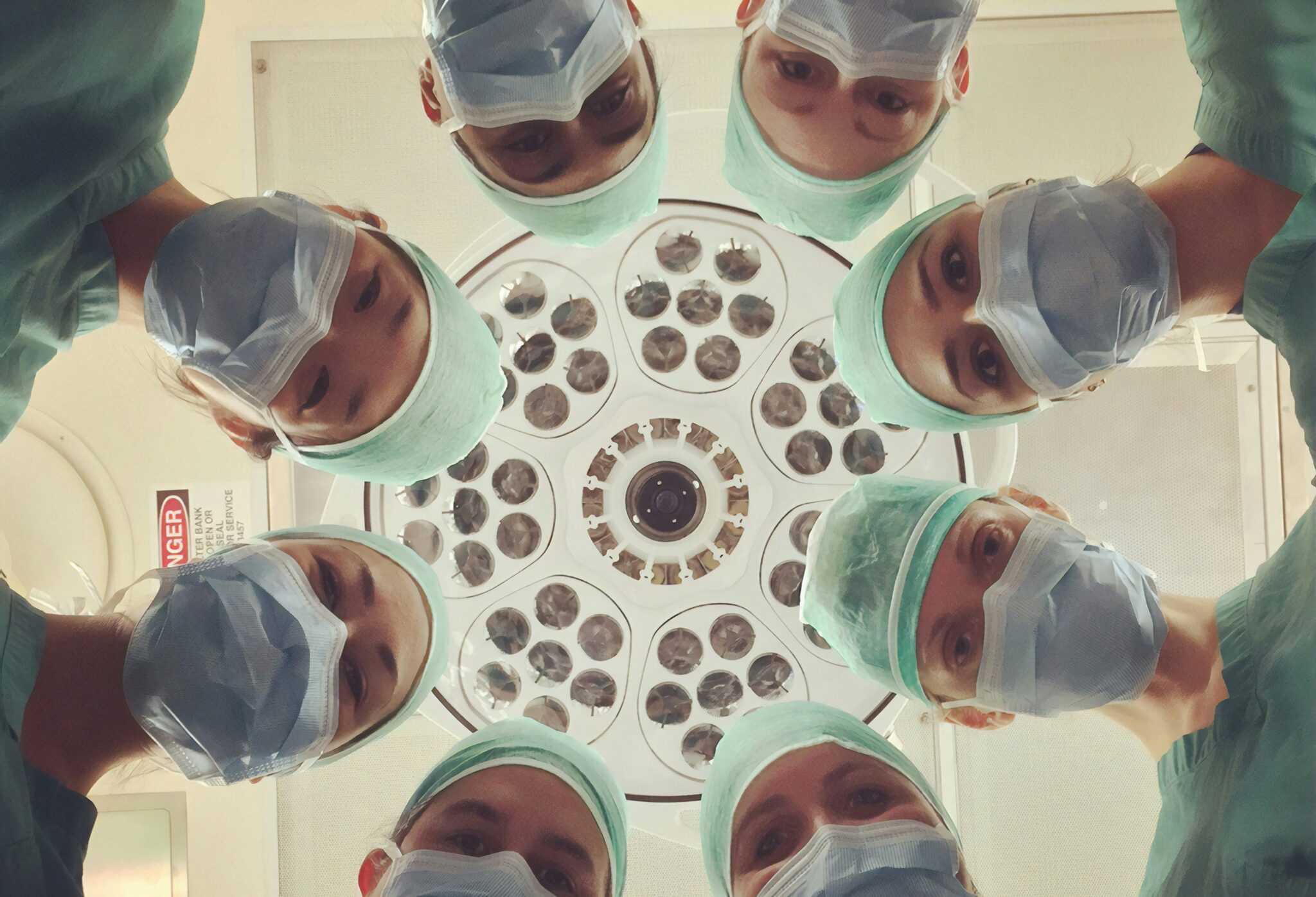
You might think it’s a childish joke, but the question warranted a serious scientific investigation. In the operating room, can intestinal gas truly compromise the sterility of a surgery? Faced with a nurse’s worry, an Australian doctor decided to turn this trivial inquiry into a rigorous microbiology experiment. The results, as surprising as they are instructive, reveal that the real shield against infection isn’t necessarily hidden where you’d expect it.
| What you will learn |
|
– The unusual protocol devised to capture bacteria from a fart. – Why wearing pants completely changes the contamination dynamics. – The reassuring scientific conclusion about infection risk in the operating room. |
An improvised microbiology experiment
It all begins with a legitimate question posed by a nurse to a doctor, Dr. Karl Kruszelnicki: “Am I contaminating the environment if I fart in the operating room?”
Not finding an answer in the existing medical literature, the physician enlisted the help of a microbiologist, Luke Tennent. Together, they devised a simple yet effective test.
A volunteer was invited to emit intestinal gas at a distance of only five centimeters from a Petri dish (a container used to culture bacteria). The experiment was carried out twice: first with pants, then with no clothing.
The results of the Petri dishes
The results after a night of incubation were unequivocal. The Petri dish used during the “no pants” attempt showed a proliferation of bacterial colonies.
These bacteria, primarily species typically found in the gut and on the skin, had multiplied dramatically. By contrast, the box exposed to gas through the pants remained perfectly clean.
The analysis showed that clothing acts as an extremely effective biological filter. The fabric traps micro-droplets carrying bacteria, allowing only odorless (or less odorous) gases to pass through, which are sterile.
Are the bacteria ultimately harmless?
Although the sight of bacteria in a Petri dish can be alarming, the researchers stressed the limited danger posed by these microorganisms.
The identified bacteria belonged to families that are generally harmless, similar to those found in certain probiotics or on our own skin.
Moreover, the experiment was conducted at a very short distance (5 cm). In an operating room, the distance between staff and the surgical field is much greater, which greatly reduces any potential risk.
Science at the service of everyday life
This study, though seemingly light, reinforces a cardinal rule of hospital hygiene: clothing is the first line of protection against the spread of germs.
It also demonstrates that science can tackle any subject, even the most taboo, to provide answers based on facts rather than assumptions.
From now on, healthcare workers can rest assured: as long as they wear their official uniform, a minor intestinal upset will have no impact on patient safety.
