
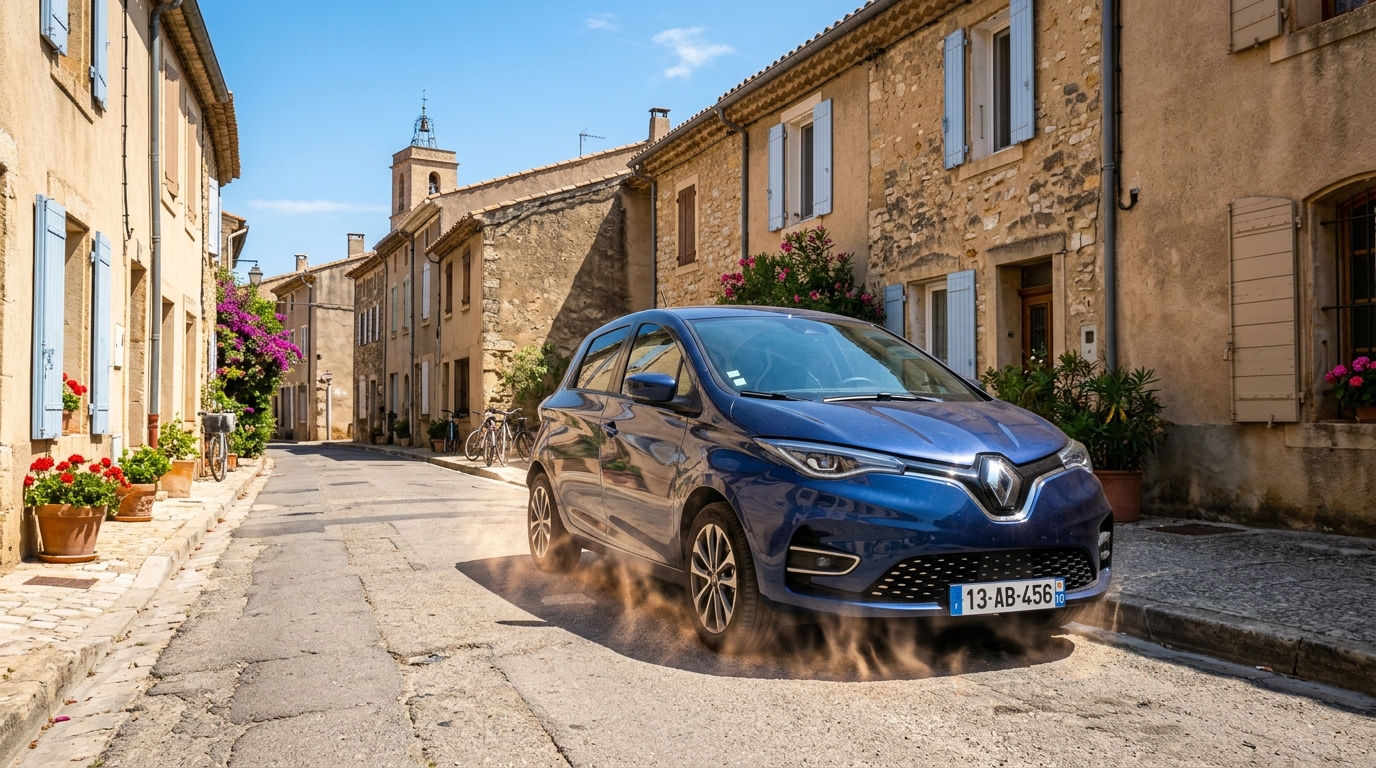
We cover it in winter, we park it in the garage as soon as the first frost appears, and we avoid charging when the thermometer shows negative values. The electric car battery has long been treated as a delicate plant that must be protected from the cold above all else. Yet this winter caution hides a surprisingly overlooked angle: it is heat, the heat that accompanies long summer days and drives under a blistering sun, that causes the deepest and most lasting damage to lithium cells. Cold slows chemical reactions temporarily and chips away at range in the moment, but everything returns to normal once temperatures rise again. Heat, on the contrary, leaves traces. Traces that never fade.
Heat, this slow poison gnawing at lithium cells
A lithium-ion battery does not like extremes, in either direction, but it is heat that acts as a aging accelerator. Concretely, an average degradation of 2.3% of capacity per year has been measured across a wide fleet of electric vehicles, which leaves roughly 81.6% of capacity remaining after eight years of use. A figure that seems reasonable, until you look more closely at the influence of local climate. In hot regions, comparable to the south of France or Arizona, this degradation can rise to 3.5% per year, versus only 1.5 to 2% in a temperate climate. The difference is far from negligible over the total lifespan of the vehicle.
The mechanism at play is purely electrochemical. When the temperature climbs, the battery’s internal resistance evolves and the chemical reactions accelerate, which wears the electrodes and the electrolyte more quickly. This phenomenon, called calendar aging, occurs even when the car is idle. In other words, a battery can age prematurely simply by being parked in direct sun, without a single kilometer driven. Degradation begins at around 50 degrees, and performance drops noticeably beyond 70 degrees, temperatures that are quite attainable inside a battery exposed to summer heat.
Why your range fades faster in July than in January
Contrary to a widespread belief, range does not collapse only when the mercury drops. Electric vehicles deliver their best performance around 21.5°C, with a range that can even exceed the manufacturer’s estimate by 15% under those ideal conditions. Beyond that point, whether cooling or heating, the figures degrade. But in periods of extreme heat, the drop can reach up to 31% of lost range, with the optimal band lying closer to 20 to 25°C. Constant use of air conditioning, on-board electronics that heat up, and the battery itself having to manage its own temperature all consume energy that would otherwise go toward driving.
This drop in performance in summer is accompanied by a less visible but equally real phenomenon: battery management systems, referred to as BMS, actively respond to prevent overheating. This shows up as reduced power, less effective regenerative braking, and fast charging that becomes less regular. The vehicle literally protects itself from heat, sometimes at the expense of driving comfort. It’s a bit like a runner deliberately slowing down in a heatwave so as not to collapse before the finish line.
Fast charging and heat waves: the duo that wears the battery out twice as fast
Two behaviors markedly amplify the thermal stress on an electric battery: leaving it parked at 100% charge in direct sun, and driving multiple fast charges during periods of intense heat. Parking at full charge under a 30°C temperature can cause up to three times more calendar aging than storing at 50% under 20°C. This is valuable information for anyone heading on summer holidays and leaving their car plugged in at full on a sun-baked parking lot before a long trip.
Fast charging, particularly favored on highway rest areas during major summer departures, adds another layer of stress. The high current injected in a short time generates internal heat, which adds to the heat produced by the outside temperature. Result: the battery endures a double thermal punch, external and internal, precisely when it is most taxed. It’s somewhat like sprinting in the middle of a heatwave after a long day without shade, with the body—here the battery—paying the price over time.
What the data reveal about the real lifespan of batteries in the face of the thermometer
The type of cooling system on board makes a substantial difference in battery longevity. Over a five-year period, a vehicle equipped with liquid cooling typically loses less than 10% of range, while a model with a simple air-vent system can lose between 20% and 30%. This technical difference helps explain why some models visibly age better than others, even under similar climatic conditions. Liquid cooling acts like a permanent thermostat, able to regulate cell temperature far more precisely than a mere airflow.
What emerges from all these observations is that summer heat is not merely a temporary inconvenience for electric batteries. It is a real chemical aging factor, acting deeply and irreversibly, unlike cold which only affects temporary performance without permanently damaging the cells. An essential nuance to understand, especially as extreme heat episodes become more frequent in France and more drivers switch to electric.
Ultimately, protecting an electric battery requires reversing some deeply ingrained habits. Avoid direct sun, limit charging to 100% outside of major departures, space out fast charging during heat waves—these simple actions can make a real difference in the vehicle’s longevity. As summer becomes a lasting part of our driving routines, a question should be addressed to both manufacturers and drivers: are we sufficiently prepared to shield our batteries from heat as well as we already protect them from cold?
