
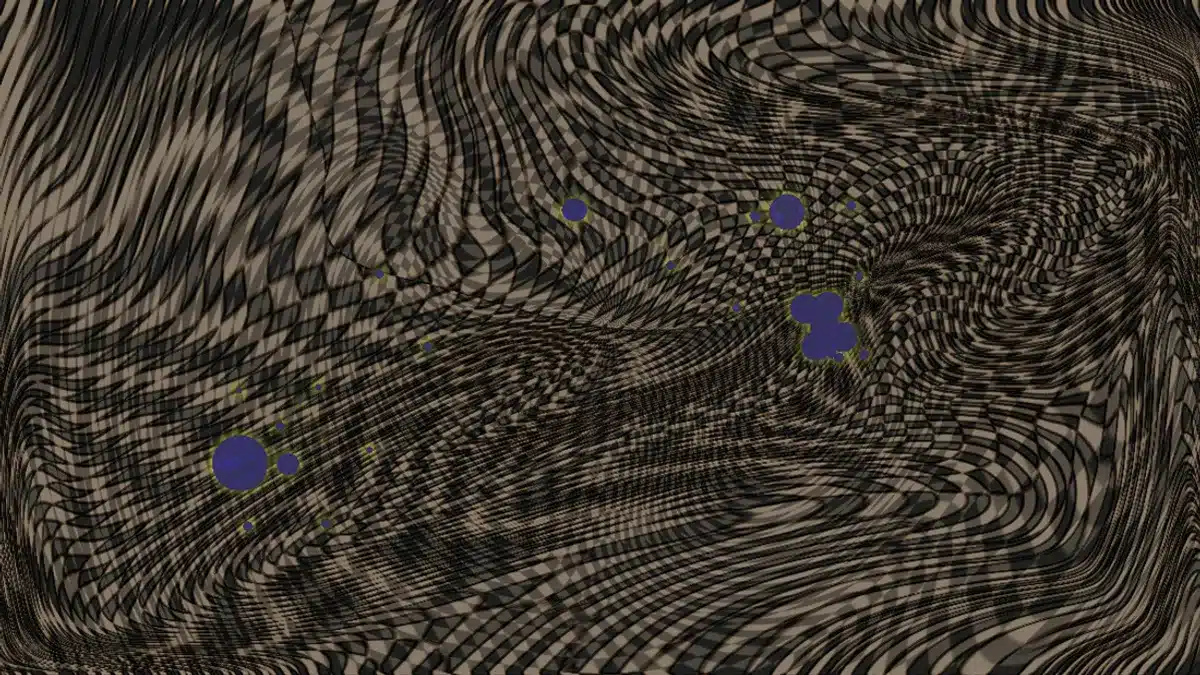
Sometimes patterns and swirls of color begin to dance in the dark when you close your eyes. These visual phenomena, known as phosphenes, are not products of our imagination, but rather the intriguing result of the inner workings of our eyes.
The Floaters (Myodesopsia) and Phosphenes
A few months ago, we mentioned these small floaters that sometimes appear in your field of vision. This phenomenon, called myodesopsia, corresponds to the observation of microscopic particles (most often tiny bits of tissue, red blood cells, or clumps of proteins) floating in the vitreous body, a gelatinous and transparent substance filling the ocular cavity behind the lens. In general, these strange moving shapes, resembling little worms, are more easily observed when you look at a clear, uniform background like the sky.
Today, we turn our attention to the phenomenon of phosphenes — sensations of light perceived when the eyes are closed in darkness. These patterns and swirls that some people see are harmless visual hallucinations resulting from the normal functioning of the eyes.
What is it?
Even in total darkness, our eyes are not completely “off.” The cells located at the back of our eyes continuously emit very faint internal light signals that mimic light. These signals are generated by changes in activity within these cells. They are then transmitted to the brain, which interprets them as lights and visual patterns. Since the brain does not distinguish between these internal signals and a real light source, this creates a harmless kind of visual illusion. The color-detecting cells also contribute to this experience, which explains why phosphenes can appear colored.
The biological interest of this phenomenon lies in the maintenance of visual sensitivity even in low-light conditions. Specifically, the cells responsible for vision, called photoreceptors, are mainly composed of two types: cones, which are sensitive to bright light and colors, and rods, which are more sensitive to low light and enable black-and-white vision.
The internal light signals generated by these cells, even in the absence of external light stimulation, help sustain a certain level of electrical activity in the visual system. This mechanism helps the eye adapt quickly to changing light levels, such as when moving from a bright environment to a dark place.
Note that while these phosphenes are generally harmless and occur in healthy people, they can sometimes indicate health issues, such as a retinal detachment or neurological problems. If the light patterns become more noticeable or persist longer, it could be a sign of a problem, and it is recommended to consult a healthcare professional.
👉 A little gesture for Space Group? Follow us on Google, add us to your bookmarks, and find us on Google News so you don’t miss a single discovery.
