
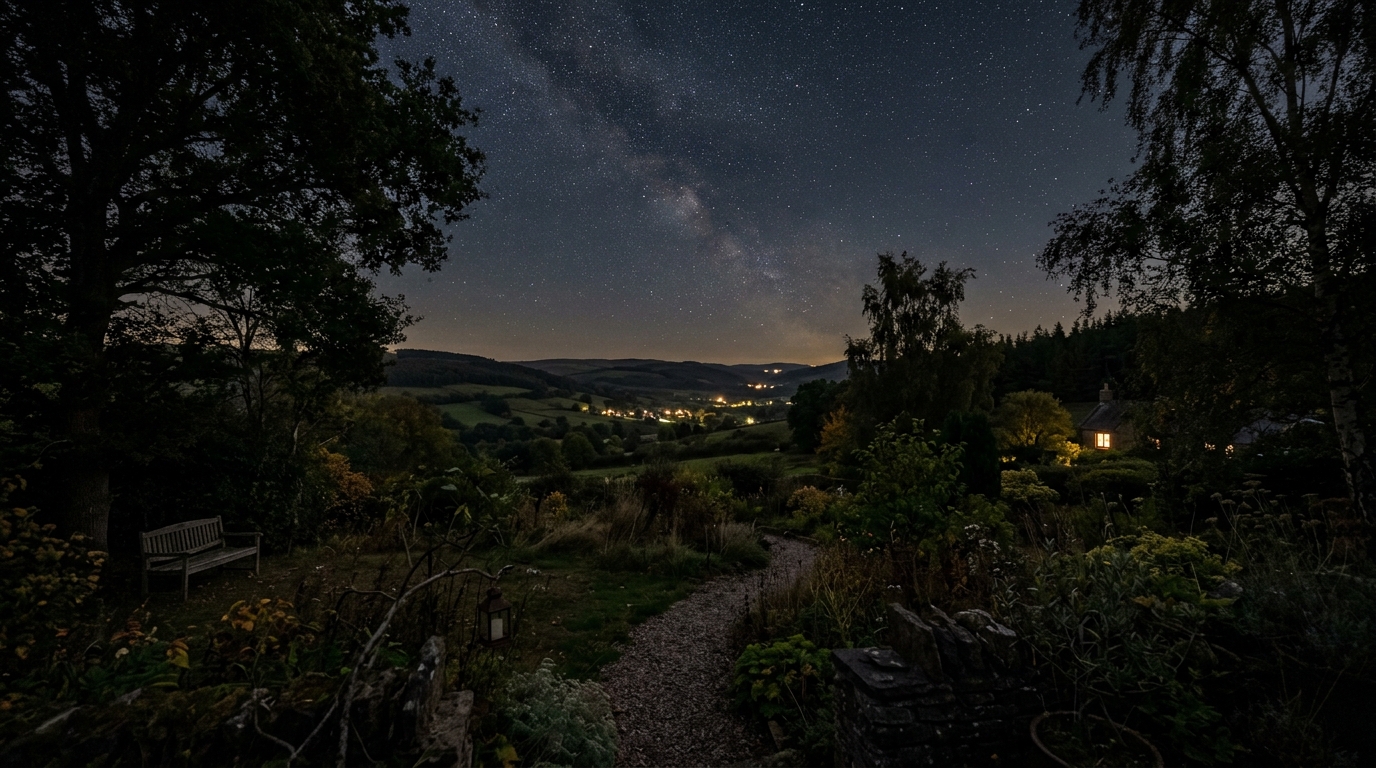
If you’ve noticed that certain distant sounds have sounded closer in the last few evenings, it isn’t your imagination. The atmosphere itself alters the way sounds travel to your ears. At the tail end of September, Brittany and several other regions experience cool mornings followed by afternoons that still feel summery—a typical autumn transition tied to the equinox. These temperature differences aren’t incidental: they herald the return of calm, clear nights, an ideal playground for a discreet but real phenomenon that subtly distorts our perception of far-off noises.
- On a clear, calm, windless night, a temperature inversion traps cold air at the surface beneath a layer of warmer air, making distant sounds seem closer and louder.
- This same phenomenon also promotes the formation of morning fogs and sea of clouds in valley bottoms, as well as the buildup of pollutants near the ground.
- These thermal inversions, frequent during anticyclonic episodes, will recur regularly throughout autumn and winter 2026-2027.
- This calm, starry night hides an acoustic trap
- Why ground-level cold changes everything about the propagation of sound waves
- What this phenomenon reveals about the atmosphere around us
This calm and starry night hides an acoustic trap
Clear skies, no wind, and air that feels almost motionless: these conditions, common during autumn anticyclones, create an ideal setting for a nocturnal stroll. Yet beneath this outward quiet lies an invisible mechanism at work. The high pressures that dominate this period are accompanied by a more stable atmosphere, with limited vertical movement. The result is that cold, moist air remains trapped near the ground instead of dissipating. It is precisely during such a quiet night, with no clouds to retain heat, that distant sounds begin to seem unnaturally close and strong. A phenomenon that has already been observed in mid-September in several mountain hollows and basins, where strong morning thermal inversions pushed temperatures down to ground level.
Why ground-level cold changes everything about the propagation of sound waves
To understand this acoustic trap, one must look at what happens vertically in the air. During a clear night, the ground cools rapidly by infrared radiation. The air just above becomes cooler than the layers above it, with sometimes more than a 10°C difference over only a few hundred meters of altitude. This is called a temperature inversion, the most common being a surface inversion, or radiative inversion, typical of autumn and winter nights that are largely clear. It is precisely this unusual arrangement—cold air at the surface and warmer air aloft—that alters how sound waves propagate. The Midwestern Regional Climate Center, affiliated with Purdue University and NOAA, explicitly cites this effect among the consequences of temperature inversions: sound waves travel farther and seem louder. This offers a possible explanation for those nocturnal noises that seem to appear from nowhere, when in fact they originate from a source much farther away than the ear perceives.
What this phenomenon reveals about the atmosphere around us
This acoustic illusion is only the audible part of a phenomenon with multiple effects. The same thermal inversion that deceives our ears also promotes the formation of morning fog and valley sea of clouds, a classic spectacle in the mountains where cold air—denser—pools in the low-lying areas while the peaks stay sunlit and mild. The ceiling of this cold-air layer varies by region, typically ranging from several hundred meters up to just over a thousand meters in the Alpine ranges, and it can rise to 800–1,500 meters in Haute-Savoie. This same vertical blockage of the air also has less poetic consequences: by preventing mixing, it favors the accumulation of pollutants near the ground, explaining many pollution peaks in autumn and winter. Another effect to note: dew almost invariably forms during these inversions, a detail that raises the risk of diseases for crops sensitive to humidity. This weather pattern, fostered by calm atmospheric conditions and a lack of wind, will recur regularly throughout autumn and winter 2026-2027, with each new anticyclonic episode.
Take this away: on a clear, calm, windless night, don’t trust your ears too quickly. The sound that seems so close may actually come from much farther away than it appears, simply because the cold air hugging the ground and the warmer air above alter the way sounds propagate. A useful reminder that the atmosphere, even when seemingly silent, quietly shapes our perception of the world around us. And if the next time you hear an unusual noise at night, you first look toward the sky?
