
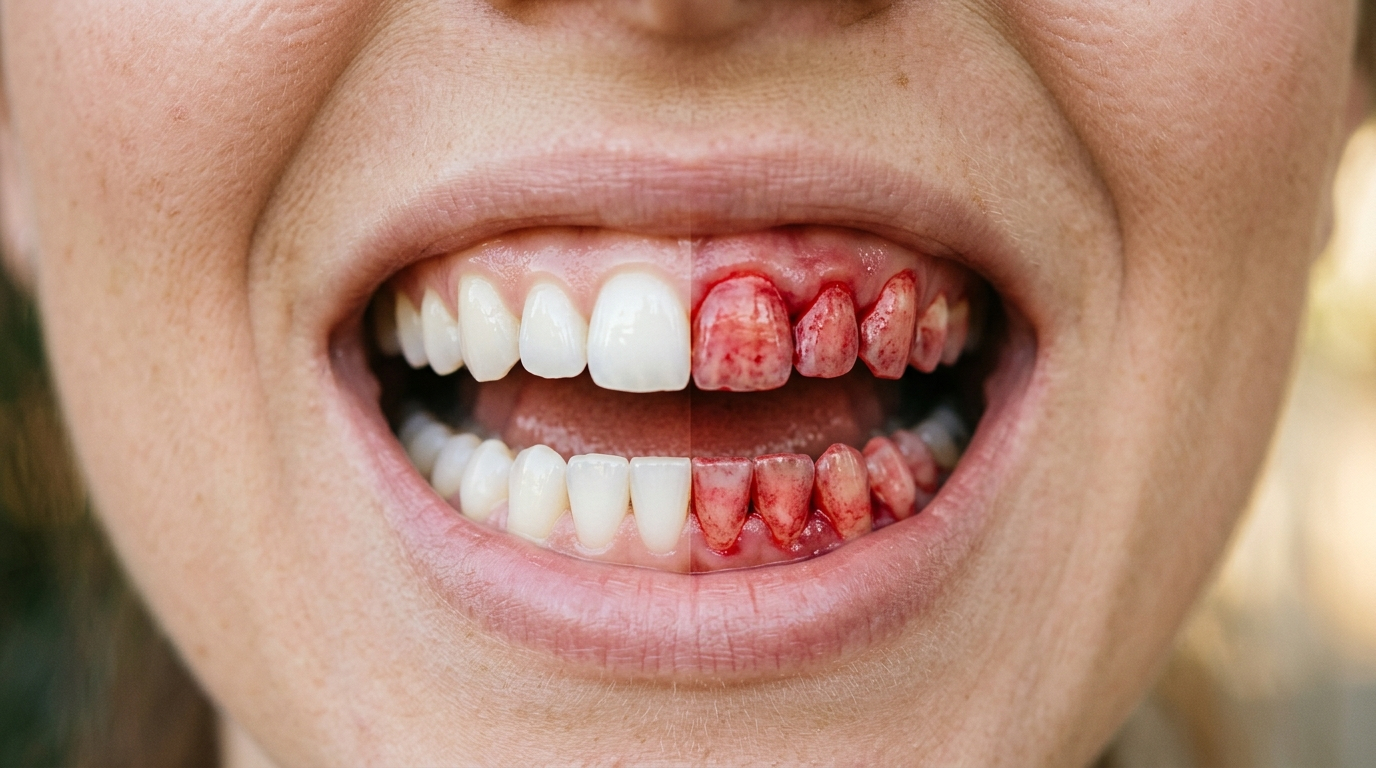
Meal finished, a dry mouth, off to the bathroom. It’s the reflex of nearly everyone, ingrained since childhood: brush your teeth as soon as the last bite is swallowed, toothbrush in hand, toothpaste ready, with the satisfaction of a job well done. Except that as we settle back into routine, between back-to-back coffees and meals scarfed on the go, this almost automatic gesture deserves to be reconsidered. For that timing, as well-intentioned as it may be, could in fact weaken what it is supposed to protect. An explanation of a misunderstanding as old as our bathrooms.
The invisible trap lurking in your plate
Everything begins well before brushing, right from the first bite. Some everyday foods and drinks are naturally acidic: citrus fruits, sodas, vinaigrettes, white wine, fruit juices, but also less obvious items like tomatoes or certain flavored yogurts. This acidity comes into direct contact with the enamel, the protective layer that coats each tooth. The result: for several minutes after the meal, the enamel is temporarily softened, more porous, more vulnerable than usual. It’s a natural and reversible phenomenon, provided it has time to repair itself. The problem is that this moment of fragility coincides exactly with the moment we reach for the toothbrush, convinced we are doing the right thing.
Why your toothbrush becomes a weapon against yourself
Here is the revelation that changes everything: brushing immediately after an acidic meal softens the enamel and promotes its wear. By scrubbing a surface that is already weakened, even with gentle motions and a soft brush, we mechanically accelerate the erosion of this protective barrier. Year after year, meal after meal, this small repeated gesture ends up damaging the enamel in an irreversible way, unlike the temporary fragility caused by the acidity alone. The teeth can then become more sensitive to hot, cold, or sweet stimuli, and gradually lose their natural shine. The paradox is cruel: the act meant to clean and protect becomes, when poorly timed, an additional factor of wear for your smile.
The new rule to adopt to protect your smile in the long run
The solution doesn’t require any special equipment or a radical change in habits, just a little patience. It is advised to wait about 30 minutes after an acidic meal or drink before brushing your teeth. This delay gives saliva time to perform its natural role: it gradually neutralizes the acidity and allows the enamel to regain its original hardness. In the meantime, a few simple actions can help limit the effects of acidity: drink a glass of water after the meal, chew sugar-free gum to stimulate saliva, or avoid continuous snacking throughout the day. Adopting this new timing requires no particular effort, only unlearning an old reflex to establish one that is more respectful of oral health.
In short, it isn’t the brushing itself that’s the problem, but its timing. A simple thirty-minute shift is enough to transform a gesture potentially harmful into a true ally for the enamel. So, the next time the urge to rush to the bathroom right after a meal appears, perhaps it’s better to wait a little, with a glass of water in hand. A simple question to ask yourself before every brushing now: is this really the right moment?
