
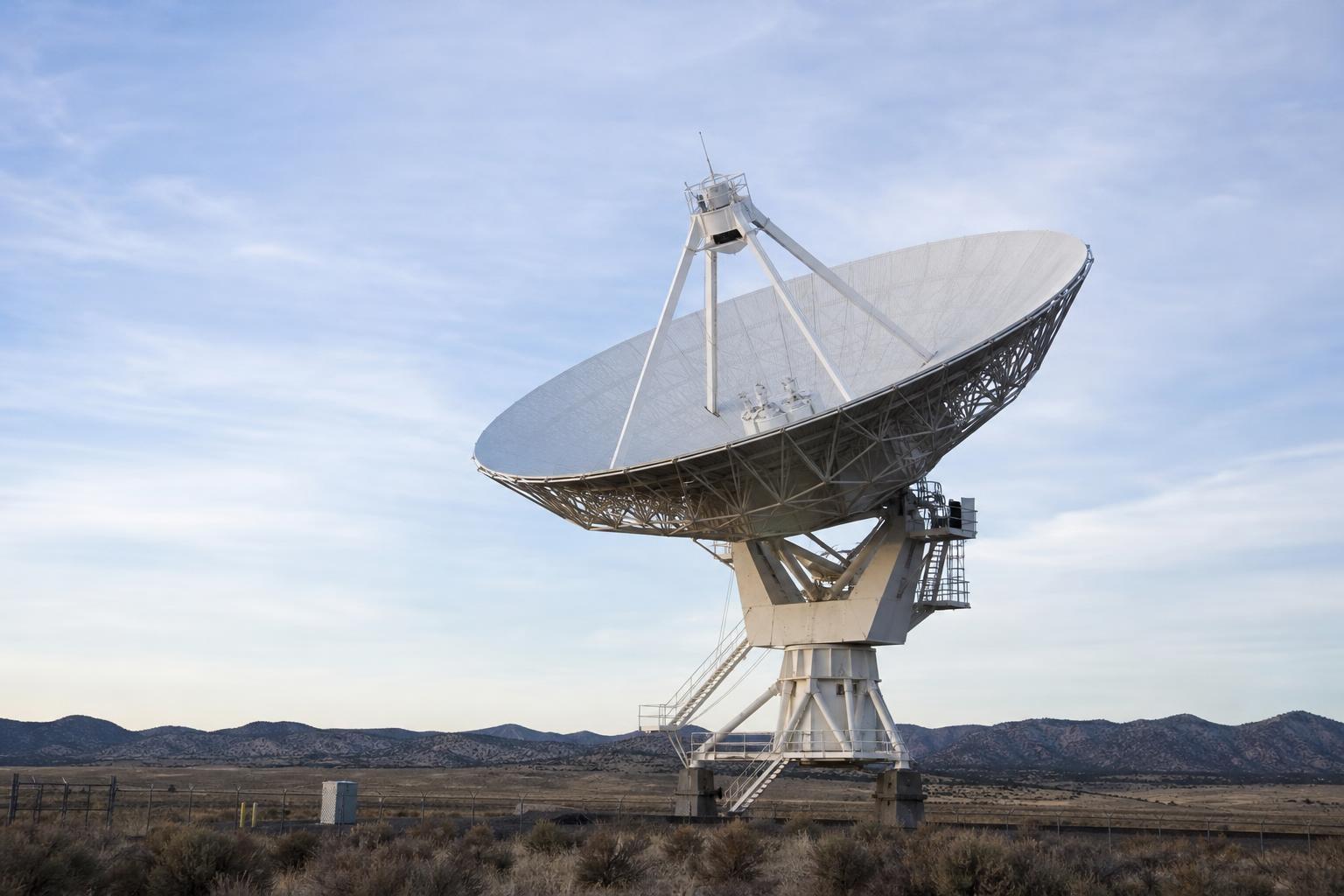
The night sky offered an unexpected whisper, a crisp, narrow radio pulse that pricked ears in observatories and garages alike. The source? A long-retired NASA satellite believed to have gone quiet in the late 1960s. Orbit analysis placed the object about 4,500 km above Earth, a liminal zone where old machines linger and space weather never sleeps. “It was a heartbeat in snow,” one observer said, “too orderly to ignore.”
A whisper from the graveyard
At first, the signal looked like a glitch, the sort of fleeting artifact that haunts radio backends and bleary eyes. Then came the repeat: the same frequency, the same drift, the same tidy envelope curving under Earth’s spin. Cross-checks pointed to a specific track in medium Earth orbit, where antique hardware drifts in long, austere loops. “You don’t expect discipline from ghosts,” an astronomer noted, “but this one behaved like a metronome.”
How the signal surfaced
The burst was first logged by a small array doing a routine sky survey, then flagged by hobbyists who watch space like librarians watch spines. Matched filters teased out the signature, and Doppler fit tied it to an abandoned craft from the early Space Age. The pattern repeated across multiple sites, ruling out terrestrial noise and most orbital impostors.
- Key markers: narrow-band carrier with gentle drift, intermittent bursts a few minutes apart, orbit consistent with legacy US hardware, apogee near 4,500 km
A dead craft that won’t stay quiet
How does a silent satellite find a voice? Space is harsh yet strangely patient, and old electronics can wake under the right light. Residual circuits may latch when solar panels briefly overcome decades of leakage, or when thermal swings nudge a tired oscillator across a stable mode. A slow tumble can make a transmitter “key” in and out, like a lighthouse with a failing bulb. “Think of it as a wind-up toy,” a radio engineer said, “where the Sun is the key, and the spring is whatever still works.”
This is not unprecedented, but it is rare, and every instance feels personal. Each blip exposes design habits of another era—simple RF chains, generous margins, and schematics drawn to be understood with a pencil and a steady hand. When such a craft murmurs after half a century, it is both failure and triumph: entropy delayed, intent remembered.
Why 4,500 km matters
That altitude sits above low Earth traffic and below geostationary lanes, within regions brushed by Earth’s radiation belts. Hardware there soaks up a lifetime of charged particles, which chew at insulation, corrupt semiconductors, and fatigue solder joints. Yet the geometry also grants long looks to ground receivers, and clean Doppler arcs that help with identification. It’s high enough to be lonely, low enough to stay reachable with modest gear.
“Altitude sets the mood,” a mission analyst noted, “and 4,500 km is a quiet room filled with old stories.”
Science in the static
Even a faint carrier has value. Engineers can study longevity of early components, check how oscillators age under radiation, and refine models for how derelicts interact with space weather. The signal’s cadence can hint at tumble rates, solar panel health, and thermal breathing across an orbit. For debris watchers, such wakes sharpen catalogs, reducing uncertainty in ephemerides and improving avoidance planning.
Beyond forensics, there is pedagogy. Student groups can aim small antennas skyward, decode whispery telemetry-like tones, and learn RF the way it’s best learned—by listening, failing, and trying again. “Space can feel distant,” a professor said, “until a 1960s circuit taps you on the shoulder.”
What happens next
Coordinated campaigns will refine the orbit, monitor the schedule, and test whether the signal responds to gentle prompts—never commanding, just careful listening. The priority is non-interference, followed by characterization, and then cautious hypotheses about what boards are awake and why they speak. Archival sleuthing may match frequencies to workshop notes, parts lists, and test sheets buried in binders older than most of today’s engineers.
No one expects a dialogue, yet no one rules out a surprise. A protocol might survive in a single flip-flop, a beacon might reassert under a peculiar Sun angle, or a cable might relax just enough to close a circuit once per revolution. “We will not poke a relic,” a ground lead said, “but we will patiently listen.”
A humbling reminder
This small event adds an accent to a larger story: the persistence of human artifacts and the long memory of space. Machines built with slide rules and soldering irons still find a way to say “I’m here,” even if the message is nothing but a steady, stoic tone. In that sound lives a bridge—from the daring first decades to a present obsessed with precision, and onward to futures we have yet to invent. The cosmos is noisy, but every so often a single, elegant note cuts through, and for a moment, the past feels present.
