
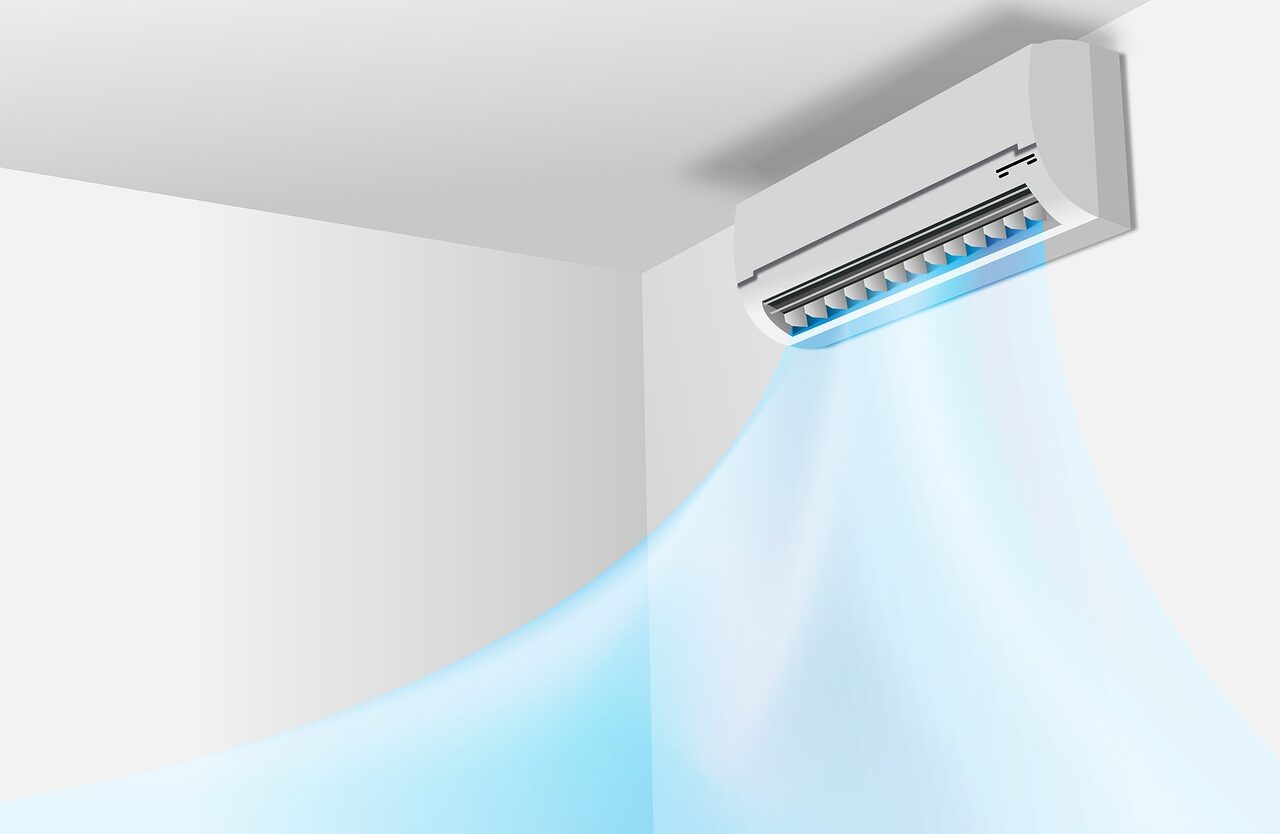
In the United States, researchers have for the first time established a link between the use of air conditioning and a reduction in heat-related mortality. Moreover, this is not a question of excessive use, quite the opposite. Nevertheless, this link should not hinder the search for more durable alternatives to current air conditioning systems.
A 57% Reduction in Mortality Risk from Heatwaves
First, let us recall that cooling needs account for about 10% of global electricity demand. Emissions are estimated at 1.13 billion tonnes of CO2 per year, in a context of increasing quantities of equipment due to rising temperatures. Furthermore, air conditioners release hydrofluorocarbons (HFCs), gases whose warming potential is much higher than that of CO2.
From environmental and climatic standpoints, air conditioning does not present favorable arguments, but the situation is different on the health front. A team from the Yale School of Public Health (United States) published a study on the subject in the journal Nature Health on August 31. According to the researchers, the use of air conditioning reduces by about 57% the risk of mortality related to extreme heat waves. The authors based their conclusion in particular on the following data: residential air conditioning prevents more than 5,250 deaths per year in the United States.
“In the United States, homeowners are required to provide heating in winter, and our study contributes to a body of convincing work that indicates they should also be required to provide air conditioning in summer.”, reads the press release reporting the study.
Moderate Use Is Enough to Maintain the Protective Effect
The health advantage comes with another finding. Indeed, the study authors stated that pushing air conditioners to the maximum offers no additional benefit compared with average use. It turns out that the protective effect plateaus once a reasonable comfort temperature is reached. In other words, there is no need to set the machine to very low temperatures, which implies moderate consumption.
Note that the reasonable comfort temperature helps keep the body cool and thus prevents hyperthermia. The benefits also include relief of the cardiovascular system and prevention against severe dehydration. Thus, there is a reduction in the risks of stroke and heart failure.
A Study to be Interpreted with Caution
Despite these apparently positive results, researchers stressed several points where vigilance is warranted. Encouraging more people to acquire an air conditioner—regardless of the level of consumption—could lead to energy overuse. Moreover, owning an air conditioner does not necessarily guarantee safety. Indeed, more than a quarter of households are in energy poverty and forgo using their equipment for fear of the electricity bill.
Finally, a global increase in air conditioners, without taking consumption levels into account, will necessarily lead to more heat emissions to the outside. These discharges contribute to the rise of the urban heat island effect and, inevitably, the acceleration of climate warming. In short, the need to air-condition is legitimate but the equipment remains too energy-intensive and polluting. These findings should further boost the search for more sustainable alternatives.
