
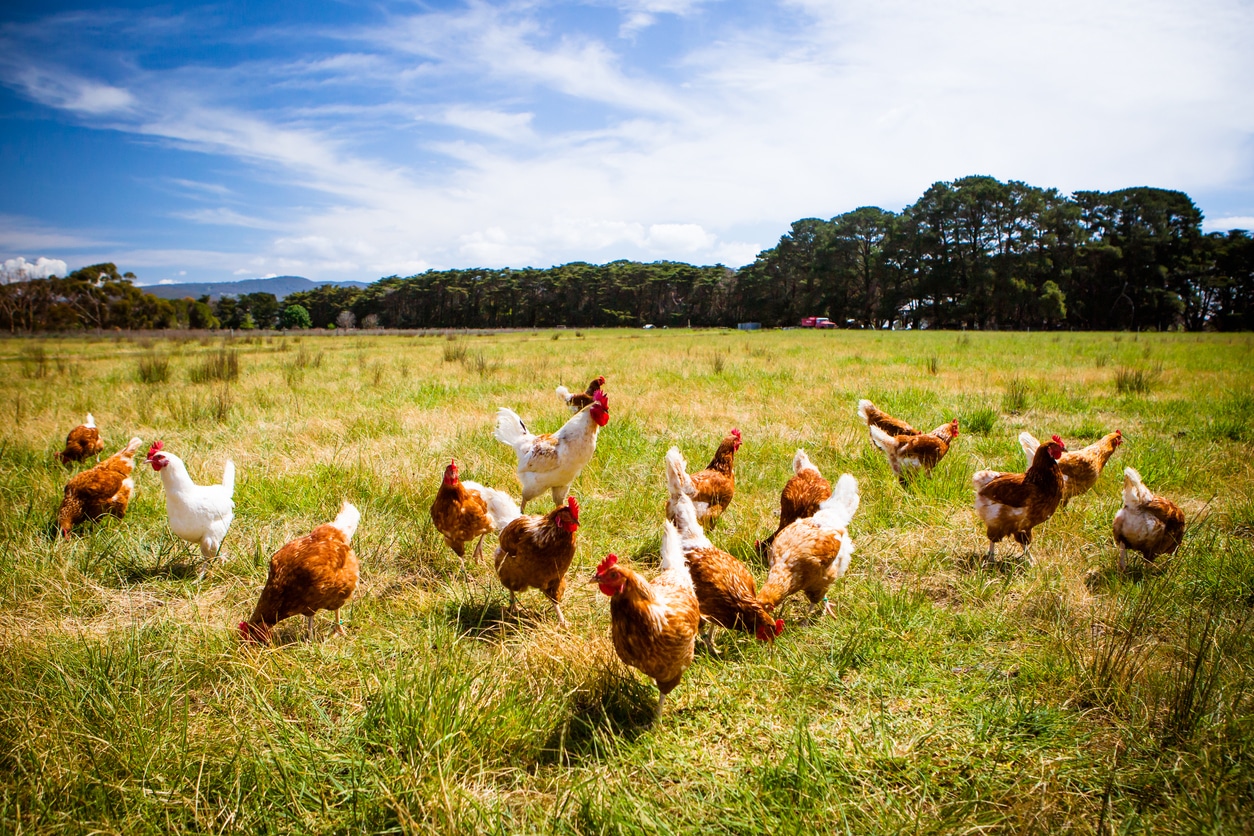
Recently in Japan, researchers used artificial intelligence to better grasp the meaning of the various sounds that chickens emit. It involves an advanced AI technique that relies on what is known as emotional learning. According to scientists, these studies could help farmers improve their production.
An AI to better interact with chickens
Following the use of virtual reality to calm cows, here comes artificial intelligence to understand the language of chickens. A study published on the Research Square platform on June 8, 2023 describes this innovation aimed at farmers. According to researchers from the University of Tokyo (Japan), it should enable professionals to interact more easily with their poultry.
Remember that chickens produce different sounds depending on the time of day and their mood. These sounds vary, among other things, in the presence of a predator, during egg laying, or during the hatching of fertilized eggs. For farmers, it is therefore important to recognize these different sounds in order to respond to the animals’ needs, but also to detect any issue within the henhouse.
The Japanese researchers describe a specific AI technique for this purpose: Deep Emotional Analysis Learning (DEAL). It is an emotional learning process based on mathematical algorithms that are capable of understanding the emotional states of chickens using auditory data. The AI was trained with about a hundred hours of chicken sound recordings. Each sound fed into the system corresponds to one of the birds’ various emotional states.
A success rate that could evolve
“To ensure the accuracy of the interpretations produced by our system, we collaborated with a team of eight animal psychologists and veterinarians, who provided expert insights into the emotional states of chickens,” the study notes. The researchers thus used the AI to analyze no fewer than 200 hours of sounds from around 80 chickens. According to the results, the system’s success rate stands at 80%. In addition, the authors identified six main emotional states, namely anger, distress, hunger, excitement, contentment, and fear.
According to the study’s leaders, this advancement should help farmers gain a better understanding of their chickens, and they may eventually rely on a dedicated mobile app. The AI is also expected to continuously evolve, as the more it hears the sounds made by chickens, the more its accuracy is likely to improve.
