
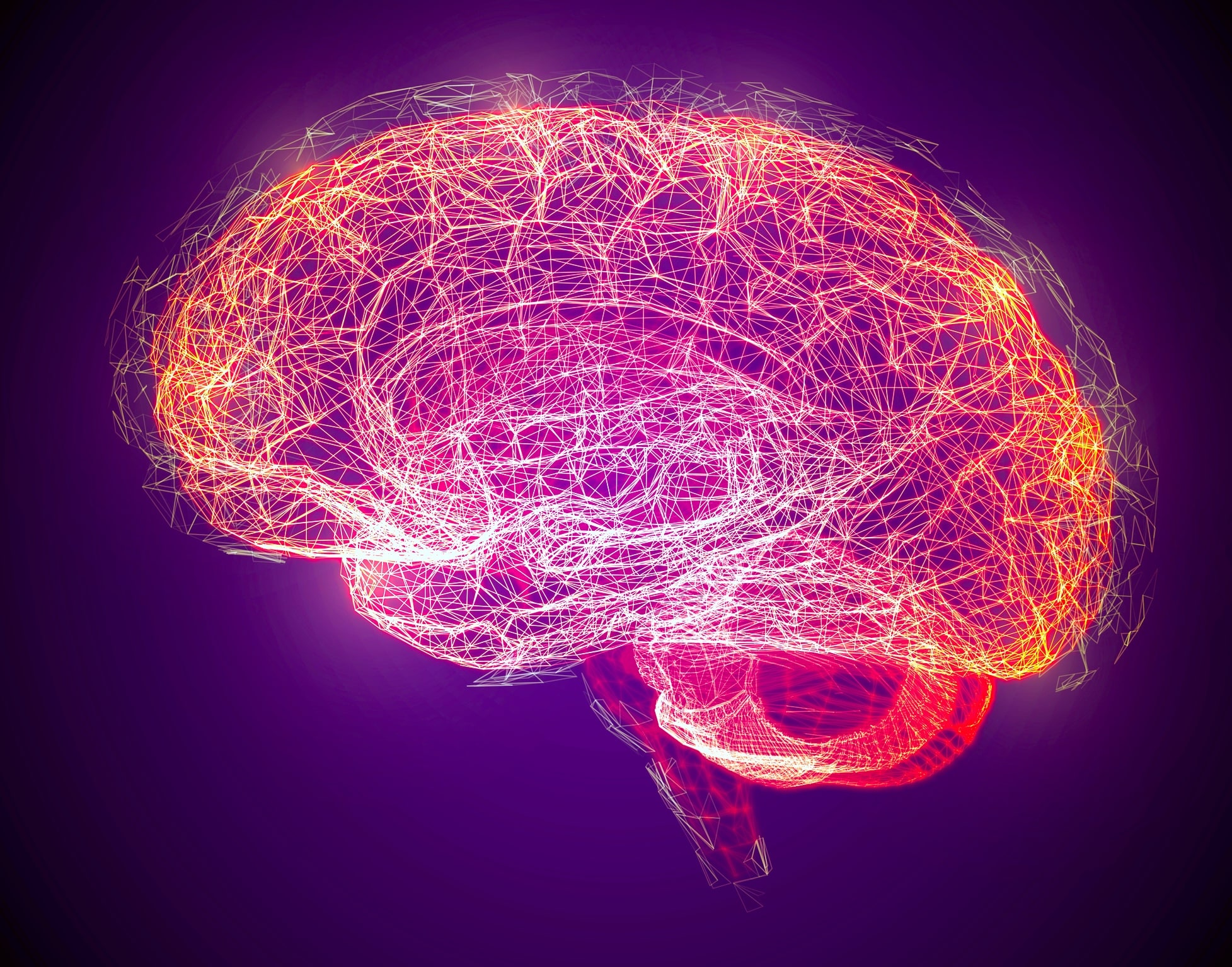
In the near future, computers will possess terrifying power. Capable of predicting diseases or simulating galaxies, they nevertheless exact an intolerable ecological toll. While tech giants build dedicated power plants for their servers, a 1.3-kilogram device nestled in your skull achieves the same feats with the energy of a breakfast. How does biology humble silicon to this extent?
The Clash of Figures: Exaflops vs Calories
The National Institute of Standards and Technology (NIST) has issued a brutal diagnosis. In theory, a healthy human brain can perform roughly one exaflop — a quintillion operations per second. To do so, it consumes about 20 watts. To put that in perspective, that is less than the bulb lighting your fridge.
At the opposite end of the spectrum, the Frontier supercomputer, one of the most powerful in the world, approaches that same computing power only with great difficulty. But to stay online, it requires 20 megawatts. To match your brain for 24 hours, this machine would need to burn 207 tons of coal, releasing a plume of poisonous CO2. Where AI demands heavy industrial infrastructure, you would only need three bananas.
AI is a sequential calculator, you are a parallel network
Why such a gap? Because our computers are the direct heirs of 19th-century calculating machines. They operate in a sequential manner: they process information one after another with rigid mathematical precision. Each step consumes energy, and the slightest error can topple the entire house of cards.
The brain, by contrast, is a master of massively parallel processing. It doesn’t do things “in order.”
-
Machine method: To catch a ball, an AI must detect the object, then measure its speed, then calculate its trajectory, then estimate the impact point, and finally command the arm’s movement. It’s a cascade of energy-hungry steps.
-
Biological method: Your brain does all of this simultaneously. With 100 billion interconnected neurons, position, speed, and motor commands flow at once through separate circuits. The result is instant, fluid, and above all, incredibly energy-efficient.
The Neuromorphic Revolution: when Silicon Mimics the Neuron
To break the impasse, researchers in Sydney, Stanford, and Texas are pursuing a wholesale redesign of computing: neuromorphic computing. The goal isn’t to push processor frequencies higher, but to copy the architecture of living systems.
Three major avenues are emerging:
-
Sparse topographic mapping: In a conventional computer, everything is connected to everything. It’s electrical chaos. In the brain, a neuron talks only to its immediate neighbors. By reproducing this local structure, researchers at the University of Surrey have created AI that learns faster while consuming ten times less energy.
-
Timing-dependent plasticity (STDP): It is the brain’s ability to strengthen or weaken a connection based on the exact order, within a few milliseconds, in which the two neurons it links fire. Today we are building chips capable of physically self-adjusting, removing the need for giant servers to “train” the algorithm.
-
Hebbian learning: “Neurons that fire together wire together.” By embedding this biological rule into computer hardware, we obtain machines capable of intuitive learning, even with incomplete or fuzzy data.
Toward a Lean and Intuitive Intelligence
The stakes go beyond ecology. By mimicking the brain, we are creating computers capable of reflexes. Machines that don’t crash at the slightest missing pixel, but which, like us, can guess, anticipate, and act without needing a nuclear plant in the backyard.
Tomorrow’s hardware will be environmentally friendly not out of ideology but out of physical necessity: to become truly intelligent, AI must stop being a radiator and finally become a network.
Source: Brain-Inspired Computing Can Help Us Create Faster, More Energy-Efficient Devices — If We Win the Race (nist.gov)
Article prepared with the help of AI · Our method
