
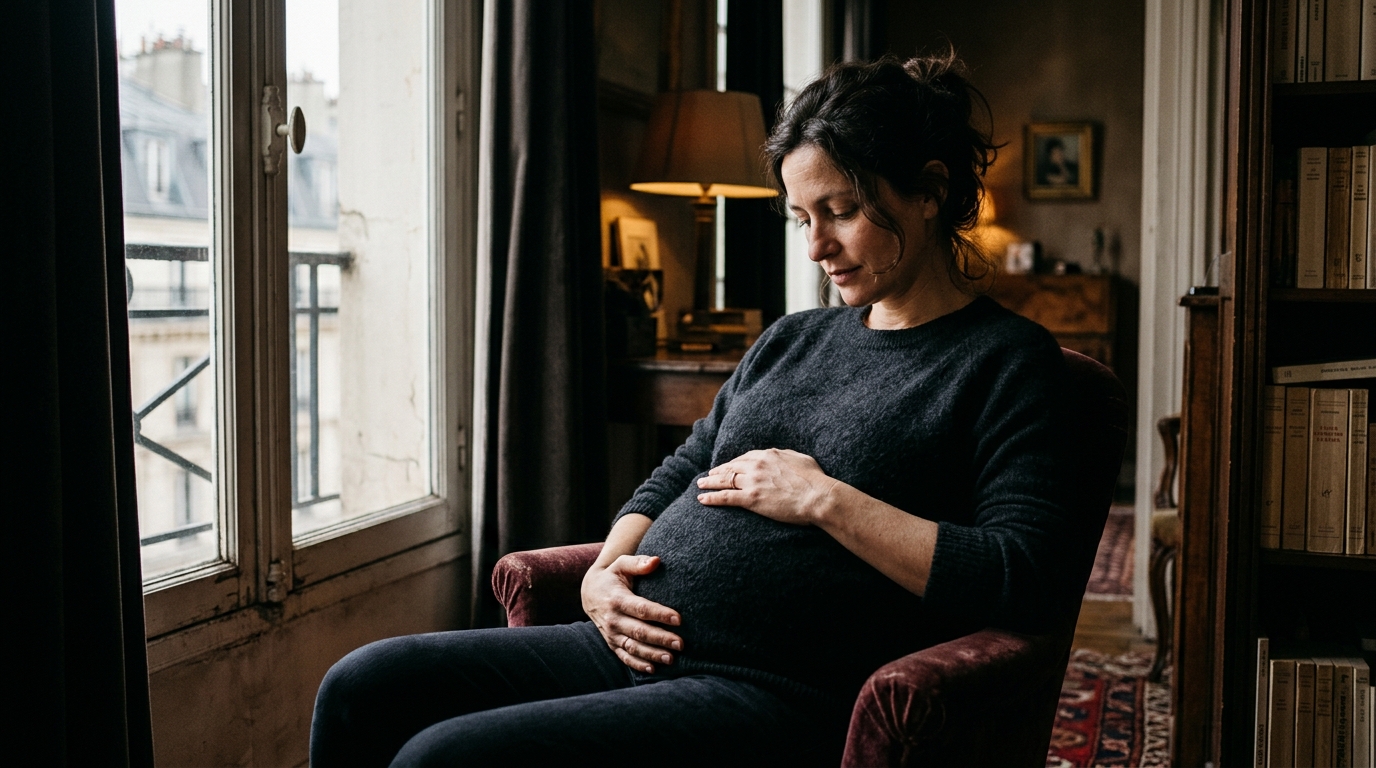
Picture a maternity waiting room in France, forty years ago. It was mostly very young mothers, sometimes barely out of adolescence, surrounded by their families. Today, this same waiting room tells a completely different story: the women waiting for their first attempt to conceive or their first appointment are often in their thirties, some even flirting with forty. This shift, far from being a mere impression or a random anecdote gathered from conversations, is indeed confirmed by official figures. Since 2010, INSEE documents a demographic reversal as discreet as it is spectacular, a trend that took time to take hold in public debate yet is profoundly reshaping the face of motherhood in France.
- In 2013, mothers under 20 accounted for only 1.8% of births, a historical low, while births to mothers aged 40 and over reached 5%, a level not seen since 1946.
- This shift, begun in 2010, is explained by longer periods of study and career paths as well as by the decline in the number of young women of reproductive age.
- Regional disparities persist (0.8% of early-mother births in Île-de-France versus 3.1% in Nord-Pas-de-Calais), and late fatherhood follows the same trend with 16% of births from fathers aged 40 or older.
- The demographic shift no one saw coming
- Why French women are waiting longer to become mothers
- What INSEE figures reveal about new maternities
- What consequences for French society and family policies
The demographic shift no one saw coming
For decades, the image of early pregnancy occupied a central place in the discourse on social fragility. There was concern about teenagers becoming mothers too soon, prevention campaigns were multiplied, and the statistics confirmed this worry. But reality eventually contradicted these well-entrenched representations. According to INSEE, the share of mothers under 20 fell to just 1.8% in 2013, a historically low level never before observed in French statistical series.
At the same time, an opposite phenomenon quietly intensified: the share of births to mothers aged 40 or older rose to 5%, a figure not seen since… 1946. In other words, it took nearly seventy years for the curve of late pregnancies to return to its post-war level, after a long decline begun in the 1970s. It is precisely from 2010 that these two curves cross: late births now exceed those of very young mothers, a silent but meaningful shift in understanding the evolution of French society.
Why French women are waiting longer to become mothers
This shift is not random but part of a profound transformation of life trajectories. The average age of mothers at childbirth has crossed the symbolic threshold of 30 years, a continued rise since the end of the baby boom. Prolonged studies, longer career paths, and the desire to stabilise one’s situation before starting a family: all these factors mechanically push back the moment of the first pregnancy.
INSEE also highlights an often overlooked aspect: the decline in the number of very young women of reproductive age plays a mechanical role in this evolution. Fewer young girls likely to become young mothers logically means fewer early births recorded. But this demographic explanation alone is not enough: it is accompanied by a real transformation of social behaviors, where parenting is now seen as a mature, planned project, sometimes deliberately delayed in favor of other life priorities.
What INSEE figures reveal about new maternities
Behind these national averages lie striking regional disparities, almost surprising. Île-de-France records the lowest share of early births in the country, with only 0.8% of mothers under 20. In Paris, this rate drops to 0.5%, and it falls further to 0.4% in Hauts-de-Seine, one of the lowest levels in metropolitan France.
Conversely, certain regions such as the Nord-Pas-de-Calais maintain historically higher rates, around 3.1%, showing that this demographic shift did not hit the territory with the same intensity everywhere. Another revealing datum of this overall aging trend in parenthood: fathers aged 40 or older now account for 16% of births. Late fatherhood is therefore following the same trajectory as late motherhood, confirming that this phenomenon affects the entire family unit and not just women.
What consequences for French society and family policies
This generalized postponement of motherhood is not without consequences for the country’s major demographic balances. The fertility indicator, which hovered near two children per woman for many years, begins a gradual decline from 2010, precisely coinciding with this shift toward later motherhood. It is no accident that these two curves move in tandem: the longer one waits to have a first child, the less time there is biologically and socially to have several.
For family policies, this finding poses new challenges. Mechanisms historically designed to support young parents now have to contend with a different reality: families forming later, with specific needs in terms of medical follow-up, parental leave, or parenting support. INSEE, which tracks these age-based series for metropolitan France since 1946, provides exactly the means to document this demographic shift and anticipate the adjustments needed in the years ahead.
This school year, as debates about birth rates regularly surface in the news, these INSEE figures offer valuable insight, far from stereotypes. France has not merely seen its young mothers disappear from statistics: it has witnessed the emergence of a new generation of older, more settled parents, but also facing unprecedented challenges. It remains to be seen whether this trend will continue to intensify, or whether it will eventually find a new equilibrium in the decades to come.
