
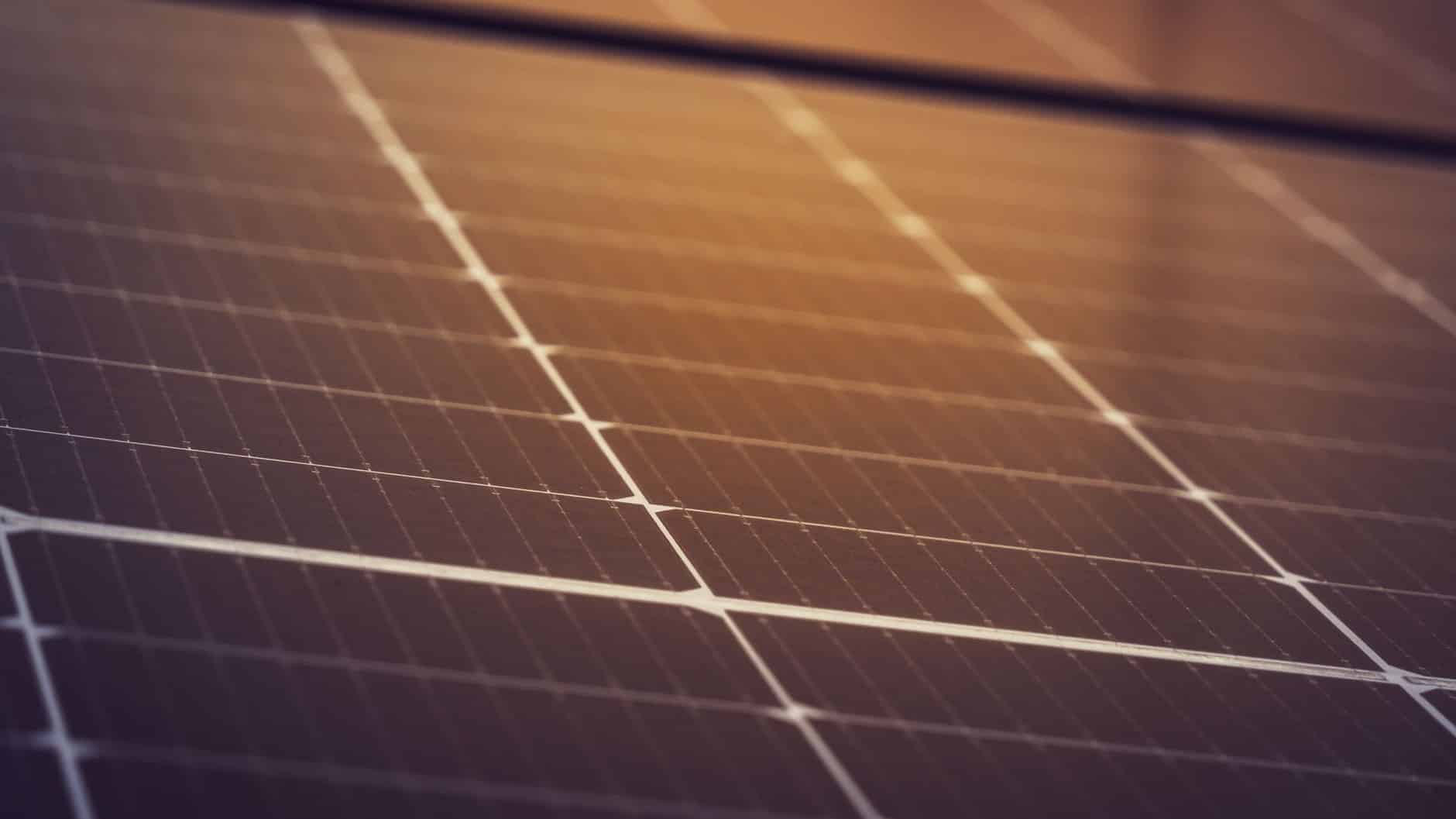
Five million euros for a kilometer of solar asphalt. That was the amount spent on the world’s first photovoltaic road, inaugurated with great fanfare on December 22, 2016, in Tourouvre-au-Perche, in Orne, by the then Minister for the Environment, Ségolène Royal. Eight years later, the bulldozers came to tear it all up. A fiasco foretold from the first day, for a reason as simple as it was poorly anticipated: the angle of the sun.
The project carried a commercial name, Wattway, developed by Colas with the support of the National Institute of Solar Energy. On 2,800 m2, solar panels in the shape of tiles were glued onto the asphalt, with silicon sheets coated in a protective resin intended to make them able to withstand traffic of all types of vehicles, including heavy goods vehicles. The political ambition went far beyond this Normand stretch: Ségolène Royal hoped that this photovoltaic coating technology could equip 1,000 kilometers of road by 2020. A quick calculation is dizzying: the minister wanted 1,000 kilometers of solar road, which would have cost five billion euros based on the Orne project’s price.
Key takeaways
- A flat solar panel yields up to three times less than when inclined at 30 degrees
- Five million euros to power barely three households
- The asphalt proved to be a formidable foe for the solar tiles under truck weight
A Panel Laid Flat, a Yield That Collapses
The problem wasn’t technological in the strict sense. It hinged on a physical law that any solar panel installer knows: the tilt. A photovoltaic panel produces its maximum output when facing the sun at an angle close to 30 degrees according to latitude. Placed flat on a roadway, it captures sunlight obliquely for much of the day, which mechanically reduces its production. Added to this are dust, exhaust gases, the shade cast by vehicles, and the heat of the asphalt, all of which further lower the cell efficiency. A recent technical article bluntly sums up the situation: output collapses when flat and dirty, producing up to three times less than a roofing panel.
Official figures confirmed the disappointment from the first year of operation. A written question addressed to the National Assembly recalls that the electric output was nearly five times lower than a comparable rooftop installation. In concrete terms, the electricity production of the stretch dropped from 78,397 kWh in 2017 to barely half of what was expected, 37,900 kWh since January 2019. The curve did not rise; it collapsed. A parliamentary report already noted in 2017 that production was halved compared to initial promises.
And the cost per watt told the same economic story. According to Wattway’s director, each square meter delivered about 110 watts, translating to a cost of €17.8 per watt, while ground-mounted solar ranged from €0.7 to €1/W, floating solar at about €1/W, and roof-mounted solar from €1.5 to €2.5/W. Generating electricity on a road would cost seven to twenty-five times more than with conventional, well-tilted installations.
The Asphalt, Mechanical Enemy of the Solar Tiles
The sun’s physics wasn’t the only adversary. The repeated passage of trucks eventually took its toll on the tiles, which were designed to withstand 40 tonnes without flinching. Microcracks multiplied, allowing moisture in and creating additional shadowed areas that further reduced production. An industry expert sums up the failure’s mechanics: repeated vehicle traffic, especially 40-tonne heavy trucks, generates microcracks, delaminations, and premature wear of the top protective layer, affecting both electricity production and road safety by altering the road’s grip.
The local residents chiefly noted the noise. The traffic produced such a din that speed had to be limited on the stretch, according to the same parliamentary documents. In response to these failures, Colas attempted a technical fix between 2020 and 2021, installing two new lots of generation-enhanced tiles, this time on a shortened 400-meter section. From 2020 to 2021, two batches of 576 tiles of the new generation were installed on this distance, but this change did not significantly boost solar energy production. The eight-year experiment’s concrete result is chilling: the installation never supplied more than three households with electricity—not even the village’s street lighting it was supposed to service.
An Embraced Demolition, a Modest Inheritance
The municipal council of Tourouvre-au-Perche ultimately approved the end of the experiment. The demolition was announced at the February 15, 2024, council meeting, and the works, which began on May 27, were scheduled to finish on June 7. Good news for local finances: the mayor noted that the experiment cost the municipality nothing and that the dismantling is funded by the company. The initial five million euros, however, had been financed by the State in the form of a public subsidy.
Wattway has not disappeared entirely. The company has redirected its technology toward uses where mechanical constraints and sun angle matter less: bike paths, parking lots, street furniture. On these low-traffic surfaces, the tilt remains unfavorable, but the absence of heavy trucks at least limits mechanical damage. It is not by chance that, eight years after the failed Tourouvre inauguration, no large-scale road-solar project has emerged in France. The Norman lesson was costly, but it at least prevented the mistake from being repeated across a thousand kilometers of pavement.
Sources: techniques-ingenieur.fr | orne.fr
